

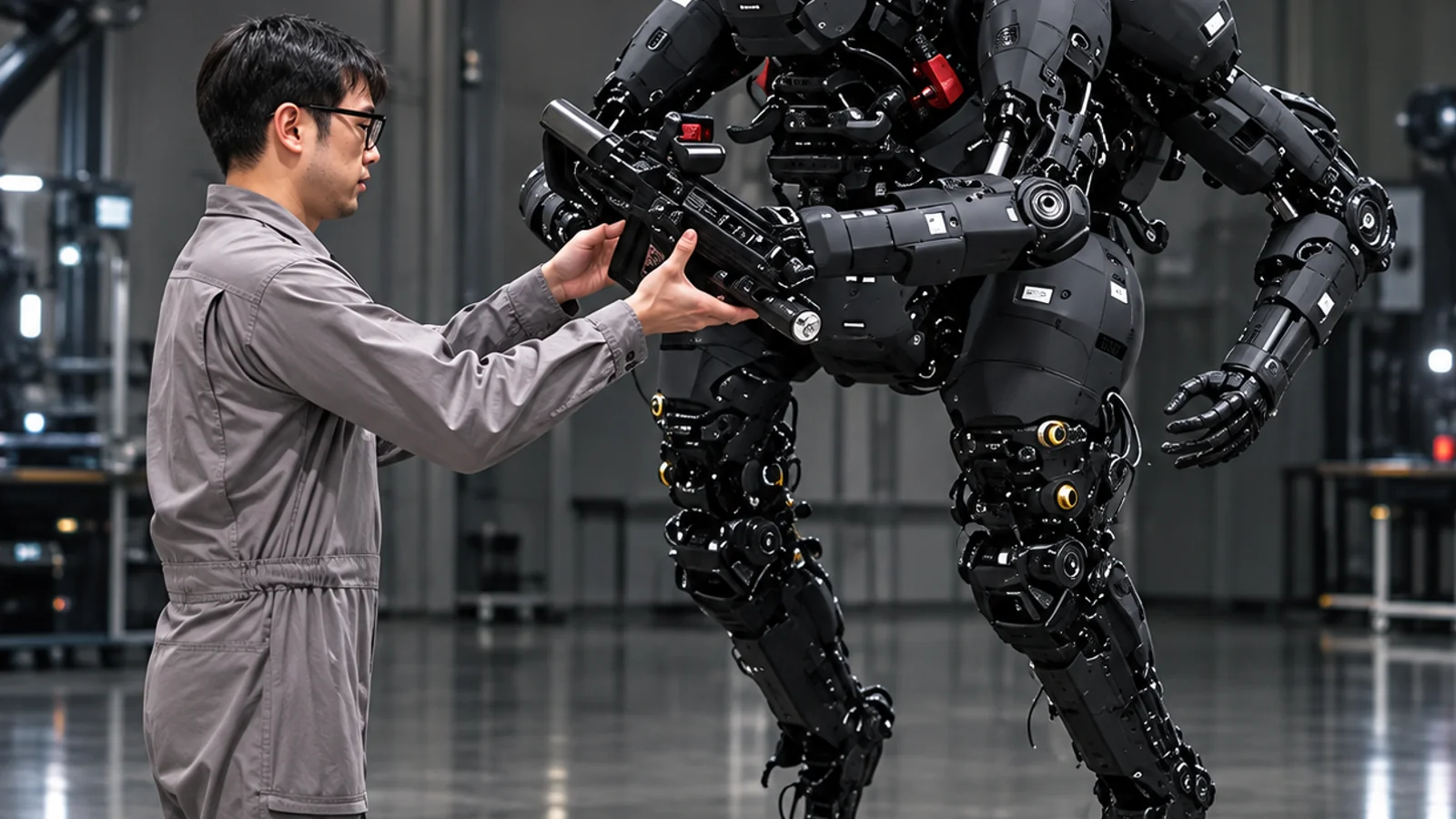
Picture a robot the size of a five-year-old that usually walks, waves and picks things up. Now give it four jet engines and watch it rise off the floor under its own power. That is exactly what happened this summer in Genoa, when researchers at the Italian Institute of Technology (IIT) demonstrated the first controlled lift-off of a jet-powered humanoid robot.
The machine is called iRonCub3. It is a heavily modified version of the institute’s long-running iCub platform, originally designed around 2004 as a research tool roughly the size and shape of a small child. Under the leadership of Daniele Pucci and the Artificial and Mechanical Intelligence lab, the team has spent years bolting on propulsion so the robot can one day fly over debris, land, and then walk and manipulate objects the way a rescue worker would.
Four Jets and a Titanium Spine
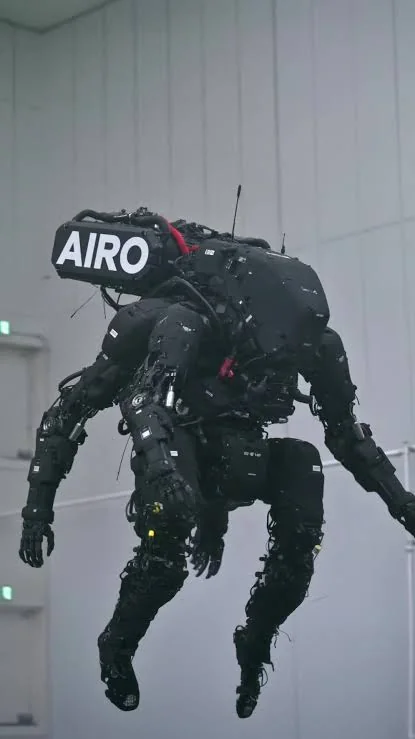
iRonCub3 carries four compact JetCat P250 Pro turbines—two mounted on the forearms and two on a custom backpack-style jetpack. Together they produce more than 1,000 newtons of thrust, enough to lift the roughly 70-kilogram robot clear of the ground. The exhaust is hot enough to melt ordinary materials (reports put temperatures between 600 °C and 800 °C) and moves at near-supersonic speed, so the engineers added a titanium spine and heat-resistant covers to keep the structure intact.
Unlike a quadcopter, which is compact and symmetric, a humanoid has long limbs, a shifting centre of mass and joints that move slowly compared with the jets. The control software therefore has to juggle two very different timescales: the leisurely motion of the robot’s arms and legs, and the rapid response of the turbines. Researchers used a mix of classical dynamics models and neural networks trained on wind-tunnel data and computational fluid dynamics to estimate aerodynamic forces in real time. The aerodynamics work was done with the Polytechnic of Milan; the learning-based models involved collaborators at Stanford University. Those results appear in a paper published in Nature Communications Engineering on the same day the flight was announced.
Fifty Centimetres and a Few Seconds
In tests on the terrace of IIT’s robotics centre, iRonCub3 rose approximately 50 centimetres and held a stable orientation for several seconds before descending. Detailed flight logs from the accompanying technical paper show the robot staying aloft for roughly three seconds, briefly touching down, then lifting again for another short interval, with attitude errors kept to a few degrees. Fuel was supplied through external lines rather than onboard tanks, a safety measure for these early runs. The achievement is modest by aircraft standards, yet it is the first time a full humanoid form has performed a controlled jet-powered take-off.
From Roof to Airport
The long-term goal is practical. In a flood, fire or collapsed building, the robot could fly over obstacles that would stop a wheeled or walking machine, then land and use its hands to clear debris or open doors while conserving energy by walking. “We believe in contributing to something unique in the future,” Pucci has said of the disaster-response vision. Next steps include moving tests to a larger dedicated area at Genoa Airport, where the team can work with aviation authorities on safer, eventually untethered flights. Engineering challenges remain: managing extreme heat for longer durations, refining control in real wind, and integrating enough fuel and computing power for meaningful missions. For now, a 50-centimetre hop is the proof that a walking robot can leave the ground under jet power and come back down in one piece.
Sources: IEEE Spectrum, arXiv technical paper on first flight experiments, Nature Communications Engineering aerodynamics paper, IIT AMI lab project page, IIT official announcement.