

Henry Cavill is turning his famous moustache into a video game, with Google’s AI tools helping translate his ideas into characters and game mechanics. Google announced the project, Mustache Protocol, on November 4, 2026, launching an online video series that follows the actor building a retro-style game on a Googlebook laptop.
The collaboration doubles as a product demonstration and a Movember fundraiser. Google says it will donate $11 for every play during November, up to $500,000, supporting men’s mental health, suicide prevention, prostate cancer and testicular cancer initiatives. Its announcement describes public access as coming when the game is finished, rather than presenting the first episode as a playable release.
A familiar moustache becomes the plot
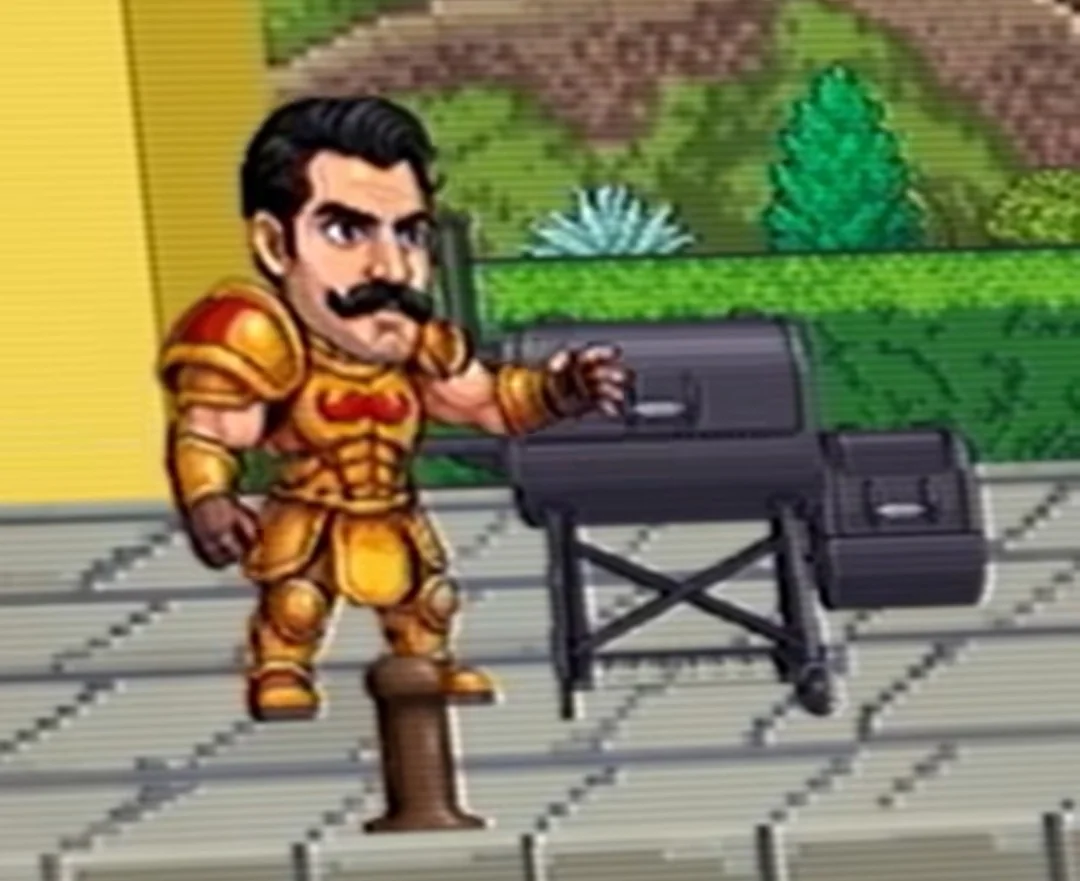
Mustache Protocol follows a hero trying to stop rogue CGI artists from erasing every moustache on the planet. The premise turns a much-discussed moment in Cavill’s film career into the game’s central joke.
During the 2017 Justice League reshoots, Cavill had a moustache for Mission: Impossible – Fallout that he could not shave because of contractual obligations. His facial hair was digitally removed from his Superman scenes, creating an effects controversy that the new campaign revisits.
The latest promotional video adds another recognisable reference: Cavill’s arm-reload gesture. ComingSoon reports that he asks the AI system to make the move trigger super strength and power-ups. He also requests a bigger moustache, more muscle, pockets and a brisket item that restores the character’s health bar to 100%. These are proposed game mechanics shown in the promotion, not independently tested features of a released build.
The AI tools behind the demonstration
Google describes Mustache Protocol as a 16-bit game and identifies several tools used in its creation. The published account focuses on the creative workflow rather than providing a complete software architecture or technical specification.
- Antigravity translates natural-language prompts into working game mechanics, according to Google’s account of the project.
- Rambler turns spoken brainstorming into more organised text, helping Cavill structure his ideas.
- Magic Pointer lets him select and combine visual elements while refining the game’s appearance.
- Continue On allows him to move between an Android phone and Googlebook without losing the context of his work.
Google’s broader product documentation says Antigravity comes with every Googlebook and supports writing and deploying applications on the laptop. The platform also provides a full Linux terminal environment for development tools, including Antigravity CLI and Claude Code. That makes the advertised workflow broader than simply generating pictures or asking a chatbot for code snippets.
However, the Mustache Protocol announcement does not identify the game engine, programming language, underlying model version or laptop configuration used. It also does not break down which processing happens locally and which relies on cloud services. Those omissions limit what can be concluded about the system’s architecture, hardware requirements or reproducibility.
A measurable donation pledge, not a benchmark
The campaign’s clearest numerical commitment is its fundraising formula: $11 per play, with a $500,000 ceiling. Google says the money will support Movember’s health initiatives, but the announcement does not report a completed donation total or player count. A funding pledge is therefore the appropriate measure to report at this stage, not money already raised.
There are no published development-time comparisons, code-quality scores, frame-rate measurements or cost figures for the game in Google’s announcement. It also does not quantify how much assistance came from people working behind the scenes. The promotional series demonstrates the workflow Google wants users to try; it does not establish that an inexperienced developer can independently produce the same result in a stated amount of time.
The hardware has a commercial context, too. Google’s September product announcement listed Googlebook starting at $899, including 12 months of Google AI Pro. That is a laptop entry price, not a disclosed budget for developing Mustache Protocol.
What the campaign shows—and what remains open
The project illustrates Google’s pitch for AI-assisted creation: describe an idea, generate an implementation, then revise the result through further instructions. In its announcement, Google says forthcoming episodes will cover character design, meme-inspired superpowers and additions to the soundtrack.
“The episodes will detail how Henry designed the hero character, vibe coded meme-inspired superpowers, and added to the game’s soundtrack.” — Google’s November 4 announcement, published under Menaka Shroff, vice president of marketing for the Global Android Ecosystem.
For the next 12 to 24 months, the useful question is whether this kind of guided demonstration translates into a repeatable development process. The evidence needed to assess that includes transparent build times, the extent of human intervention, testing results and the effort required to maintain the finished software. Those measures are not supplied for Mustache Protocol in the announcement.
Google has also not set out a 12-to-24-month development roadmap for the game in that release. Its stated next steps are additional videos and eventual public play tied to the November fundraising campaign. For now, Mustache Protocol is a celebrity-led showcase of Google’s creative AI workflow, with a specific charitable pledge attached—not a published benchmark of autonomous game development.
Sources: Google’s November 4 announcement of Mustache Protocol and its Movember donation pledge; Google’s documentation of Googlebook’s AI features, development tools and launch pricing; and ComingSoon’s report on Cavill’s latest promotional video and its film references.