

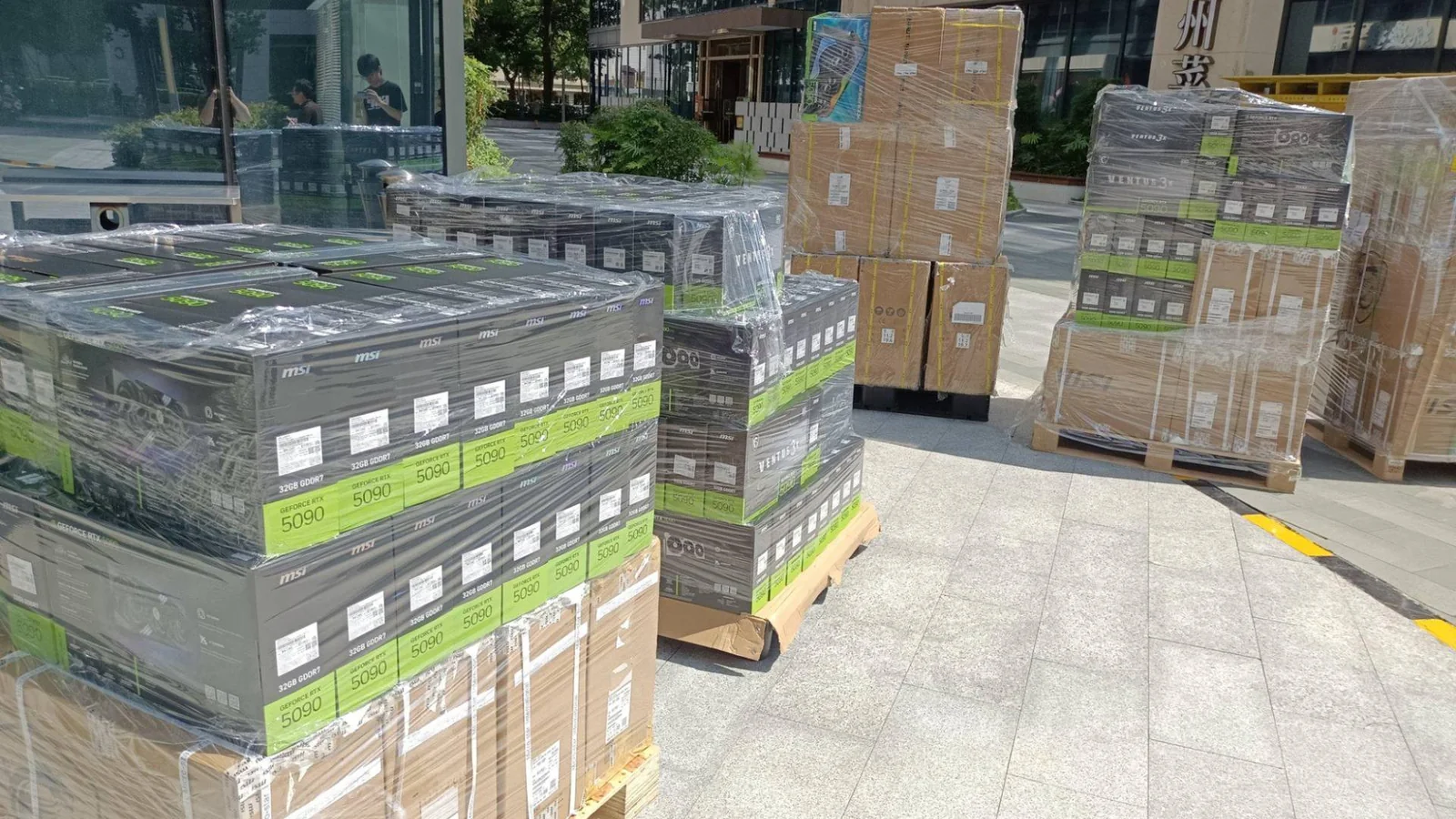
Six pallets of Nvidia computer hardware valued at $11.4 million disappeared during a shipment from Oakland, California, to Fort Worth, Texas, in late summer 2026. The load was picked up on August 29 by a truck displaying a food transportation company logo, as scheduled, then vanished after making several multi-hour stops. Investigators lost the trail in San Bernardino County, and the theft was not reported to Oakland police until September 13. As of early November, no arrests have been announced and the cargo has not been recovered.
The incident highlights rising risks to high-value technology shipments tied to the AI data center buildout. Nvidia’s GPUs and related systems power much of the current wave of artificial intelligence infrastructure, making them attractive targets for organized cargo theft rings operating along major freight corridors.
How the shipment disappeared
According to reporting by the Bay Area News Group and confirmed by Oakland police, the six pallets left an East Oakland facility on August 29. The handoff matched the paperwork: a truck marked with a food hauler’s logo collected the load and headed south. Tracking showed the vehicle made several extended stops lasting multiple hours before contact was lost in San Bernardino County.
The buyers realized the shipment had never arrived in early September. Oakland Police Department confirmed a grand theft report was filed on September 13 and that the investigation remains open. Police have not publicly identified the exact Nvidia products involved, the owner of the cargo, the motor carrier, or the driver. They have also not confirmed whether the food-transport branding was legitimate or an impersonation.
The Oakland Police Department (OPD) is investigating a grand theft that occurred in East Oakland. The victim reported the crime to OPD on September 13, 2026. The investigation is ongoing, and anyone with information is asked to contact the OPD General Crimes Unit at (510) 238-3728.
Authorities have not linked this case to other recent incidents, though the pattern of targeting Nvidia and AI-related hardware is clear. In 2025, police in Fremont and Union City investigated burglaries of Nvidia cargo totaling more than $7.5 million. Investigators in those cases believed some of the suspects’ vehicles originated in Southern California and that the group traveled north specifically for the thefts.
Hardware value and industry context
With an average declared value of roughly $1.9 million per pallet, the missing load represents a substantial quantity of high-end computing equipment. Nvidia has not publicly confirmed the contents, but the valuation is consistent with AI accelerators or complete systems used in data centers rather than consumer graphics cards.
Professor Olaf Groth of UC Berkeley’s Haas School of Business, who studies artificial intelligence and global technology economics, noted the strong financial incentives. “These chips command about double the price that they command inside the United States. So, if a chip costs about $550,000, then they go for about $1 million or more abroad,” he said. He added that larger cargoes and more complex methods point to increasing professionalization of the groups involved.
Cargo theft experts and freight investigators have reported a broader surge in thefts of data-center-bound equipment, with techniques that include GPS spoofing, staged collisions with escort vehicles, and the use of compromised or fictitious carrier identities. Shippers have responded by sometimes disguising high-value loads, yet the food-hauler branding in this case did not prevent the loss.
Ongoing investigation and open questions
More than two months after the report was filed, Oakland police have announced neither recoveries nor arrests. Key details remain undisclosed: the precise hardware models, whether the food-transport company was real or spoofed, what occurred during the multi-hour stops, and the ultimate destination of the cargo.
The case sits within a larger pattern of opportunistic and organized theft targeting the physical supply chain of AI hardware. As data-center construction continues at scale, the combination of high unit values, dense packaging, and long-haul trucking routes creates persistent exposure. Law enforcement and logistics operators face the dual challenge of improving real-time tracking and verification while the black-market demand for advanced GPUs remains strong.
Sources: The Mercury News, Ars Technica, FreightWaves, ABC7.