


Welcome to the Robot Gym: Neura's Plan to Train Humanoids
Category: HUMANOIDS
Lead
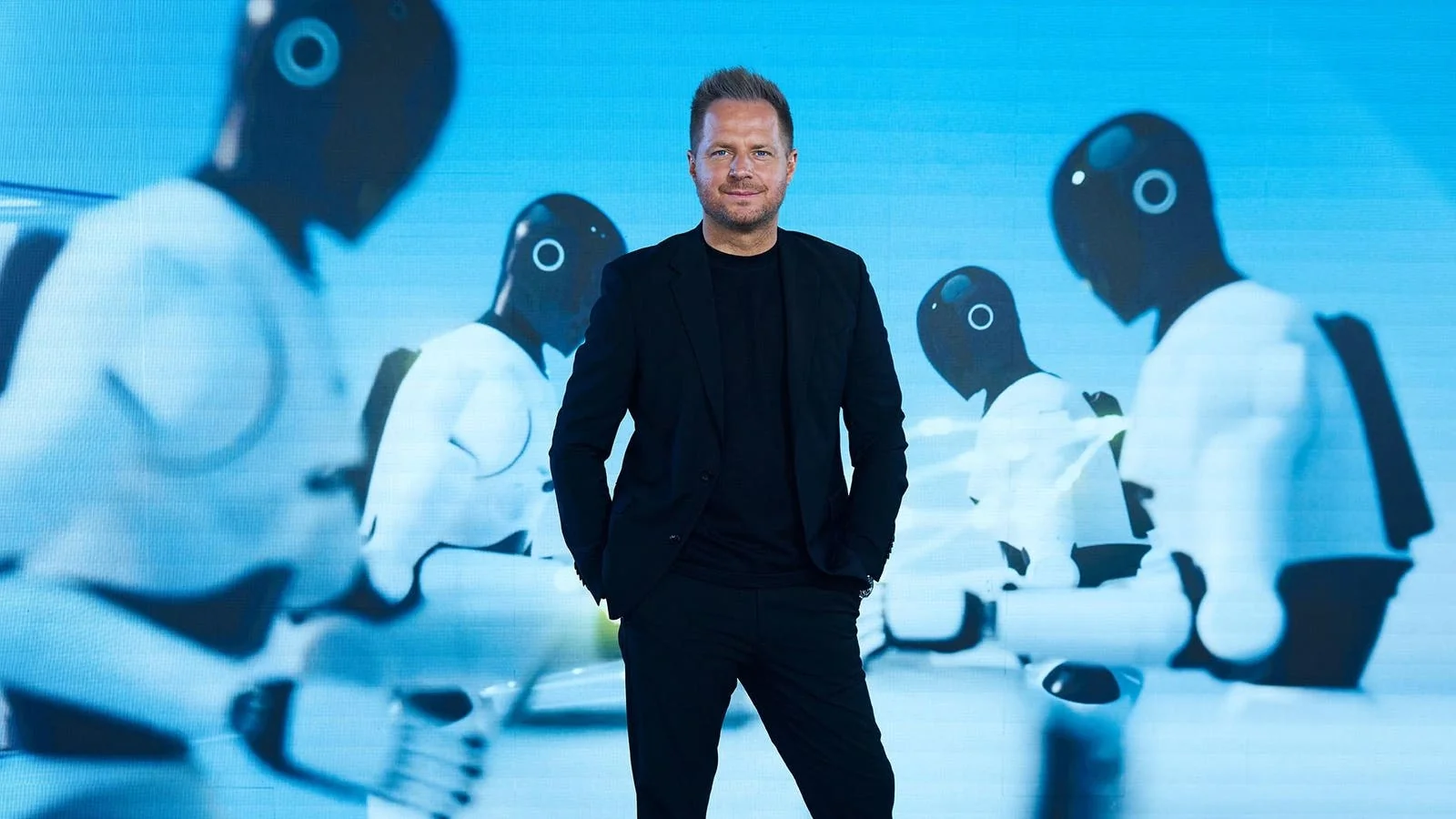
German robotics founder David Reger is betting that humanoid robots need a place to train before they can do real work. According to a Forbes report published on 18 October 2026, his company Neura Robotics is building "robot gyms." Customers rent these facilities to teach the robots they buy from Neura specific jobs. Forbes estimates Reger's roughly 20% stake in the company is worth nearly $1.5 billion, which is why it calls him a new robot billionaire.
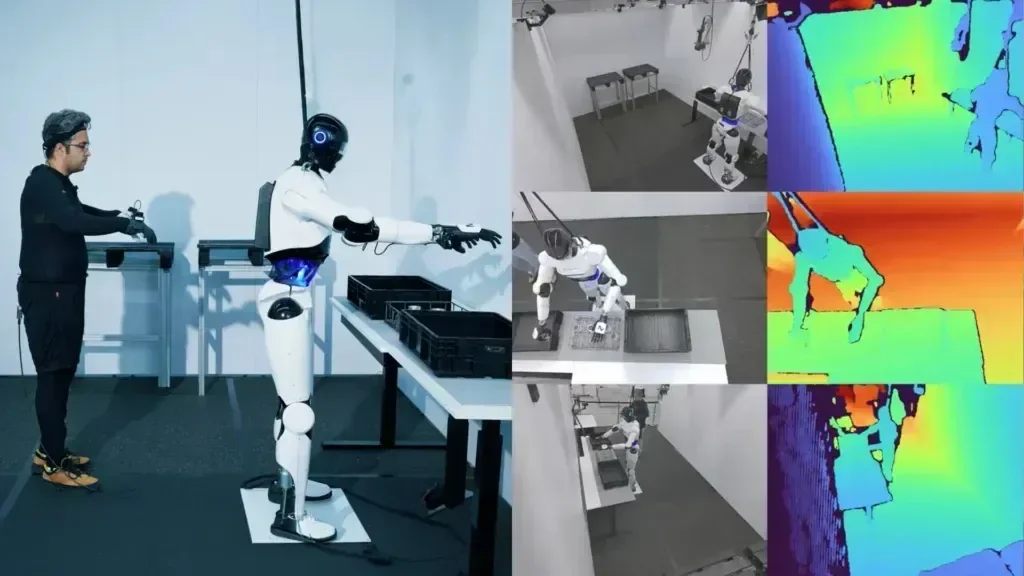
The idea reflects a bottleneck in the field. Language models learn largely from text on the internet. Robots have to learn how to reach, grip and place real objects, and that takes demonstrations and repeated practice.
Technical architecture and specifications
Forbes says a Neura gym rents out dedicated training cells with simulation environments and tracking technology. Whatever one robot learns is stored on Neuraverse, Neura's cloud platform, and can be transferred to other machines the customer owns. Reger also wants companies to be able to trade or lease those skills.
Neura's flagship humanoid is the 4NE1. Forbes lists it at 5 feet 11 inches (about 180 cm) and 176 lbs (about 80 kg). The report names these technology partners:
- Nvidia, for simulation technology and the compute behind Neura's AI
- Amazon, for the cloud side of Neuraverse
- Qualcomm, whose processors Neura is building into the robots' control systems
- Bosch and Schaeffler, for components such as actuators, which Forbes says can make up about half of a humanoid's component costs
- Tether, which wants to put its wallet software inside the robots so they could eventually make transactions
Empirical data and real-world impact
In June, Neura raised up to $1.4 billion, led by Tether. Nvidia, Amazon, Qualcomm, Bosch, Schaeffler and the European Investment Bank also invested, according to Forbes. The round valued the company at about $7 billion, per people familiar with the deal. Automate.org separately reported the round and the valuation.
Gym figures reported by Forbes:
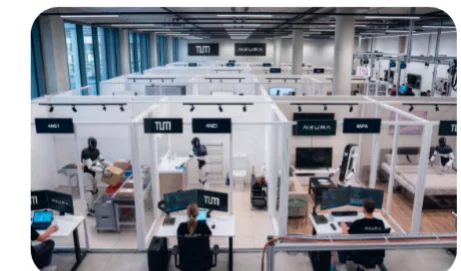
- The company and its partners have committed $19 million to a facility at Munich Airport, which Reger says is already operating. Customers are booking up to 20 training cells for at least a year, and rents can reach tens of thousands of dollars.
- The Technical University of Munich is a partner there. A 3,000-square-metre site is being developed at RWTH Aachen University.
- Neura expects five gyms by year-end: three in Germany, one in China and one in the US. Ten more are in development, with US plans including Detroit and San Diego.
Demand figures are Reger's own claims. He says 12,000 companies contacted Neura in the past year, mostly about humanoids. He says it can currently build enough robots for only about 100 customers. A single humanoid pilot, including the robot and annual training and maintenance fees, can cost $300,000 to $550,000. Gyms are meant to spare Neura from sending its own engineers to customer factories.
Most of Neura's revenue still comes from collaborative robot arms and mobile carts, and the company declined to disclose revenue. Its latest financial statement in the German company register dates from 2022 and showed a loss of close to $7 million. The company says its order book exceeds $1.1 billion, half of it tied to the existing cobot fleet. It also cites an $11 billion pipeline of agreements with varying levels of commitment. It would not say how many humanoids it has built or deployed.
Industry context and future outlook
Neura's humanoid has had public setbacks. At Automatica in June 2025, only a motionless prototype was shown, and the company blamed a delayed delivery. At Computex in June 2026, a newer version fell backward on stage. Qualcomm attributed that to a communication glitch that triggered a built-in safe-collapse sequence.
The wider market is also hard to read. Forbes cites a market research firm saying Chinese makers shipped 19,100 humanoids, or 97% of the global total, in the first half of 2026. It also cites the International Federation of Robotics counting about 7,000 full-size humanoids sold worldwide last year, many of them bought to generate AI training data. Competition for gyms exists too: Schaeffler runs its own humanoid gym in Erlangen, where it trains Hexagon's AEON robot.
A regulatory hurdle sits in the US. In July, the Federal Communications Commission put foreign-made "advanced robotic devices" on its Covered List. A new foreign humanoid can still reach the market with conditional approval after a Department of War supply-chain review. Neura told Forbes it is developing US manufacturing capacity in Detroit, targeting 2027. Neura also says it will deliver 5 million cognitive robots by 2030, including humanoids, a target that is unproven.
Reger frames it as a European industrial play. As he put it to Forbes: "I want Neura to become the largest taxpayer in Europe one day."


