
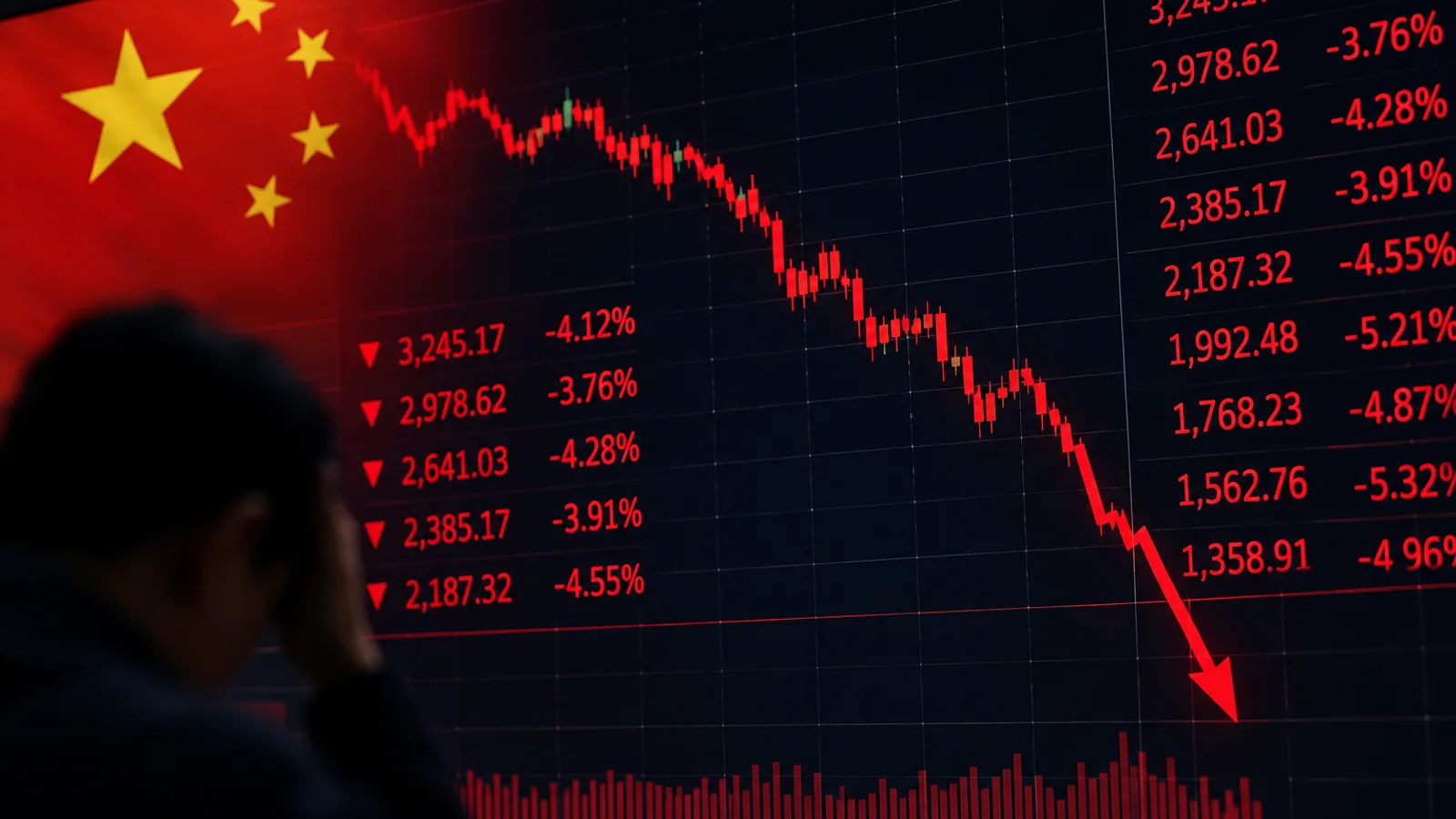
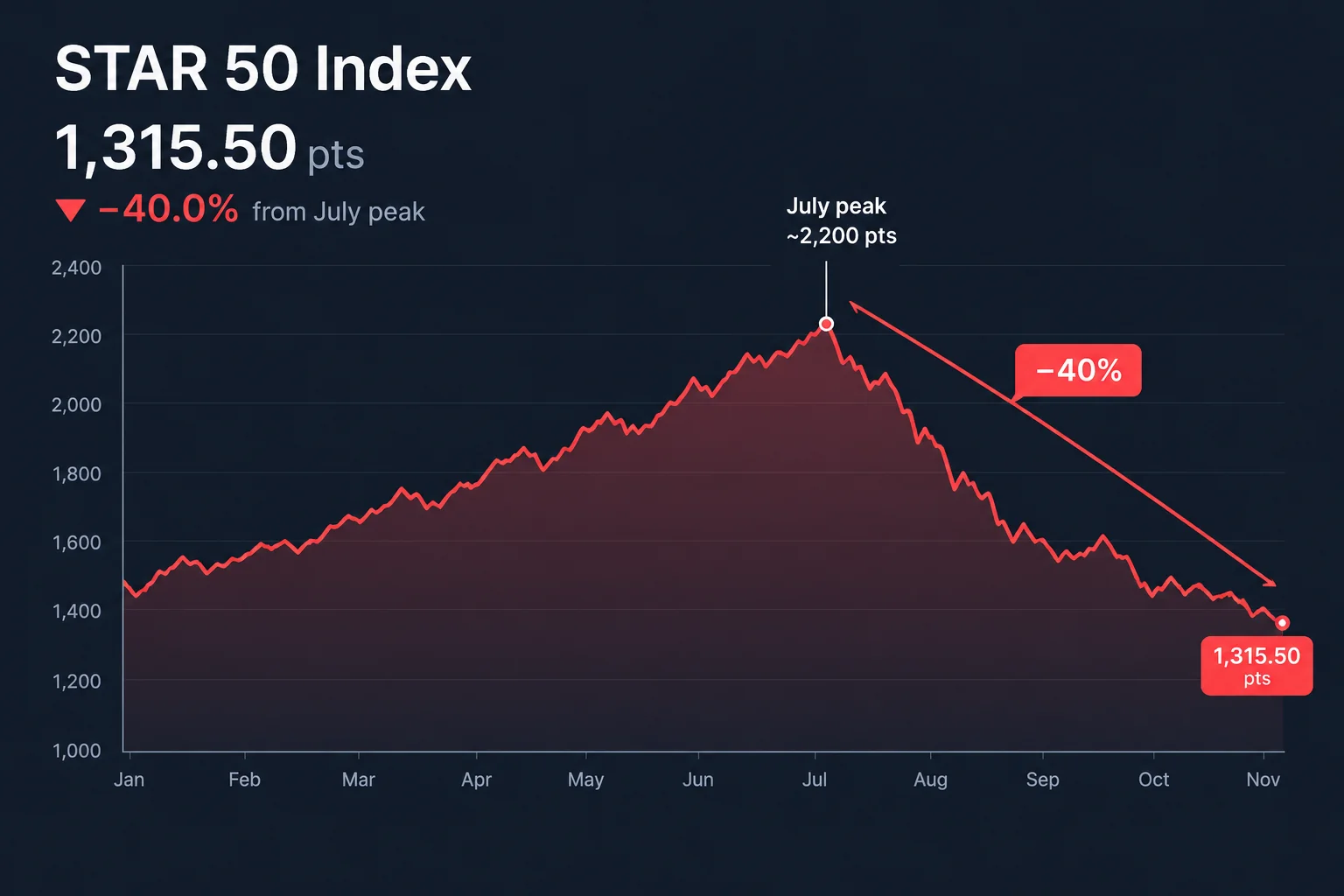
China's AI and semiconductor stocks have suffered one of the sharpest drawdowns in the global AI trade so far. The STAR 50 index, which tracks leading AI and chip companies on Shanghai's technology board, has fallen nearly 40% from its July peak. That wiped out roughly $480 billion in market value in less than four months, according to Reuters reporting. The index closed at 1,315.50 points on Monday, October 26.
A note on the numbers: a figure of ¥1.3 trillion erased in a single session has spread widely on social media, with some posts citing ¥1.43 trillion. ROBOTICO could not confirm either figure in the primary reporting reviewed. Reuters and the outlets that follow it put the verified loss at about $480 billion in market value, measured from the July high. Other viral claims attached to the story, such as reports of large-scale liquidations of U.S. Treasuries by Chinese institutions, are not supported by any reporting we found.
What the STAR 50 Tracks and Why It Matters
The STAR 50 is made up of the largest companies on Shanghai's STAR Market, a board focused on technology. Its weightings lean heavily toward AI and semiconductor names. Among the sector's biggest decliners, domestic AI chip developers, often described as China's answer to Nvidia, have roughly halved since July. Robot maker Unitree's share offering was oversubscribed about 8,000 times by retail investors, and its stock has since fallen by about half. Chinese AI model developer Z.AI is reported to be down about 81% from its June high.
The sell-off has not stayed inside the technology board. The broader CSI 300 index has lost about 20% from its June peak, which puts it in bear-market territory. One market tally cited by BigGo Finance puts the total decline in Chinese equity value since the May peak at about $3.5 trillion.
The Numbers Behind the Rout
- Valuations: The STAR 50's price-to-earnings ratio once stood at about 250. Even after the drop, it is still around 100.
- Concentration: Goldman Sachs estimates that AI-related stocks make up about 42% of the combined market capitalization of China's onshore A-shares and Hong Kong H-shares. They account for roughly 57% of trading turnover.
- Retail exposure: Because of that concentration, losses have reached small investors who piled into the theme.
- Comparison with the U.S.: The Nasdaq is down about 6% from a record high set roughly three weeks before the Reuters report. That is a far shallower pullback.
What Triggered the Sell-Off
Analysts point to several overlapping pressures rather than a single event:
- Stretched valuations. A rally that ran further than those in Western or other Asian markets left little room for disappointment.
- Worries about AI demand. Investors have grown more cautious about how much AI spending will translate into earnings.
- Export curbs and trade risk. Reports cite restrictions on Chinese exports, tax concerns, and the possibility of U.S. bans on Chinese equipment in data centers.
- A global hardware sell-off. Bloomberg Intelligence analysts say the worldwide selloff in AI hardware hit China's A-shares hardest. Foreign investors had piled into the sector in the second quarter.
Warning signs had appeared earlier. In June, Chinese hedge fund manager Wealspring Asset described AI as a "super bubble" and cautioned that the hottest Chinese AI infrastructure stocks could fall more than 80%. It compared the buying to China's 2015 retail-driven frenzy.
Outlook: What to Watch Over the Next 12 to 24 Months
The immediate concern is financing. Reuters notes that the slump could hamper tech fundraising and new listings, and could weaken Beijing's efforts to steer household savings into equities to fund the AI build-out. Some analysts also warn that falling share prices could spill over into consumer spending.
Morgan Stanley expects offshore-listed Chinese stocks to fall a further 10% to 15% before they bottom, according to reporting on the rout. The next test for global sentiment comes this week, with earnings due from Microsoft, Alphabet and Amazon. Whether the correction stays a Chinese phenomenon will depend on how U.S. AI spending and valuations hold up.
Longer term, Chinese AI companies still face the same structural questions as their global peers: whether demand justifies the capital being spent, and how export controls affect access to chips and data-center equipment.
Sources: Trending Topics, Technology.org, Global Banking & Finance (Reuters analysis), Digit, BigGo Finance.