


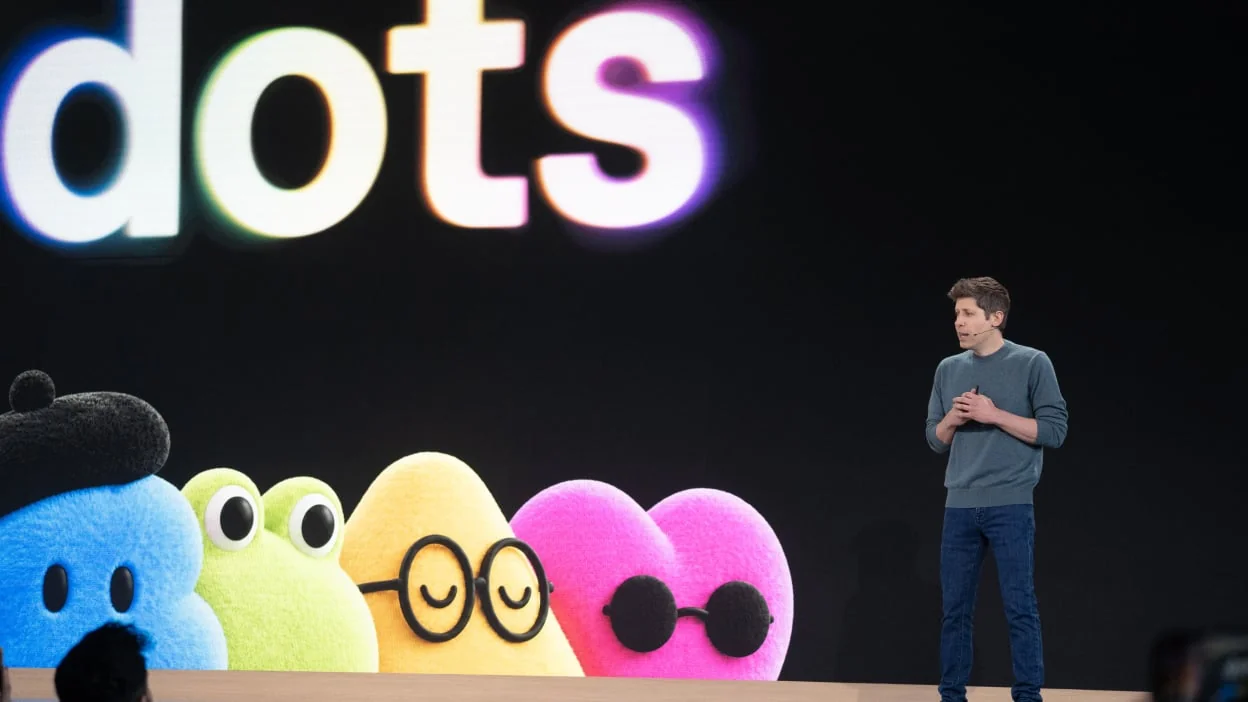
OpenAI is expanding its push into autonomous AI with Dots, a new generation of personal agents designed to work continuously on user-defined goals rather than simply respond to individual prompts. Announced on September 29, 2026, the service combines the company's GPT-6 Astra model with a cloud-based computer, connected applications and a system that adapts to user feedback over time.
The product marks a shift in how OpenAI wants people to use artificial intelligence. Instead of opening a chatbot every time a task needs attention, users can assign an objective to a persistent agent that continues working between conversations, conducts research and prepares deliverables. OpenAI is initially rolling out Dots to eligible ChatGPT Pro and Business Premium subscribers, while Enterprise customers, including education and healthcare workspaces, can access a beta when their administrators enable it.
The distinction matters because the AI industry is increasingly moving from systems that generate answers to agents that take action. Dots is designed to bridge that gap by coordinating tasks across applications, maintaining project context and bringing completed work back to the user for review.
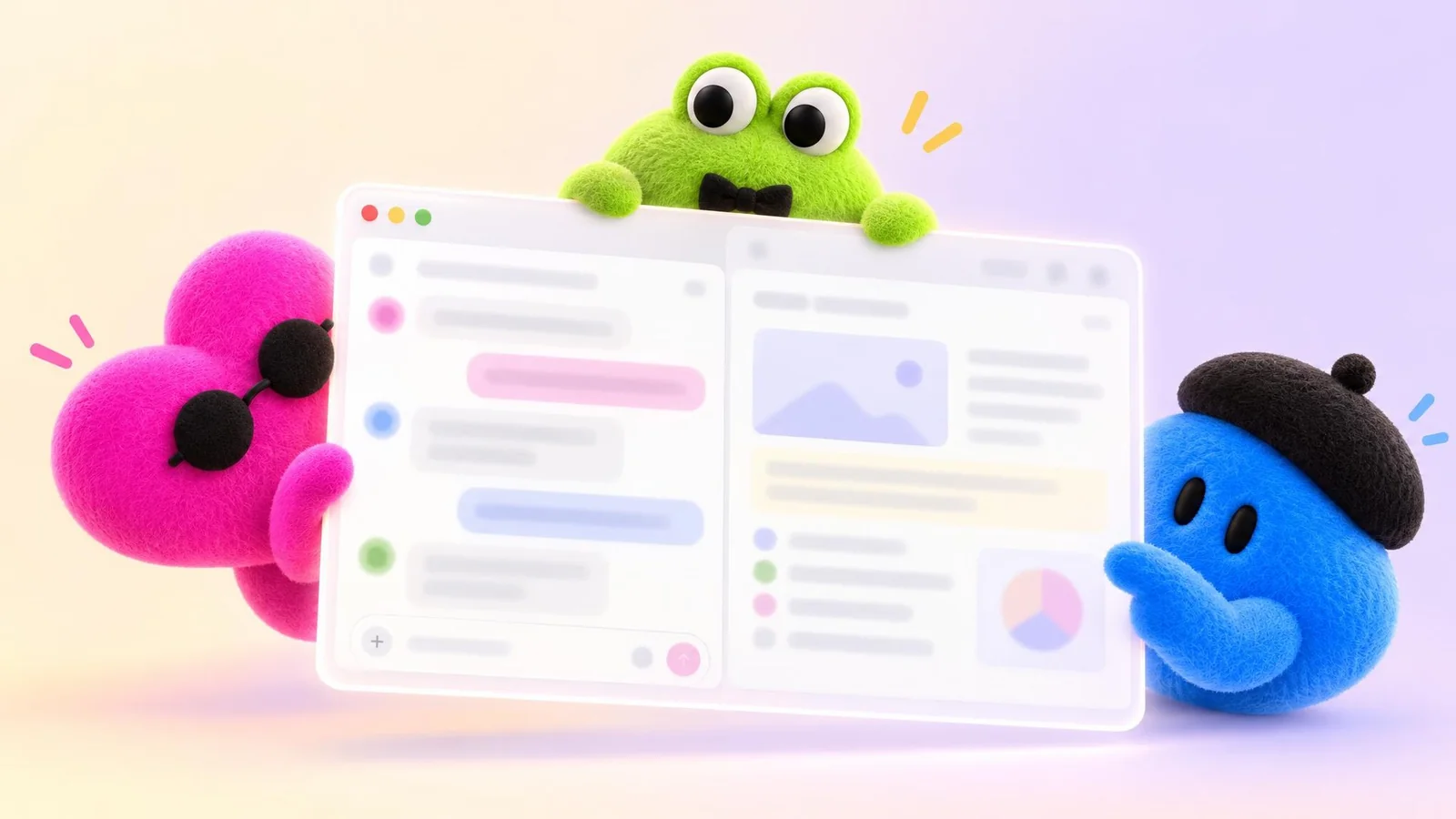
What Is OpenAI Dots?
Dots is OpenAI's persistent AI agent platform, built to handle work that may require multiple steps, different applications and repeated follow-up. A user can establish a goal, provide relevant context and allow the agent to make progress over time instead of managing every step manually.
OpenAI describes Dots as an always-on assistant that can learn from feedback and work toward goals around the clock. Users can give their agent a name, communicate with it through supported interfaces and refine its output as projects evolve.
Potential applications include preparing presentations, tracking developments in a research project, transforming interview transcripts into content, investigating software bugs and helping developers implement and test application changes. These are examples of intended workflows, not evidence that every task can be completed reliably without human involvement.
The company has also described an early real-world example in which a tester's Dot identified an overlooked invoice, prepared it and sent it after receiving the user's approval. The example illustrates the intended workflow: the agent handles the preparation while the human retains control over an important action.
Technical Architecture: GPT-6 Astra and a Cloud-Based Computer
At the center of Dots is GPT-6 Astra, the model OpenAI identifies as the system's underlying intelligence. The product combines that model with a cloud-based computing environment and access to connected tools, allowing the agent to work through tasks that extend beyond a single text exchange.
Persistent execution and computer access
Traditional chatbot interactions generally begin with a user request and end with a response. Dots is designed for longer-running workflows, allowing it to continue pursuing an objective between conversations. Its cloud computer gives the agent an environment in which it can use digital tools and carry out supported operations.
This architecture is important for tasks that involve several dependent steps. For example, preparing a market research presentation may require gathering information, comparing sources, organizing findings and producing a document. An agent can coordinate those activities as a connected workflow rather than treating each request as an isolated exchange.
OpenAI has not publicly provided a complete technical specification covering the cloud computer's hardware, processor configuration, memory allocation, energy consumption or per-task infrastructure costs. Those details should therefore not be treated as established product specifications.
Connections to more than 4,000 applications
OpenAI says its plugin ecosystem gives Dots access to more than 4,000 applications. The company also identifies ChatGPT, Slack and Microsoft Teams as ways users can interact with their agents, making the system relevant to workflows that span communication and productivity software.
However, the number of applications in the broader ecosystem does not mean that every integration supports every action. Available functions depend on the particular connector, permissions, service restrictions and the account involved. Some operations may require additional authentication or explicit approval.
The ability to move between tools is one of the product's defining features. Rather than keeping research, communication and task execution inside one interface, Dots aims to coordinate work across the digital services people already use.
Learning from feedback
OpenAI says Dots can learn user preferences over time through feedback. In practical terms, this is intended to help the agent adapt to a person's preferred working style, formatting choices and expectations for completed work.
This should not automatically be interpreted as the underlying GPT model retraining itself on every interaction. The public product description does not establish that individual user feedback directly updates the model's core parameters. The more defensible interpretation is that Dots uses accumulated context and feedback to improve how it approaches ongoing tasks.
Real-World Applications and Measurable Impact
OpenAI's initial examples focus on knowledge work, where digital tasks can often be divided into research, drafting, coordination and review. The company has described internal scenarios involving software debugging, turning designs into working applications and keeping planning activities aligned with deadlines.
These examples demonstrate the intended scope of the system, but the company has not published a comprehensive independent benchmark establishing how much time Dots saves across different occupations or how frequently it completes complex projects without intervention.
Where Dots could make a difference
- Research and analysis: Gathering information, following developments and organizing findings into a report or presentation.
- Software development: Investigating bugs, preparing code changes and testing implementations for developer review.
- Content production: Converting transcripts and source materials into drafts, summaries and social media content.
- Project coordination: Tracking outstanding work, identifying potential delays and helping teams maintain progress toward deadlines.
- Administrative tasks: Preparing documents, invoices and other routine deliverables, with approval where necessary.
The most significant potential benefit is continuity. A conventional assistant may require users to reconstruct the context of a project each time they return. A persistent agent is intended to retain relevant working context and continue moving toward a defined outcome.
That advantage still needs to be measured against the cost of reviewing results, correcting mistakes and handling tasks that cannot be completed because of missing information or restricted access. Automation is most useful when it reduces the total amount of work, not merely when it transfers work from one stage to another.
What the available data actually shows
OpenAI has confirmed several product-level figures and rollout details, but it has not released enough public performance data to calculate Dots' overall productivity impact.
- Application ecosystem: OpenAI says Dots can connect through its plugin ecosystem to more than 4,000 applications.
- Availability: The rollout began on September 29, 2026, with access for eligible Pro and Business Premium users and an administrator-enabled beta for Enterprise workspaces.
- Initial allocation: The first Dot is included in eligible Pro and Business Premium subscriptions at no additional charge.
- Operating model: The agent is designed to remain available around the clock and continue working toward assigned goals.
- Independent performance evidence: A comprehensive public dataset covering task completion rates, error frequency, average time saved and operating costs has not been established by the product announcement.
These figures describe the product's stated capabilities and access model rather than independently verified productivity gains. The practical impact will depend on the complexity of assigned work, the quality of connected data and the degree of human supervision required.
Pricing, Access and Availability
Dots is being introduced through selected ChatGPT subscription plans rather than as a universally available standalone service. OpenAI says the first agent is included in eligible Pro and Business Premium plans, with an allowance for more substantial work and temporarily expanded limits during the first month after launch.
Enterprise customers, including education and healthcare organizations, can access the beta when their workspace administrator enables it. Access is being rolled out gradually, so eligibility does not necessarily mean that every account receives the feature immediately.
There are also regional differences. According to OpenAI's Help Center, Pro access excludes the European Economic Area, Switzerland and the United Kingdom during the initial rollout, while Business Premium is available across supported ChatGPT regions. Organizations considering the product should verify the current eligibility rules for their account and location.
OpenAI says conversations with Dots do not count toward standard ChatGPT usage limits. However, tasks started or managed through Codex or ChatGPT Work remain subject to the relevant usage allowances. This distinction matters for users planning to delegate extensive coding, research or other resource-intensive work.
The company has indicated that users may eventually be able to add more agents and increase the amount or speed of work each agent performs. Those plans point toward a more scalable model, although future pricing and capacity options should not be confused with features already available.
Competition: OpenAI Dots and the Rise of Personal AI Agents
Dots enters a market in which technology companies are competing to make AI useful beyond conventional chat interfaces. Meta's Muse is another emerging personal agent, while coding assistants and workplace automation platforms are increasingly capable of executing multi-step tasks.
OpenAI's approach emphasizes a persistent assistant that can connect to multiple applications and pursue a user's objectives over time. This differs from tools primarily designed to answer questions or operate within a single software development environment.
The wider industry is also moving toward specialized agents. OpenAI has outlined plans for agents with distinct identities and more narrowly defined responsibilities, including access management, company-provisioned hardware and deeper integration with organizational systems of record.
For businesses, specialized agents could offer a clearer way to assign responsibilities and restrict access than a single general-purpose assistant. An agent tasked with preparing internal reports, for example, may not need permission to modify financial records or send external communications.
OpenAI has also described work with Microsoft on integrating specialized Dots agents with enterprise oversight and security controls through Agent 365. The practical value of such integrations will depend on the depth of the implementation and the controls organizations can enforce.
Security, Privacy and Reliability Challenges
Giving an AI agent access to applications creates a different risk profile from asking a chatbot to explain a topic. An agent may encounter confidential documents, internal messages, customer information or systems capable of making changes outside the conversation.
The more actions an agent can perform, the more important it becomes to distinguish between reading information, preparing a proposed action and executing that action. A mistaken summary can be corrected relatively easily. An incorrectly sent message, altered record or unauthorized transaction may be much harder to reverse.
Permission management and human approval
OpenAI says Dots supports controls that allow users to determine which actions require approval. Such controls are important for limiting the consequences of errors, particularly when an agent is working in the background or handling tasks over an extended period.
Organizations should evaluate whether permissions can be restricted to specific applications, records and operations. They should also establish clear review procedures for actions involving sensitive information, external communications, financial commitments or changes to production systems.
Approval prompts alone are not a complete security strategy. Businesses also need to consider authentication, audit trails, data retention, access revocation and how the system behaves when it encounters ambiguous instructions or malicious content embedded in a document or website.
Privacy and data governance
Connecting an agent to personal or corporate accounts can expose more information than a conventional standalone chatbot interaction. Before enabling integrations, users should understand what data the agent can access, which services receive information and how permissions can be reviewed or revoked.
OpenAI has stated that business data is not used to train its models without consent. Companies should nevertheless review the applicable contractual terms, workspace settings and data-handling documentation before deploying Dots in environments containing confidential or regulated information.
Persistent context also creates governance questions. An agent that remembers preferences or project details may be more useful, but users need to understand how that context is stored, corrected and deleted, particularly when an employee changes roles or leaves an organization.
Reliability and access restrictions
AI agents can misunderstand instructions, overlook relevant information or produce outputs that appear complete despite containing errors. Their performance also depends on the services they use. Third-party websites may block automated activity, impose rate limits or require additional verification.
These restrictions can interrupt otherwise well-planned workflows. A system may be able to research a product or prepare a purchase recommendation without being able to complete the transaction. Similarly, a development agent may draft a change but still require a human to validate the result before deployment.
For this reason, successful task execution should be measured by the quality and correctness of the final outcome, not simply by whether the agent reports that it has completed its work.
What to Watch Over the Next 12 to 24 Months
The next phase of development will help determine whether persistent agents become dependable workplace infrastructure or remain useful but limited assistants requiring frequent supervision.
- Independent benchmarks: Public evaluations of task success, error rates, time savings and total operating costs would help organizations compare Dots with competing tools.
- Enterprise controls: Deeper integration with identity systems, audit logs and administrative policies will be important for organizations deploying agents at scale.
- Broader availability: Expansion into additional regions and subscription tiers will determine how widely individuals and smaller organizations can access the technology.
- Multi-agent coordination: OpenAI's longer-term vision includes teams of specialized Dots. Coordinating their work without duplicated effort or conflicting actions will be a significant engineering challenge.
- Third-party compatibility: The usefulness of application integrations will depend on reliable access, stable interfaces and cooperation from external service providers.
- Clear accountability: Companies will need practical rules defining who is responsible when an agent makes a mistake or takes an action that produces an unintended result.
OpenAI has not published a complete roadmap with guaranteed delivery dates for these developments. Their timing and eventual implementation remain uncertain.
The Bottom Line
OpenAI Dots represents a broader change in the role of AI software. Instead of limiting the interaction to a prompt and a response, the product is designed to give an agent an objective, access to digital tools and enough continuity to make progress over time.
Its combination of GPT-6 Astra, a cloud-based computer, application integrations and feedback-driven personalization could make it useful for research, administration, software development and project coordination. The initial subscription model also gives eligible customers a way to experiment without paying an additional fee for their first agent.
However, product capabilities and demonstrated business value are not the same thing. The lack of comprehensive public benchmarks makes it difficult to quantify productivity gains, while security, reliability, third-party access and data governance remain important constraints.
For now, the strongest use case is delegating clearly defined digital work that can be checked before consequential actions are taken. Whether Dots can reliably manage more complex responsibilities with less supervision will depend on its real-world performance, the maturity of its integrations and the controls available to users and organizations.
Sources: OpenAI's official product announcement and Help Center documentation, alongside reporting from Reuters and TechCrunch.
OpenAI Help Center: Getting started with your dot
Reuters: OpenAI takes on Meta with its always-on Dots agent
TechCrunch: OpenAI launches Dots
```


