


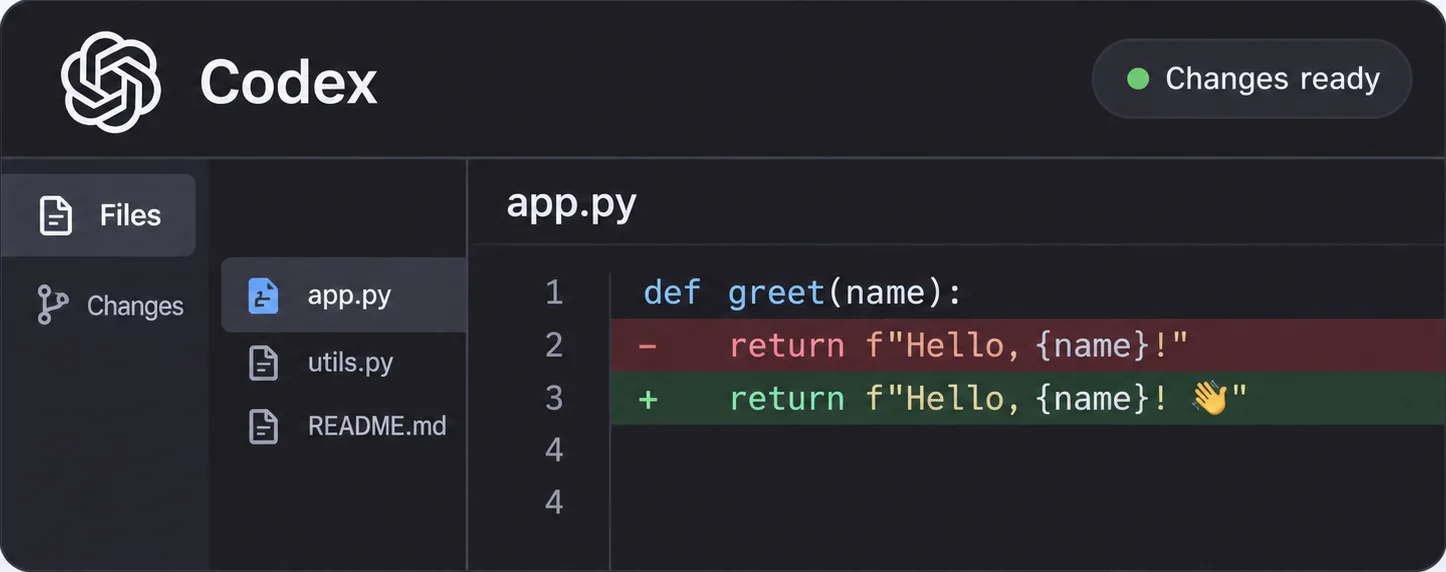
OpenAI is taking another step toward turning Codex into something much bigger than an AI coding assistant. On November 4, 2026, the company announced plans to acquire Pierre Computer Company, the developer behind Code Storage and several open-source tools already integrated into the Codex application. The acquisition is intended to expand Codex beyond writing and editing software toward the infrastructure developers need to manage, review and deliver code.
The announcement is significant because the next stage of AI-assisted software development is increasingly about coordinating entire development workflows rather than simply generating lines of code. As AI agents take on more programming tasks, they also need reliable systems for creating branches, storing changes, tracking project history and collaborating with human developers.
OpenAI wants Codex to become a central environment for that process. Instead of relying exclusively on external development infrastructure, the company is positioning itself to provide more of the tools connecting an AI-generated change with the finished software product.
According to OpenAI's official acquisition announcement, the transaction remains subject to customary closing conditions, including regulatory approvals. The two companies will remain independent until the deal closes.
What OpenAI is acquiring
Pierre Computer is a developer-tools company focused on infrastructure for software development and machine-driven workflows. Its portfolio includes Code Storage, a service built around Git, alongside a collection of open-source developer libraries.
Some of Pierre's technology is already present in Codex. OpenAI specifically identifies two libraries, Trees and Diffs, as components developers encounter when browsing project files and reviewing code changes inside the application.
The acquisition therefore builds on existing technical integration rather than introducing an entirely unrelated product into OpenAI's ecosystem.
Trees: Making large codebases easier to navigate
Trees is a library designed to help applications display and navigate project file structures. Software projects can contain extensive directory hierarchies, making it increasingly important for developers and AI agents to locate relevant files quickly.
Within Codex, the technology supports file browsing. It provides part of the interface through which developers explore a project and understand its structure before or while making changes.
Diffs: Reviewing what an AI agent has changed
Diffs addresses another essential part of software development: understanding the differences between versions of a file.
When an AI agent modifies a project, developers need to see precisely which lines have been added, removed or changed. Diffs provides the underlying functionality for presenting those modifications in a readable format.
Its Edit mode also allows reviewers to correct a line directly within the diff interface, reducing the need to move between separate editing and review environments.
Highlights: Faster syntax highlighting
Pierre has also developed Highlights, a syntax-highlighting tool designed to update quickly as developers type or AI agents stream generated code into an interface.
Syntax highlighting identifies different elements of programming languages, such as keywords, variables and strings, using visual formatting. Responsiveness becomes particularly important when large amounts of code are generated and displayed continuously.
Code Storage: The strategically important component
Code Storage could have the biggest implications for Codex's future.
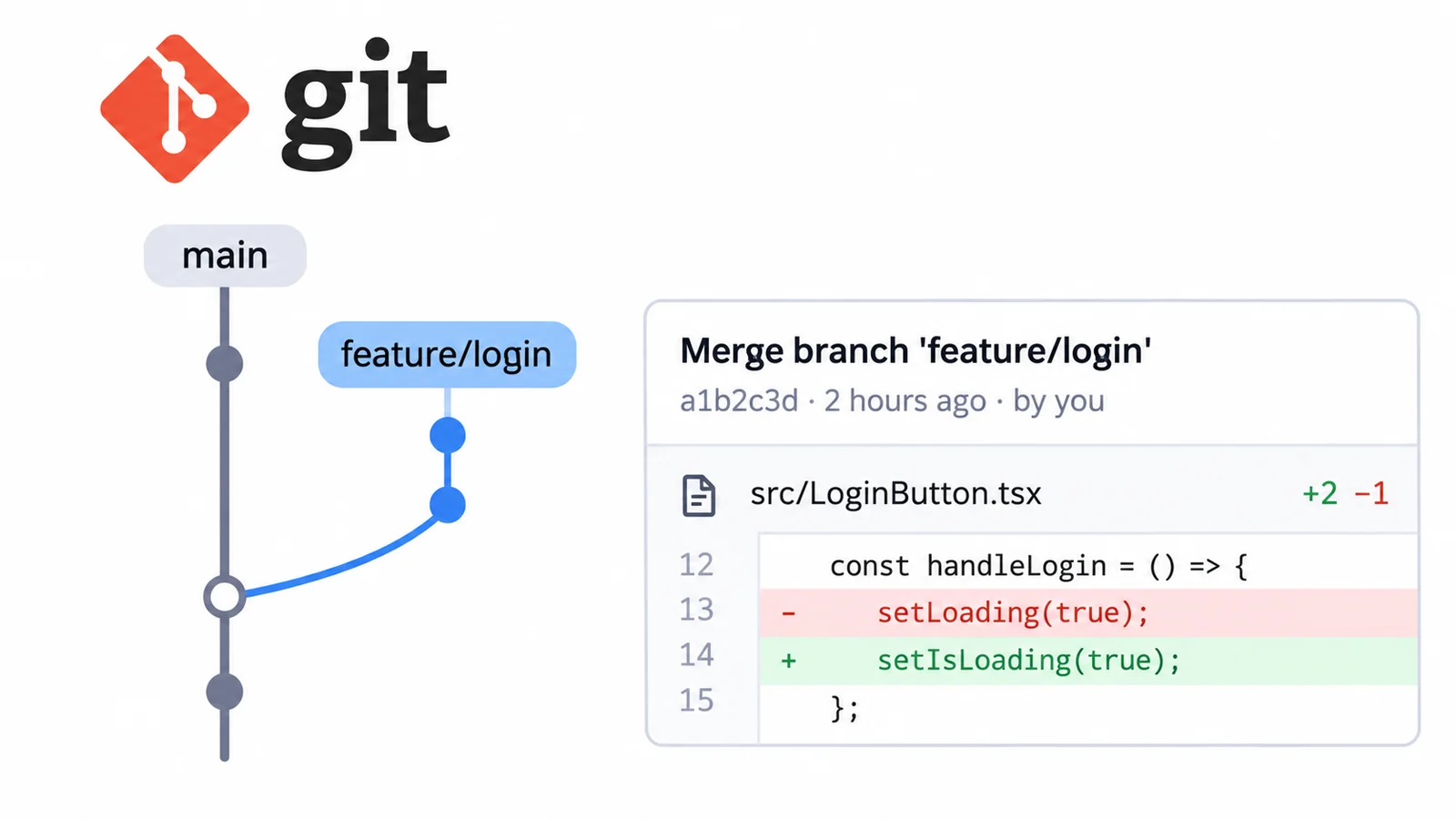
The service allows applications to store code and maintain its history using Git, the widely adopted version-control system used to track changes in software projects.
Git is traditionally associated with human developers creating branches, committing changes and merging contributions. However, AI coding agents introduce a different operating pattern. Multiple agents can work on different tasks simultaneously, creating a growing number of branches, modifications and intermediate project states.
Infrastructure designed around these workflows needs to support automated operations without sacrificing the ability of human developers to inspect and control what happens.
By bringing Pierre's Code Storage capabilities into its ecosystem, OpenAI is seeking to strengthen the infrastructure layer behind AI-assisted development.
Why Codex could become more than a coding assistant
Until now, AI coding products have largely competed on their ability to understand programming instructions, generate code, identify errors and modify existing applications.
But generating code is only one part of building software. A completed project also requires version control, collaboration, testing, review, deployment and long-term maintenance.
OpenAI's announcement suggests that it wants Codex to cover a much larger portion of this process.
The company's stated ambition is to connect the code an organisation ships with the decisions made by its people. In practical terms, that could mean a development environment in which AI agents and human engineers share access to project history, code changes and review workflows.
Such a platform could eventually support a process in which an agent:
- Creates a new development branch for a requested feature.
- Explores the existing project structure and identifies relevant files.
- Writes or modifies code across multiple files.
- Stores changes and maintains their version history.
- Prepares a reviewable diff for a human developer.
- Responds to feedback and makes additional corrections.
- Helps move approved changes toward deployment.
These steps describe the broader workflow OpenAI is working toward, not a claim that every stage is already available as a unified Codex feature.
The distinction matters. An AI system that can generate a working function is useful. An AI development platform that can coordinate changes across an entire software project, maintain its history and support controlled delivery would occupy a considerably broader role in the technology stack.
Technical architecture: Git infrastructure meets AI agents
The acquisition brings together several complementary layers of software development infrastructure.
At the interface level, Trees provides project navigation, Diffs supports change inspection and editing, while Highlights handles syntax presentation. Code Storage operates at a deeper infrastructure level, providing applications with a way to store code and track its history through Git.
Git is particularly important because it allows developers to maintain different versions of a project without treating every modification as an isolated file replacement. Branches make it possible to develop multiple changes independently before combining them.
For AI agents, this capability is especially relevant. Multiple agents can potentially work on separate tasks within the same broader project, while version control provides a mechanism for tracking and reviewing their contributions.
However, supporting this model at scale requires more than a conventional code editor. Storage, concurrency, synchronization, repository management and access controls all become important parts of the architecture.
OpenAI has not published a complete technical specification for a future Codex platform incorporating Pierre's Code Storage. Details such as its underlying storage architecture, capacity limits and performance guarantees should therefore not be assumed.
Pando: OpenAI is already rebuilding its Git infrastructure
The Pierre acquisition also needs to be understood alongside another development announced by OpenAI earlier in the week: Pando, the company's in-house source-control backend.
OpenAI developed Pando to address the demands created by its increasingly agent-driven engineering workflows. As engineers and coding agents work on more changes in parallel, conventional approaches to managing a large shared Git environment can become a bottleneck.
Pando is designed to improve how OpenAI manages its internal repositories and the operations performed by engineers and agents.
The timing of the two announcements is notable. Pando addresses OpenAI's internal source-control requirements, while Pierre brings additional developer-facing tools and Code Storage capabilities that the company intends to build on within Codex.
They are related developments, but they should not be confused. OpenAI has not announced that Pando and Pierre's Code Storage are the same system or that one will simply replace the other.
Together, however, they demonstrate that OpenAI is treating source control and development infrastructure as important parts of the AI coding ecosystem.
OpenAI provides further technical details in its engineering article, Scaling Git at OpenAI.
Empirical data: What the infrastructure figures show
OpenAI's engineering article provides concrete evidence of the scale of its internal infrastructure challenge. According to the company, Pando handles nearly one petabyte of Git data per day and has reduced median push latency by nearly five times compared with its previous system.
The company also reports that Pando has served more than 57 terabytes of Git pack data in a single hour, with more than 99% of those bytes delivered from local disk cache.
These figures relate to Pando's internal deployment, not Pierre's Code Storage or a new Codex release. They nevertheless illustrate the infrastructure demands OpenAI expects as coding agents become more deeply involved in software engineering.
Real-world adoption: Pierre already serves AI development platforms
Code Storage is not a purely experimental technology. Pierre's official product website identifies several companies using its infrastructure, including Lovable, Poke, Anything, Bolt, Amp and Parahelp.
These companies operate products involving AI-generated software, automated workflows or AI agents. Their use cases demonstrate why conventional source-control infrastructure is becoming increasingly relevant to the development of autonomous software tools.
According to Pierre's published Code Storage product information, the service advertises the following technical capabilities and observed workloads:
- More than 500 Git requests per second observed for a single repository.
- More than 15,000 API requests per second observed.
- More than 30 concurrent writes.
- Repositories of up to 32 TB.
- Git Large File Storage (Git LFS) support.
- Synchronization with GitHub and other third-party services.
- SDK access through TypeScript, Python and Go.
These are figures published by Pierre, rather than independently audited acquisition benchmarks. They describe the existing service and should not be interpreted as guaranteed performance for every customer or as confirmed specifications for future Codex infrastructure.
The company also advertises a 99.99% service-level agreement. Its website describes the product as a programmable storage layer that supports native Git operations, webhooks and integration with automated development systems.
This architecture is relevant because AI applications often need to store more than conventional source-code repositories. Pierre identifies agent memory files, design artifacts, legal documents and other machine-generated resources as additional use cases.
That makes Code Storage potentially useful beyond traditional software development. It could provide a persistent version-controlled environment for applications in which AI agents continuously create, modify and retrieve different types of digital assets.
Additional reporting by SiliconANGLE describes Pierre's existing customer use cases and the potential implications of bringing its code-hosting technology into Codex.
Does this put OpenAI in competition with GitHub?
The acquisition naturally raises questions about OpenAI's ambitions in the developer infrastructure market, particularly in relation to Microsoft-owned GitHub.
GitHub has become one of the central platforms for software development, providing repository hosting, version control, collaboration, code review and integrations with development and deployment tools.
OpenAI is approaching the same general workflow from a different starting point. Codex is an AI-powered development product, and the Pierre acquisition provides an opportunity to expand the infrastructure surrounding the code its agents create.
The strategic overlap is clear, but it would be premature to describe Pierre's acquisition as the launch of a direct GitHub replacement.
OpenAI has not announced that Codex will immediately replace GitHub repositories, pull requests or existing enterprise development systems. Nor has it published a detailed migration strategy for companies currently using third-party source-control platforms.
What the company has confirmed is that it intends to bring Code Storage's functionality into Codex while continuing to support existing customers after the acquisition closes.
There is also an important distinction between providing infrastructure for AI-generated code and operating a complete software collaboration platform. The latter requires mature permission systems, security controls, audit trails, integrations, dependable availability and support for complex enterprise workflows.
GitHub already has an established ecosystem in these areas. OpenAI will need to demonstrate that its expanded Codex environment can meet comparable operational requirements before any meaningful shift in the market can be established.
Axios's reporting on the acquisition also examines the competitive implications for Microsoft's GitHub and OpenAI's broader ambitions in AI-driven software development.
What happens to Pierre's open-source projects?
One important part of the announcement concerns the future of Pierre's developer libraries.
OpenAI says Pierre's open-source projects will remain open source after the acquisition and that it will continue contributing to them.
This is relevant for developers who already rely on Trees, Diffs and other components in their own applications. Maintaining open-source availability would allow the broader developer community to continue using these technologies rather than making them exclusively dependent on Codex.
OpenAI has also stated that existing Code Storage customers can continue using the service after the acquisition closes while the company works to bring its features and functionality into Codex.
However, the announcement does not provide a detailed timetable for product integration, changes to pricing or a long-term service roadmap. Existing customers will need further information before drawing conclusions about how the acquisition will affect their current deployments.
What remains uncertain over the next 12 to 24 months?
The acquisition creates several opportunities, but it also introduces technical and operational challenges that OpenAI will need to address.
1. Integrating storage without disrupting existing workflows
Bringing Code Storage into Codex will require careful integration with existing repositories, development environments and automated pipelines.
Companies depend on predictable version-control behaviour. Changes to authentication, repository access, synchronization or branch management can affect development operations, particularly when multiple automated systems rely on the same infrastructure.
2. Managing multiple AI agents working simultaneously
Parallel execution is one of the main reasons for investing in agent-oriented development infrastructure.
However, multiple agents modifying related parts of a software project can create conflicting changes, duplicated work and complicated merge operations. A scalable storage system does not automatically solve these coordination problems.
Codex will need reliable mechanisms for isolating agent tasks, tracking changes, resolving conflicts and ensuring that developers retain control over what enters production.
3. Security and permissions
Giving AI agents access to source-code repositories introduces additional security requirements.
Organisations will need granular permissions, secure authentication, access logging and controls that prevent an agent from modifying or exposing resources beyond its authorised scope.
These requirements become especially important when agents can operate independently for extended periods or interact with sensitive enterprise repositories.
4. Reliability and infrastructure costs
Large-scale Git infrastructure must handle frequent writes, repository synchronization, file retrieval and simultaneous access without creating bottlenecks.
As more agents work concurrently, the amount of generated code and associated project data can increase substantially. Storage costs, network traffic, compute requirements and operational complexity will all influence whether a unified Codex platform can compete economically with established alternatives.
5. Enterprise adoption and interoperability
Professional development teams rarely operate entirely within one software ecosystem. They use different repository providers, cloud platforms, continuous integration systems and deployment tools.
Codex will therefore need to maintain interoperability with existing infrastructure if OpenAI wants organisations to adopt it without rebuilding their entire development environments.
Compatibility with Git and support for third-party integrations will be important factors in determining how quickly the expanded platform can gain adoption.
What the acquisition actually means for the future of software development
OpenAI's acquisition of Pierre Computer is more significant as an infrastructure move than as a conventional expansion of an AI coding product.
The company is investing in the systems that make it possible for AI agents to participate in the entire software development process, not just generate individual pieces of code.
Codex already uses Pierre's file-navigation and code-review technologies. Adding Code Storage capabilities could give OpenAI a stronger foundation for managing the history and organisation of changes created by both human developers and AI agents.
The Pando project provides another indication of the direction in which the company is moving. OpenAI is adapting source-control infrastructure to accommodate development environments where parallel work by AI agents is becoming increasingly important.
Still, the acquisition does not mean that Codex has already become a complete autonomous software development platform. The integration has yet to be completed, and OpenAI has not announced a delivery schedule for the planned products or platforms.
The financial terms of the acquisition have also not been disclosed.
OpenAI's announcement makes the strategic ambition clear. The company wants Codex to connect the code organisations produce with the decisions and workflows behind it, creating an environment in which human developers and AI agents can work on increasingly ambitious software projects.
Whether that ambition develops into a serious alternative to established developer infrastructure will depend on execution, reliability, security and adoption by real engineering teams.
For now, one thing is clear: the competition in AI-assisted software development is expanding beyond which model writes the best code. Increasingly, the contest is also about who controls the infrastructure on which that code is created, stored, reviewed and delivered.
Sources and further reading
The following primary and independent sources were used to verify the announcement, technical details and industry context:
- OpenAI – OpenAI to acquire Pierre Computer Company, Inc. (November 4, 2026). Primary source for the acquisition, existing Codex integrations, open-source commitments and transaction conditions.
- OpenAI Engineering – Scaling Git at OpenAI (November 2026). Primary source for Pando and the company's internal Git infrastructure performance figures.
- Axios – Exclusive: OpenAI targets Microsoft's GitHub with deal (November 4, 2026). Independent reporting on the acquisition and its competitive implications.
- SiliconANGLE – OpenAI to acquire developer tooling startup Pierre Computer (November 4, 2026). Additional reporting on Pierre's technology, customer applications and Codex integration.
- GitHub – Official website. Background on the established source-control and developer collaboration platform.


