
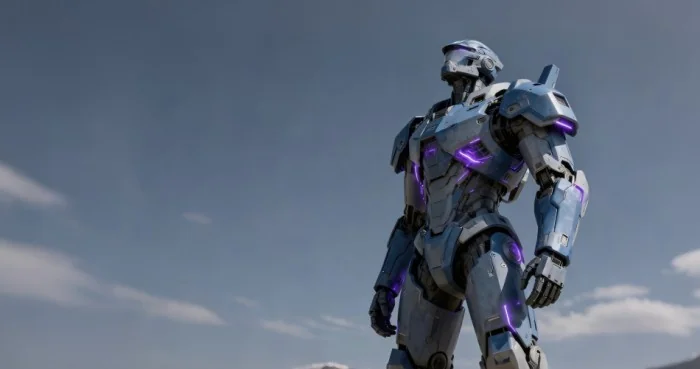
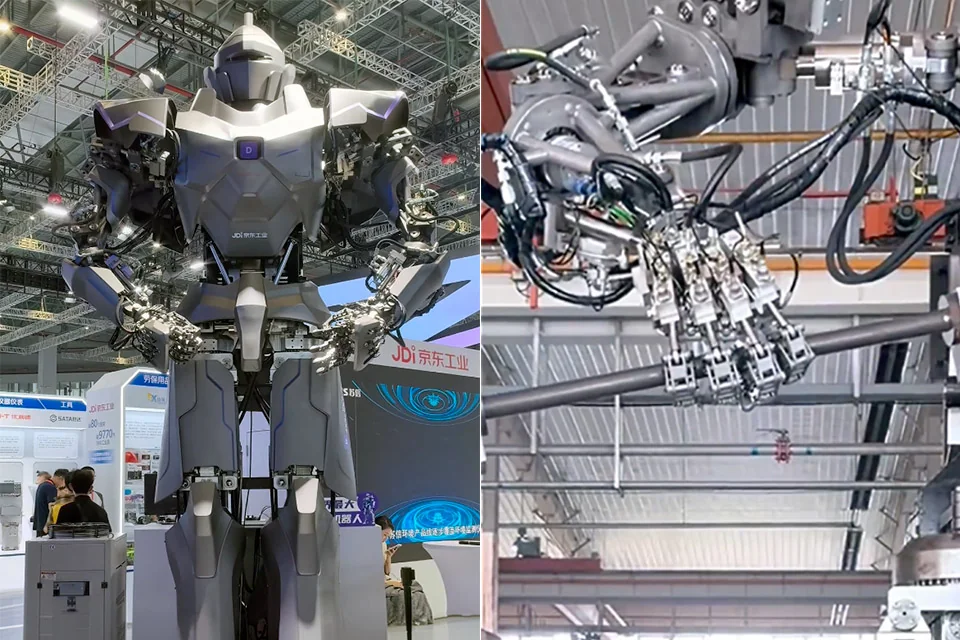
Beijing-based NeodraDynamics Robotics has unveiled Neo1, a humanoid robot about 13 feet (4 meters) tall and weighing around 1.2 metric tons. The company showed it together with JD Industrial, the industrial-supplies arm of JD.com, at the China International Industry Fair (CIIF) in Shanghai, which ran from October 12 to 16. Neo1 had earlier appeared at the World Robot Conference in Beijing.
Most humanoids on the market are built around lightweight electric drives and aimed at labs or service tasks. Neo1 goes the other way. NeodraDynamics says its hydraulic-electric hybrid design is meant for what it calls "4D" work: dangerous, dirty, difficult and dull jobs such as heavy assembly, port handling, mining, rescue and nuclear maintenance.
Technical architecture and specifications
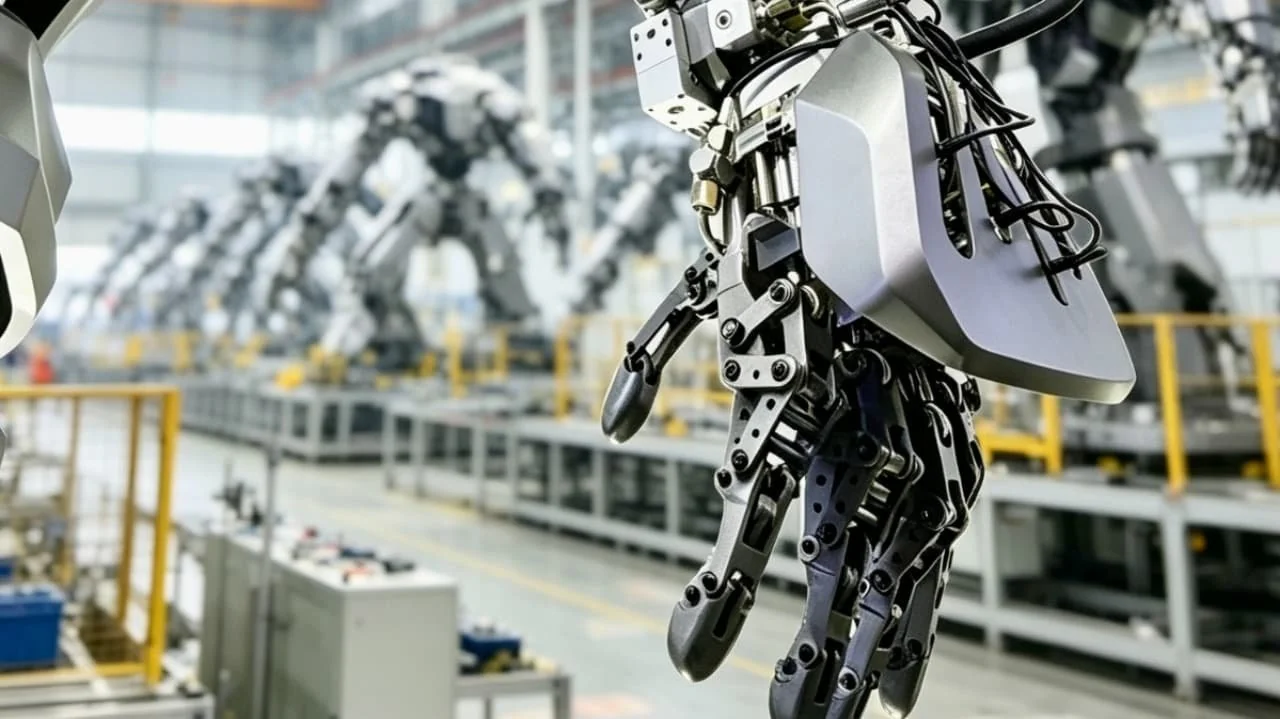
According to the company, Neo1 has 41 active degrees of freedom across the body. Of those, 39 joints are driven by miniature hydraulic linear actuators developed in-house. The remaining two, the forearm rotation joints, are electric. So the machine is not purely hydraulic, even though it is often described that way.
Each actuator weighs about 1 kg and is said to deliver "ton-level" continuous thrust. That figure describes a single component, not a single arm. The stated payload for the whole robot is 500 kg (1,102 lb) with both arms working together. NeodraDynamics describes the actuators as digital hydraulics that push a piston with pressurized oil, similar in principle to an excavator but scaled down to fit a humanoid frame.
- Height: about 4 m (13 ft)
- Weight: about 1.2 metric tons (2,646 lb)
- Joints: 41 active degrees of freedom, 39 hydraulic and 2 electric
- Dual-arm payload: 500 kg (1,102 lb), as stated by the company
Empirical data and real-world impact
All of the headline figures come from NeodraDynamics and have not been independently verified. In its CIIF press release, the company also cites a repeat positioning accuracy in the micrometer range, but outlets have reported that figure inconsistently, so it is not repeated here.
Neo1 has not yet worked a shift on a real site. NeodraDynamics spokesperson Cui Dalong told New Atlas that the robot is controlled remotely by a computer running a preset program and gets its power through a cable. A battery is planned for when the robot moves around, and autonomy depends on an AI "brain" that still needs training.
Walking is also on hold, because the motion control is unfinished. Dalong said that "walking on legs is not the priority for industrial applications." The company does not expect the full humanoid to work on industrial sites, and instead plans to mount its heavy-duty arms on a wheeled base.
Industry context and future outlook
The partnership with JD Industrial is aimed at matching the robot to customer scenarios and running pilot applications. The company has pitched Neo1 for ports, offshore oil and gas rigs, nuclear refueling and power-grid tower construction. No price, delivery date or customer list has been published.
Hydraulics are not the only route to high strength. Boston Dynamics retired its hydraulic Atlas in 2024 in favor of an electric version, and its then-CEO Robert Playter told IEEE Spectrum that the new Atlas was stronger than a person in most joints. Neo1's hybrid approach is therefore one bet among several.
Over the next 12 to 24 months, the open questions are practical ones: battery power and mobility, finished motion control, the AI layer for autonomy, and proof of reliability in field trials. Founder Yang Tao framed the philosophy in the company's release:
Robots should not merely replicate human forms but surpass human physical limits to create unprecedented operational capabilities.
Sources: New Atlas and the NeodraDynamics press release of October 14, 2026, distributed by PR Newswire and republished on Webull.