


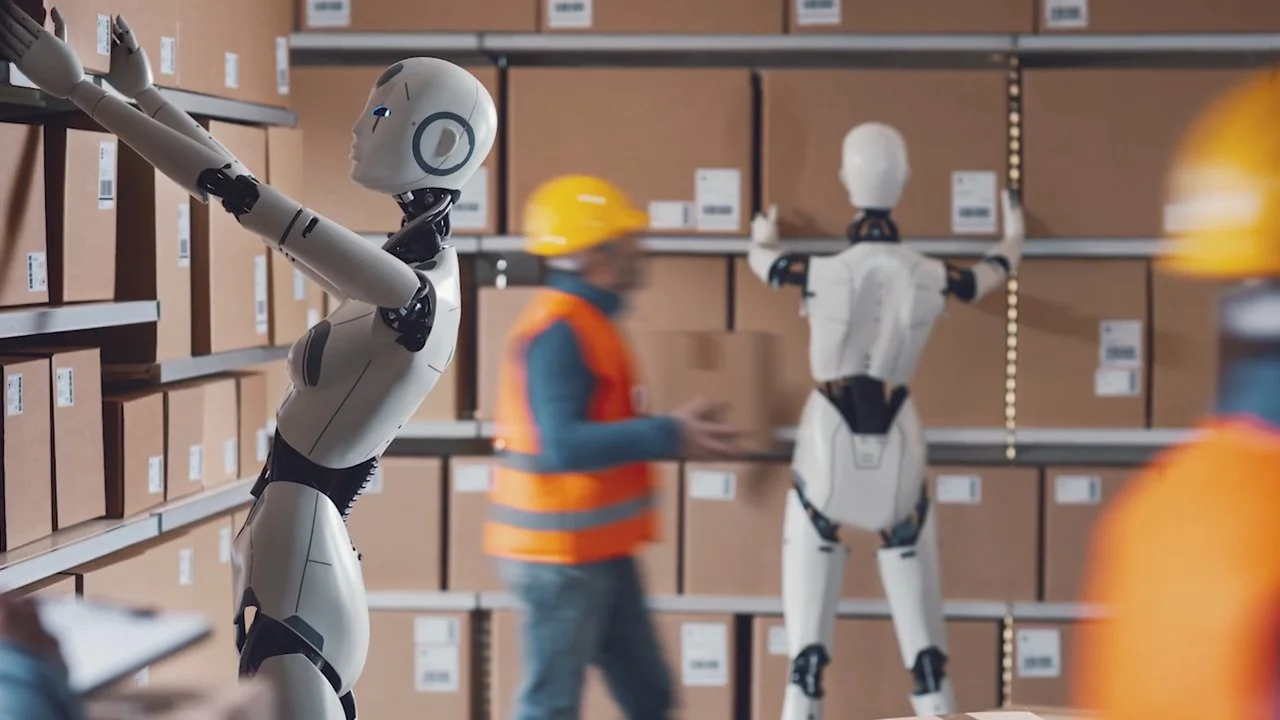
Morgan Stanley Research estimates that the global market for humanoid robots could reach $5 trillion by 2050, including related supply chains and networks for repair, maintenance and support. The firm projects more than 1 billion humanoids in use by that year. The forecast, published in mid-2025, has circulated widely in technology and investment discussions.
Humanoid robots—machines with arms, legs, hands and AI-powered brains—remain in early development stages. Current revenues from public companies and startups working on them are described as very low. The long-term projection implies roughly 1 billion units in service, with the bulk of value coming from labor substitution rather than pure hardware sales alone.
Market Size and Adoption Timeline
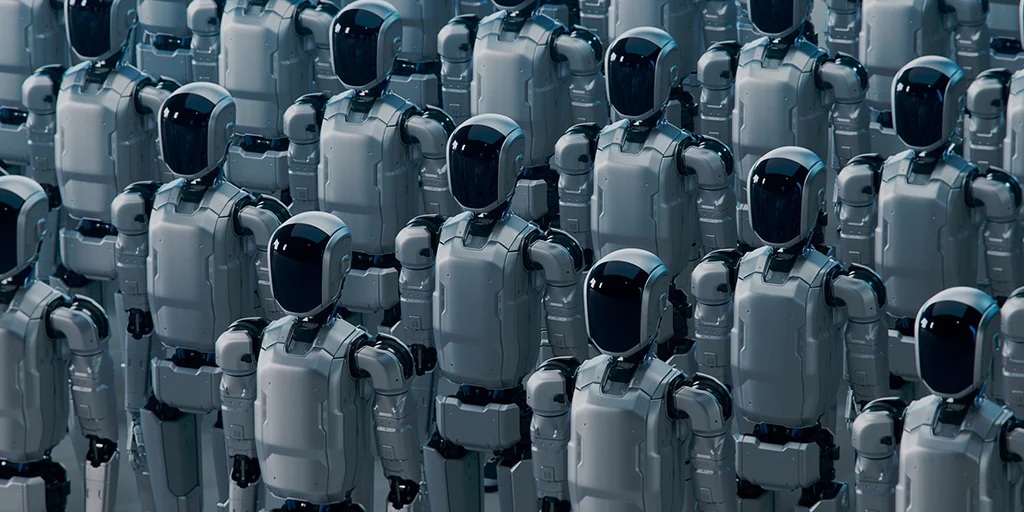
Morgan Stanley’s analysis indicates adoption should remain relatively slow until the mid-2030s, then accelerate in the late 2030s and 2040s as technology improves and regulatory and societal support increases. By 2050, about 90 percent of humanoids—roughly 930 million units—are expected to handle repetitive, simple and structured work, primarily in industrial and commercial settings.
China is projected to lead with approximately 302.3 million humanoids in use, followed by the United States at about 77.7 million. Household use is forecast far more conservatively, with only around 80 million humanoids in homes worldwide by 2050. Creating general-purpose home robots capable of varied tasks will require further progress in both hardware and AI models, along with significant price declines and broader acceptance.
Adoption should be relatively slow until the mid-2030s, accelerating in the late 2030s and 2040s.
The quote comes from Adam Jonas, Morgan Stanley’s Head of Global Autos and Shared Mobility Research.
Cost Trajectory and Technical Requirements
Complexity in software models and tight hardware integration currently keeps humanoids expensive. Morgan Stanley estimates the cost of one unit was around $200,000 in 2024 in high-income countries. Prices are expected to fall to about $150,000 by 2028 and $50,000 by 2050 in those markets. In lower-income countries that can leverage lower-cost supply chains, prices could drop to as low as $15,000 by 2050.
At those levels, U.S. household penetration could range from roughly 3 percent for households earning $50,000 to $75,000 annually to 33 percent for those above $200,000. Overall, about 10 percent of U.S. households might own a humanoid by 2050, totaling around 15 million units. The forecasts assume one unit per household.
China’s Position and Supply Chain
National support for embodied AI appears stronger in China than in other countries at present, according to the research. Sheng Zhong, Morgan Stanley’s Head of Industrials Research, has noted that government backing is driving innovation and capital formation. Chinese component suppliers are working on design, materials, manufacturing processes and AI algorithms to close performance gaps.
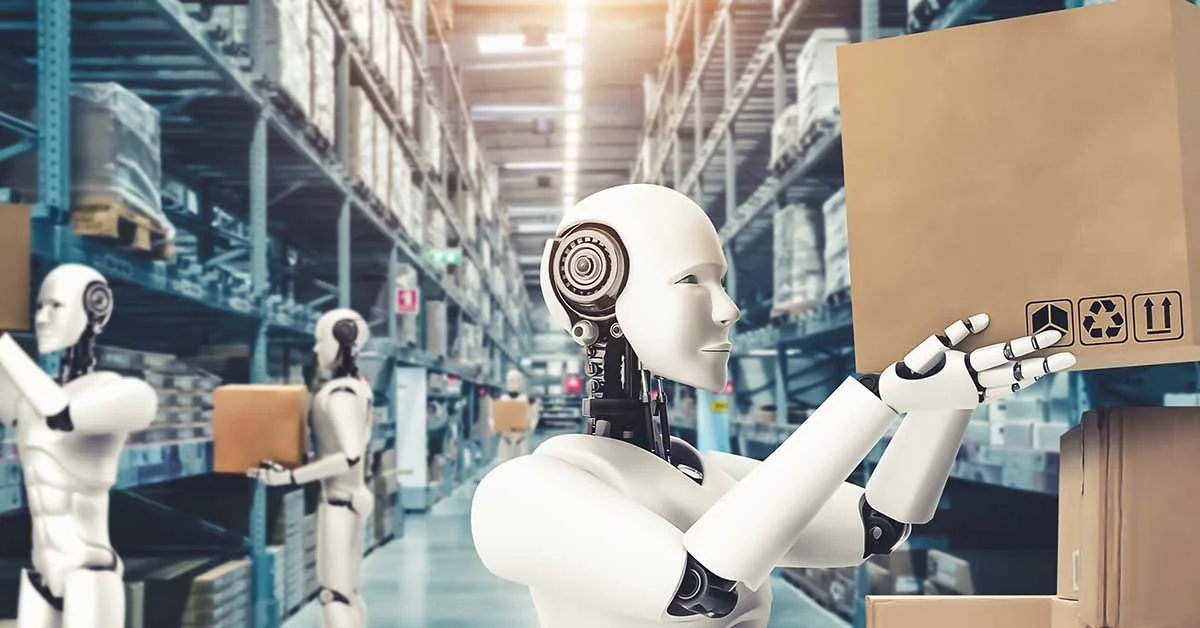
While some U.S. companies lead in early humanoid design, China is positioned to advance in mass production and downstream applications thanks to its manufacturing base. Many critical components—including reducers, motors, batteries and related parts—still come primarily from China and other parts of Asia. Nearly every robot developer relies on these supply chains.
It is becoming apparent that national support for ‘embodied AI’ may be far greater in China than in any other nation, driving continued innovation and capital formation.
That assessment is from Sheng Zhong.
Labor Market Context and Outlook
The research frames the opportunity partly through labor substitution. The global labor market includes roughly 4 billion people at an average of $10,000 per person, representing about $40 trillion. Humanoids could address portions of repetitive industrial and commercial work. Broader robotics forecasts from the same firm point to even larger overall robot hardware markets by 2050 when including multiple form factors, though the $5 trillion figure specifically covers humanoids plus associated services.
Challenges over the next 12 to 24 months include improving reliability for real-world tasks, reducing costs through volume production, securing diverse supply chains and navigating regulatory questions around workplace and eventual home use. Safety, training data for physical AI models and manufacturing scale remain key hurdles. Investor interest has focused on integrators, component suppliers and companies advancing both the “brain” and “body” of these systems.
Public discussion has also highlighted comments from Tesla CEO Elon Musk on the long-term potential of humanoid robots such as Optimus, which he has described as potentially the biggest product of all time. These statements align with broader industry attention on the technology but do not constitute specific investment advice.
Sources: Morgan Stanley Research article on the $5 trillion humanoid market (May 14, 2025) and Morgan Stanley Thoughts on the Market podcast transcript with Adam Jonas and Sheng Zhong (May 15, 2025).


