

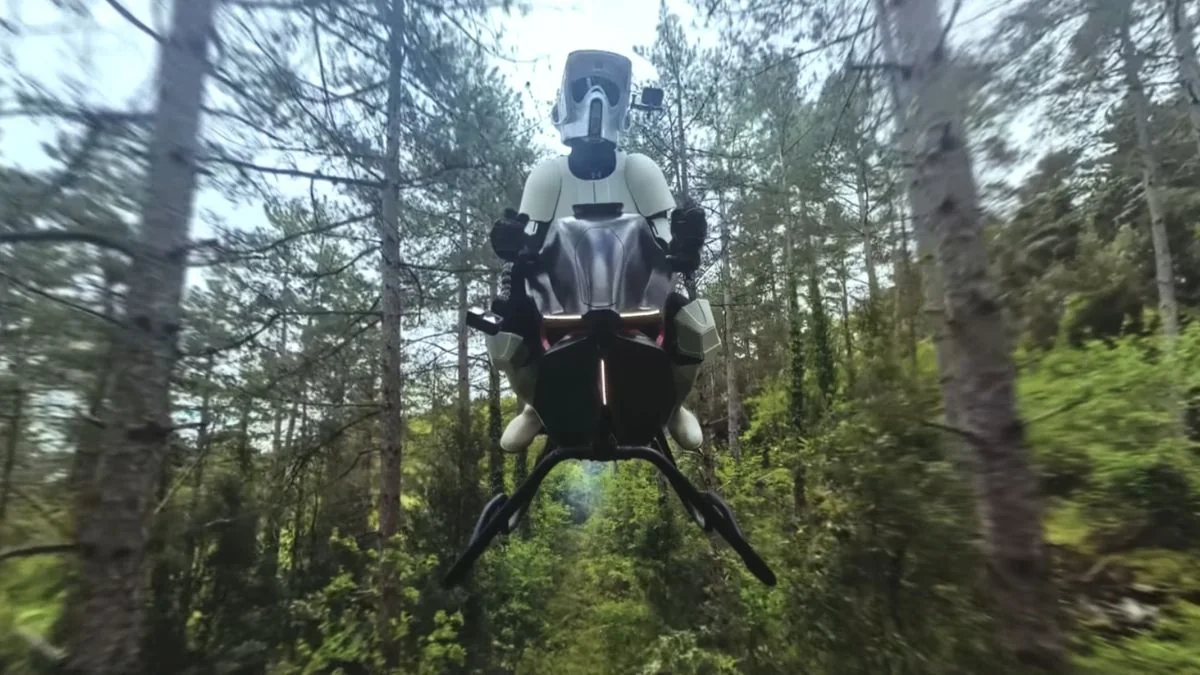
Polish inventor Tomasz Patan and his startup Volonaut have built a single-seat, jet-powered flying bike called the Airbike. Its open frame and forest-skimming demo footage have drawn constant comparisons to the speeder bikes of the Star Wars films. Volonaut unveiled the machine on April 30, 2025, after a long period of development in secrecy. It opened pre-orders on August 1, 2025, and a short clip of the prototype has since gone viral again on social media.
The Airbike matters because it takes a different route from most personal flying machines. Instead of the rotors and propellers used by eVTOL aircraft and drones, it relies on jet propulsion. The company says this gives it greater maneuverability, including in confined spaces. Patan is also known for the electric Jetson One ultralight, which reportedly entered series production in 2025.
Technical Architecture and Specifications
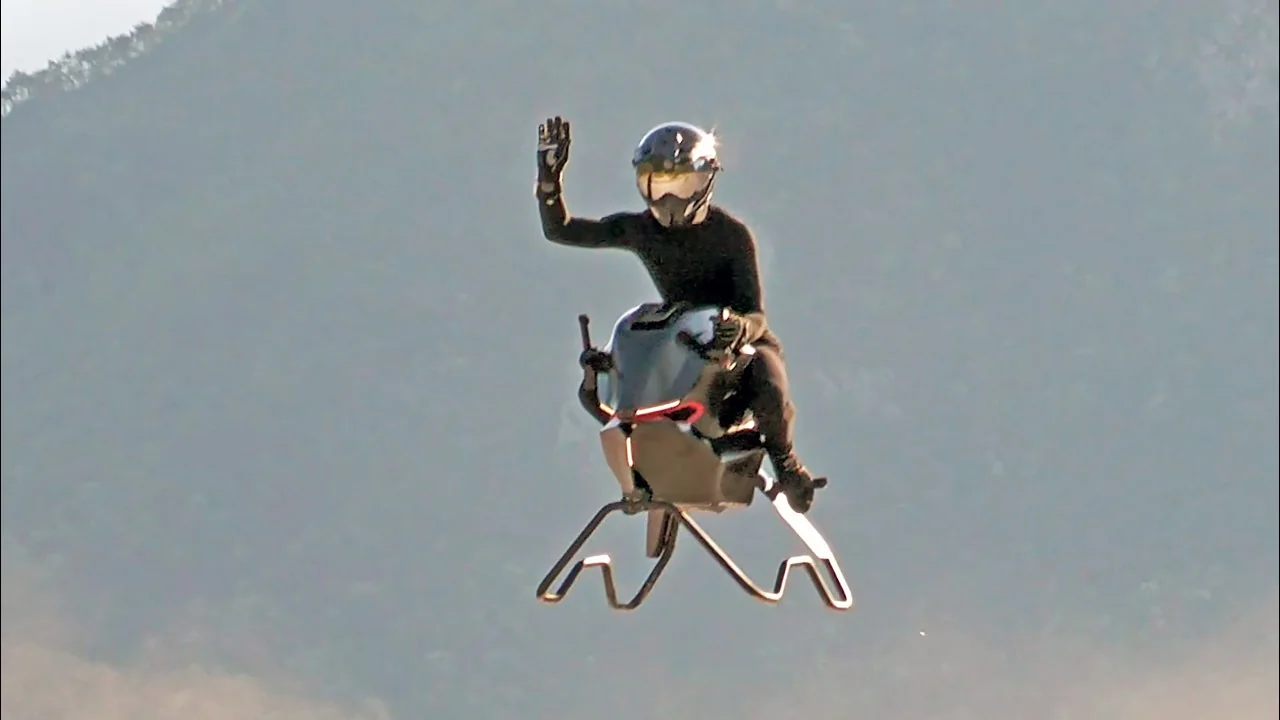
The Airbike is a single-seat machine with a motorcycle-style riding position and handlebars. Reports describe a body built from carbon fiber and 3D-printed parts. Volonaut says it weighs about 30 kg, roughly seven times less than a conventional motorcycle. The open-seat layout has no cockpit shell and gives the rider a 360-degree view. According to one report, the display is mounted on the rider's helmet rather than on the bike.
Volonaut describes a proprietary stabilization system enhanced by a flight computer, which is meant to let the bike hover automatically and simplify rider input. The exact propulsion layout is less clear. German outlet Motorrad describes a central, steerable mini-turbine, while other coverage refers to redundant jet turbines. Patan has not published detailed technical data, and Volonaut has not disclosed suppliers or production capacity.
- Fuel: Jet-A1, kerosene, diesel or biodiesel
- Refueling: under one minute, according to the company
- Flight time: up to 10 minutes per tank
- Top speed: reportedly capable of around 200 km/h, but limited to 102 km/h to stay within U.S. ultralight rules
Empirical Data and Real-World Impact
Buying an Airbike currently means a three-step process with a total price of $880,000. In the U.S., the speed-limited version is positioned as an FAA ultralight, which means it would not need aircraft certification. Volonaut has not published delivery numbers or a confirmed production timeline.
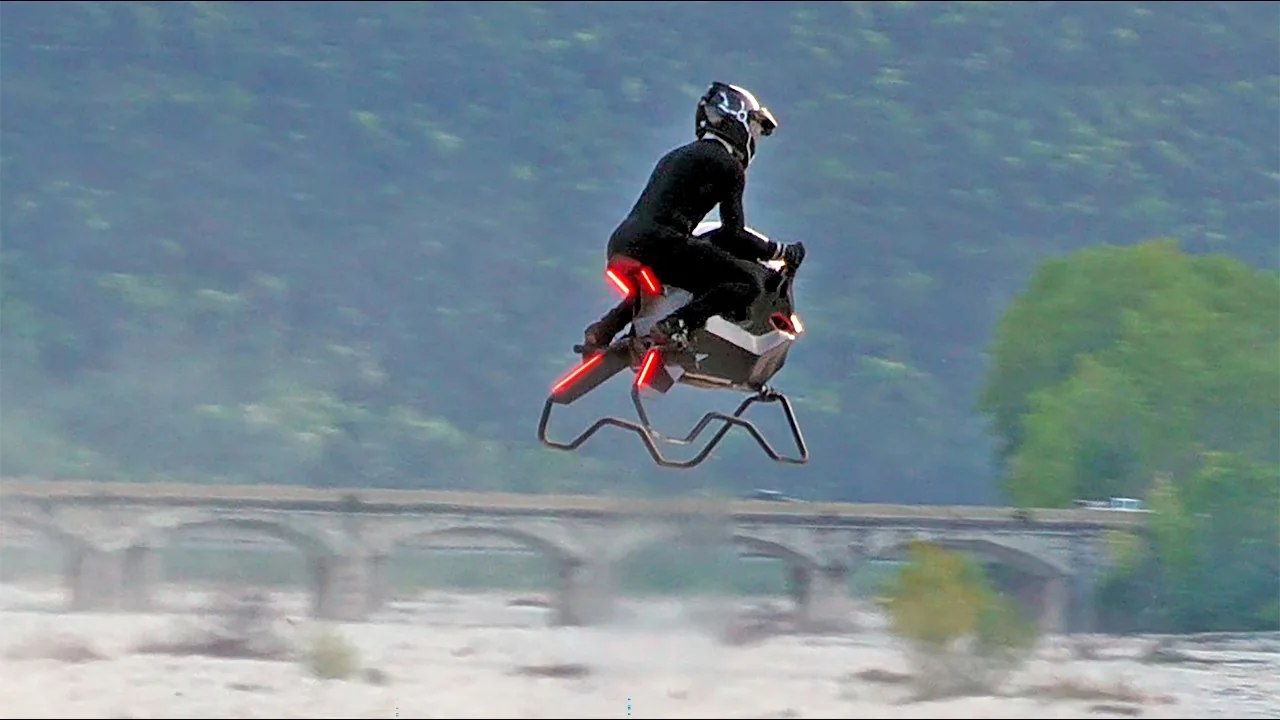
The launch video drew skepticism, and some observers noted that clear takeoffs and landings were not always visible. Patan told Robb Report that the footage involved no trickery, adding "not a bit of AI." He credited skilled camera and FPV drone operators for the cinematic look. Footage of a prototype test flight released in August 2025 convinced many outlets that the bike does fly.
Industry Context and Future Outlook
The Airbike has a short flight time and a very high price, so it is a niche product for now. The wider category also faces open questions. Small jet turbines are expensive and loud, and cities planning drone corridors may restrict them. Competing projects such as JetPack Aviation's Speeder, which uses multiple jet turbines and is still at the prototype stage, face similar hurdles. Over the next 12 to 24 months, the main things to watch are independent flight demonstrations, delivery of the first customer units, noise and safety data, and how regulators outside the U.S. classify the machine.
Volonaut has not yet published independent test data or confirmed delivery figures. This article will be updated as the company releases more verified information.
Sources: Volonaut, Entrelligence (original post; video credit X/Poland_Based), Robb Report (as cited by ADV Pulse), Motorrad, CircuitDigest.