


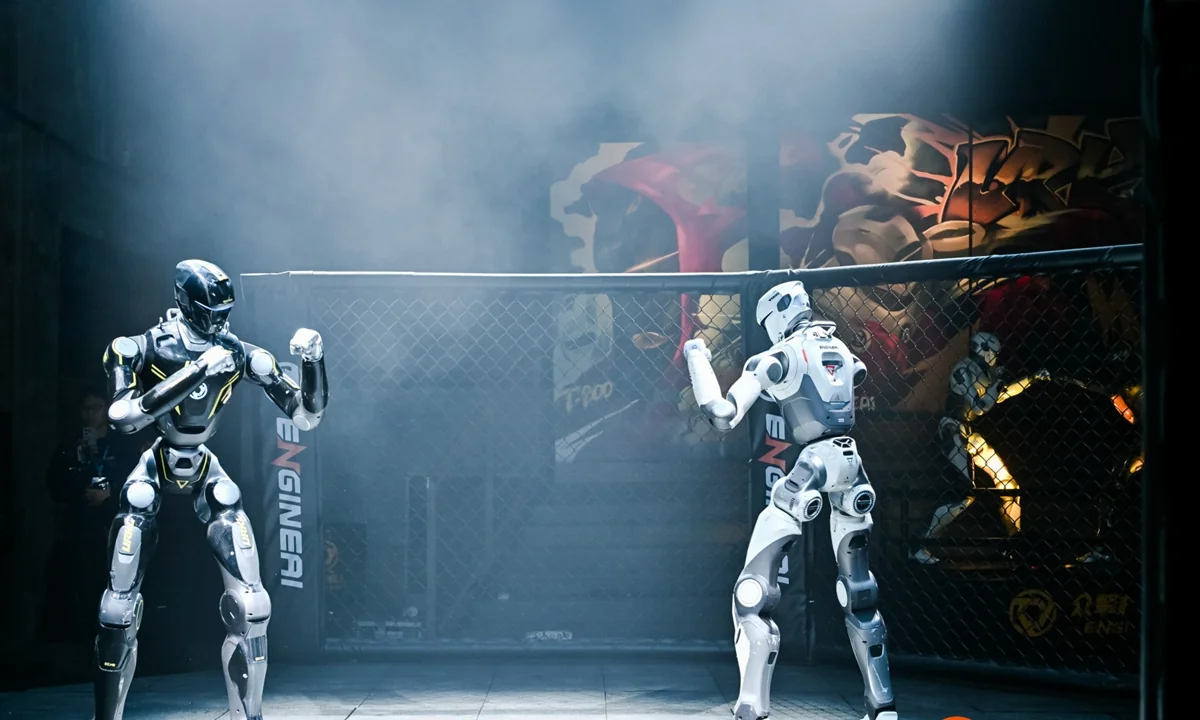
Robots are stepping into the ring, throwing punches, delivering kicks and trying to knock each other down. And this time, the story is not just about remote-controlled machines smashing into one another. Artificial intelligence is becoming part of the fight.
In China, EngineAI launched its Ultimate Robot Knockout Legend (URKL) humanoid combat league in February 2026. The competition puts teams in charge of training humanoid robots to fight, maintain their balance and respond under pressure. Meanwhile, BattleBots has showcased Orbitron, an AI-driven combat robot designed to navigate its surroundings and choose its own attacks.
The idea sounds like science fiction, but the competitions are real. The bigger question is what happens when robots must do more than perform a rehearsed trick: when they have to react to an unpredictable opponent, recover from a fall and keep fighting.
China Is Turning Robot Fighting Into a Competition
EngineAI's URKL league is among the clearest examples of humanoid robot combat becoming an organized competitive sport. Announced in February 2026, the league invites teams from universities, companies and research institutions to compete using the company's T800 humanoid robots.
Instead of simply watching machines perform scripted martial arts routines, the competition is designed to test how robots handle physical challenges. Balance, movement, perception and decision-making all matter when a machine has to deal with an opponent that can knock it off course.
The technology is still developing, and a robot's performance in a fighting arena does not prove that it is ready for everyday work. But the format gives engineers a demanding environment in which to test how their systems behave outside controlled demonstrations.
Teaching a Robot How to Fight
Getting a humanoid robot to throw a punch is one challenge. Getting it to remain upright, respond to an opponent and recover after a hit is another.
Teams working on AI-driven combat robots can train movement and control systems in simulated environments before testing them on physical machines. The goal is to help a robot coordinate its limbs, maintain balance and execute movements without falling over every time the action gets unpredictable.
Some approaches use reinforcement learning, in which a system learns through repeated attempts and feedback. Others combine programmed movement, sensor data and control algorithms. The exact approach depends on the team and the robot; not every humanoid fighter uses the same AI technology.
The most important test comes when the robot leaves the simulation. Real machines have to deal with friction, mechanical limits, unexpected impacts and components that can break. A movement that works perfectly in a virtual environment may be much harder to execute on the arena floor.
AI Is Entering Traditional Robot Combat, Too
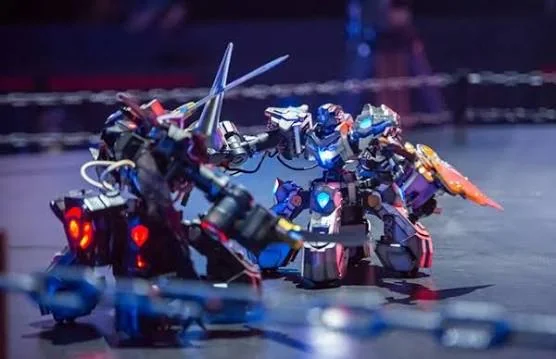
Humanoid fighting is only one side of the story. In the established world of robot combat, BattleBots has introduced Orbitron, an autonomous heavyweight machine developed by Canadian builders Steven and Peter Szczeszynski.
According to BattleBots, Orbitron uses computer vision, real-time localization and automated path planning to understand its surroundings and decide how to attack. The aim is to reduce the need for a human driver and let software make decisions during a match.
That is a significant change in the nature of robot combat. Instead of relying entirely on a person's reactions through a controller, an autonomous robot can use onboard systems to process information and choose its next move.
However, autonomy does not automatically mean human-level intelligence. A robot can make decisions within a narrowly defined competition without possessing general intelligence or the ability to perform unrelated tasks.
Why Fight Robots at All?
Beyond the entertainment, physical competition can expose weaknesses that are difficult to identify through demonstrations alone.
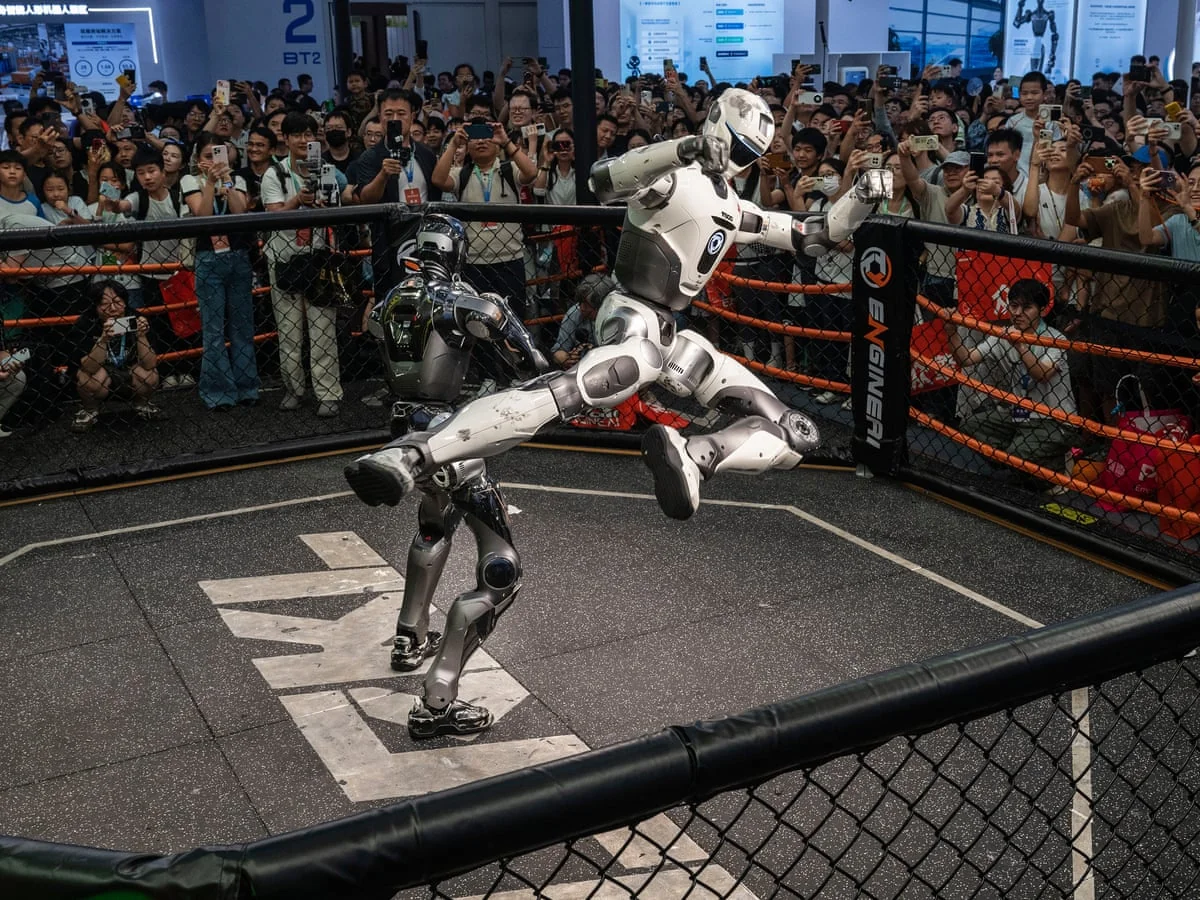
A humanoid robot that falls during a match has to deal with the consequences. A machine that loses its balance must recover. A control system must respond to changing conditions rather than assume everything will happen as planned.
These challenges are relevant to robotics research because balance, movement and reliable control also matter in environments such as warehouses, factories and other spaces designed for people.
That does not mean a robot that can fight is automatically ready to work in a warehouse. Industrial applications require different tests, including reliability over long periods, safe interaction with people and the ability to complete useful tasks consistently.
The Next Fight Is Already Taking Shape
Robot combat is developing along two parallel paths: traditional machines built to battle inside protected arenas and humanoid robots trained to fight using increasingly sophisticated control systems.
As teams experiment with AI, the interesting question is no longer simply which robot has the strongest weapon. It is whether a machine can interpret what is happening, choose an effective response and remain functional when its opponent disrupts its plans.
The technology still has substantial limitations, and not every combat robot is autonomous. Many humanoid fighting demonstrations use remote human control, while other competitions specifically test autonomous behavior. That distinction matters when evaluating claims about AI.
But the direction is clear: robot fighting has become a real-world proving ground for machines that must move, react and withstand physical pressure. The spectacle draws the audience in. The engineering challenges are what make the results worth watching.
Sources
- Shenzhen Government Online — World's First Humanoid Robot Combat League Launched in Shenzhen: Official report on EngineAI's URKL league, the T800 robot and the competition's technical objectives.
- BattleBots — Orbitron: Official profile of the AI-driven autonomous combat robot and its navigation and attack-planning systems.
- Live Science — China Pits Rival Humanoids Against Each Other in the World's First Robot Boxing Tournament: Background on the May 2025 humanoid robot boxing competition and the use of human-operated machines.


