
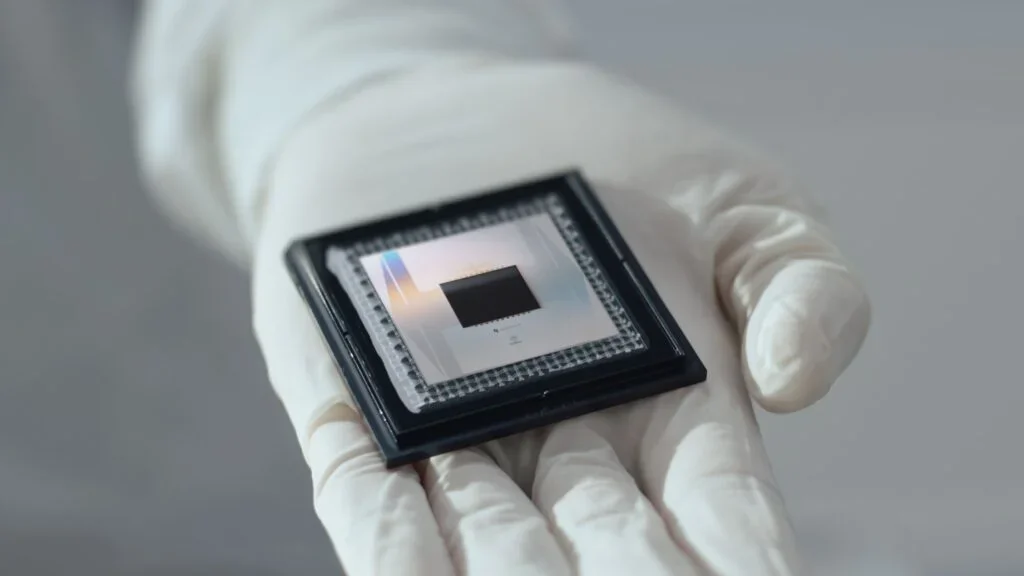
Google Quantum AI has demonstrated that magic state cultivation works on real hardware, achieving a roughly 40-fold reduction in preparation errors on its Willow superconducting processor. The results, published on October 15, 2026, in the journal Science, produced logical T-states with a record fidelity of 99.99 percent while retaining about 8 percent of attempts.
This milestone addresses a long-standing resource bottleneck in fault-tolerant quantum computing. Magic states are specialized, single-use quantum resources required to implement non-Clifford operations that enable universal computation. Previous estimates indicated that preparing these states through traditional distillation methods could consume up to 95 percent of a large-scale quantum computer’s physical qubit capacity, leaving limited room for actual algorithms.
Technical Details of the Experiment
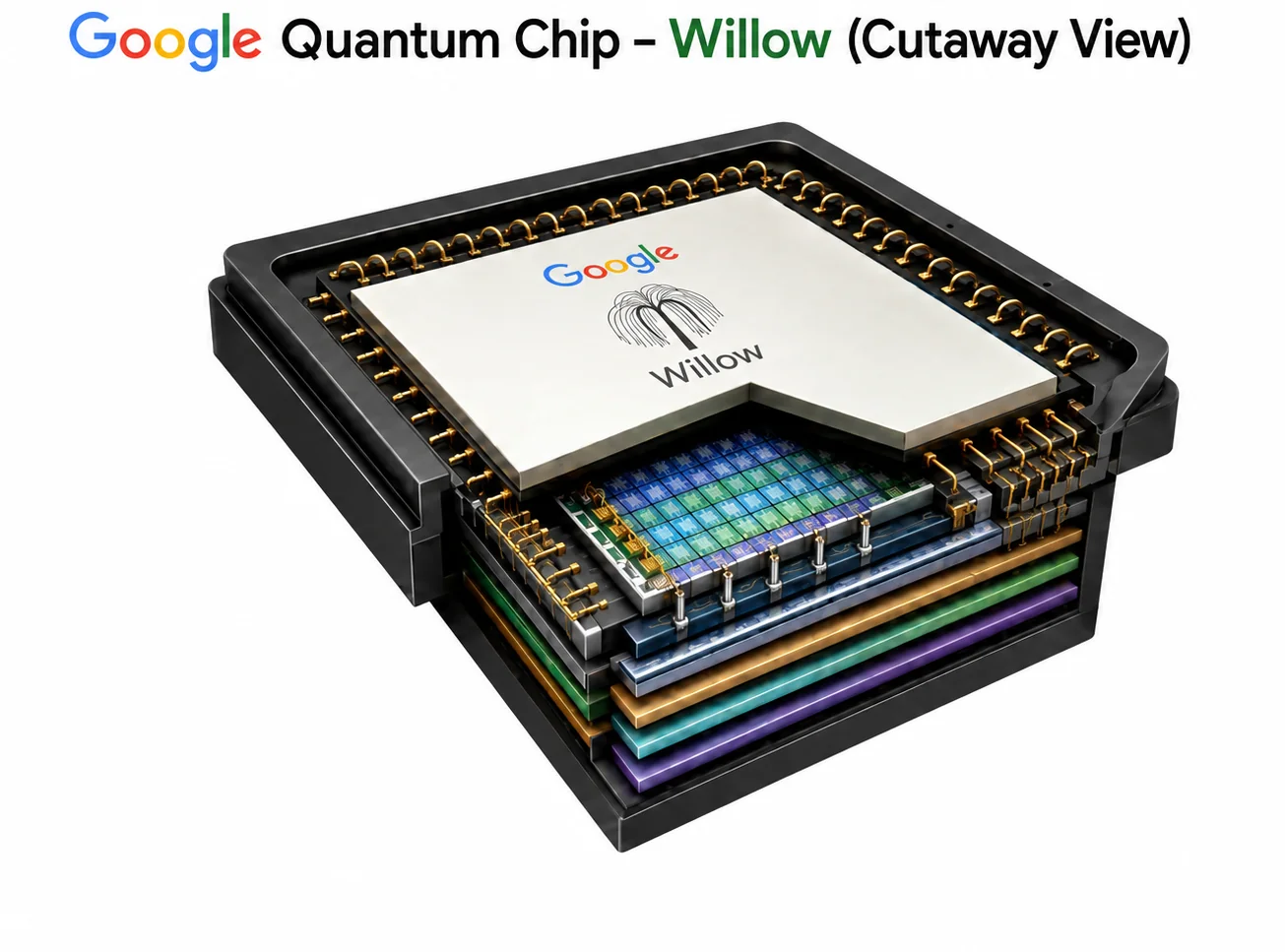
The research team, led by scientists including Emma Rosenfeld and Craig Gidney of Google Quantum AI, implemented the cultivation protocol on Willow, a processor containing 105 superconducting qubits arranged in a square lattice. The experiment used at most 54 of those qubits.
In the protocol, a noisy initial state is injected into a small region of the chip encoded in a distance-3 color code. Coordinated measurements then check for errors. Attempts that fail the checks are discarded. Successful states are refined and transferred via a fault-tolerant code-switching process into a larger distance-5 surface code.
The team also developed a measurement technique called kickback tomography to accurately bound the logical fidelity of the cultivated states despite experimental noise and drift. Without cultivation, the logical error rate for the T-state was approximately 4.4 × 10⁻³. With cultivation it dropped to between 1 × 10⁻⁴ and 2 × 10⁻⁴.
- 40-fold error reduction relative to uncultivated states
- 99.99 percent logical fidelity for T-states
- Approximately 8 percent of preparation attempts retained
- Successful grafting from distance-3 color code to distance-5 surface code
Performance Metrics and Practical Implications
The demonstrated fidelity represents a significant improvement over previous experimental preparations of encoded magic states on superconducting hardware. The result validates a theoretical framework for cultivation first detailed by Google researchers in 2024.
By filtering rather than fully distilling, cultivation aims to produce high-quality magic states with lower overhead than conventional methods. In principle, successful scaling of the technique could reduce the total number of physical qubits required for useful fault-tolerant algorithms, including certain cryptographic and scientific workloads.
The current experiment remains at a small scale. The paper notes that practical applications such as factoring large RSA keys would require magic-state error rates orders of magnitude lower than those achieved here.
On Google Quantum AI's Willow processor, our protocol achieved an extraordinary 40-fold reduction in errors relative to un-cultivated states. And we got T-states with a record logical fidelity of 99.99%.
The statement appears in the official Google Quantum AI research blog post authored by Rosenfeld and Gidney announcing the Science publication.
Remaining Challenges and Outlook
Several engineering hurdles remain before the approach can support large-scale fault-tolerant machines. Cultivation must still be demonstrated at greater code distances and with higher retention rates. Integration with other error-correction architectures, including modular designs under exploration by the same group, will also be required.
The work builds on earlier Willow results that established improved error-suppression thresholds for surface codes. Together these advances form part of Google’s broader roadmap toward practical quantum advantage in error-corrected regimes.
Further technical details are available in the peer-reviewed paper “Magic state cultivation on a superconducting quantum processor” and the accompanying Google Quantum AI blog post. Independent coverage has confirmed the experimental parameters and the significance of the fidelity milestone within the quantum computing research community.
Source: