


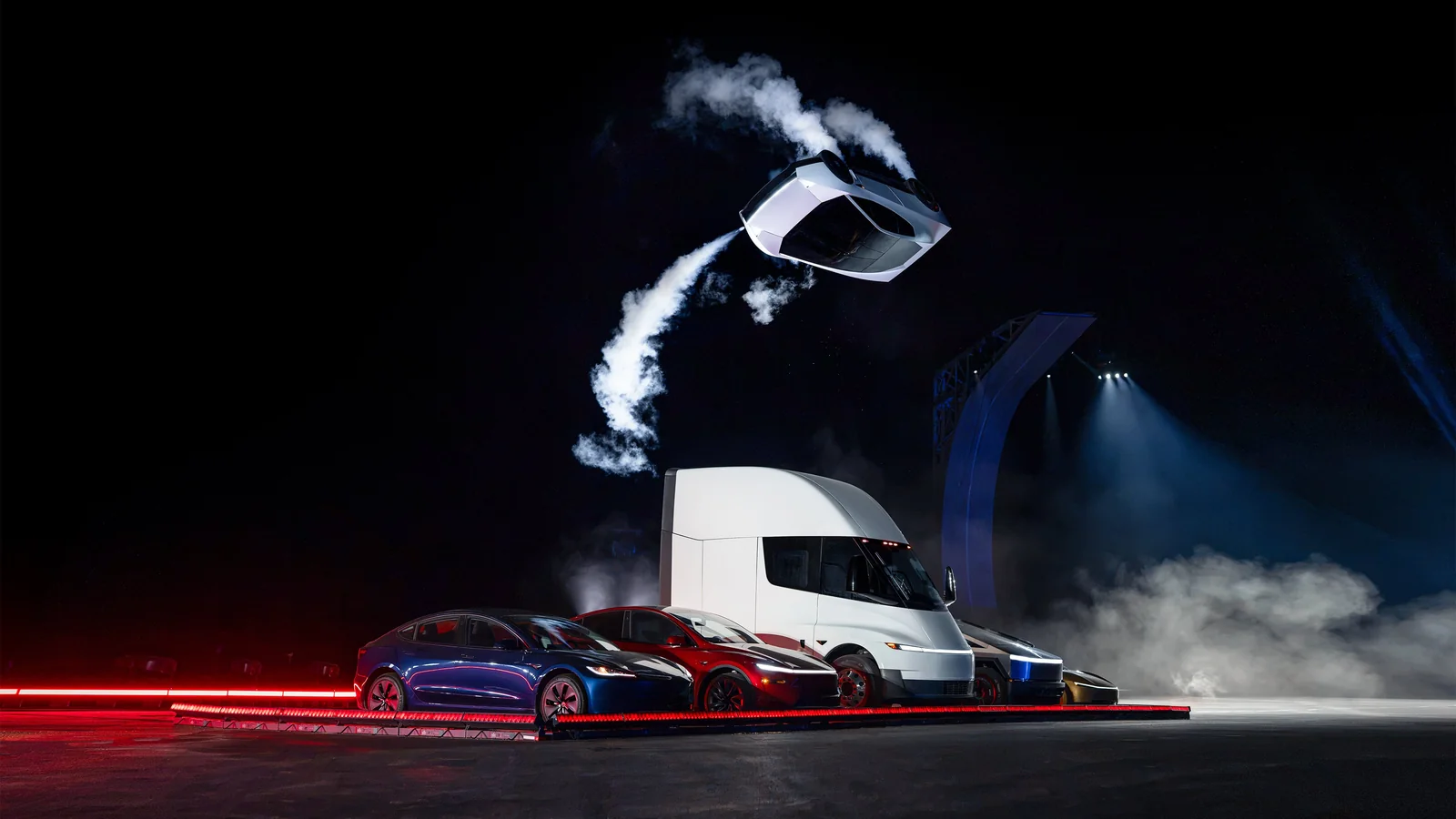
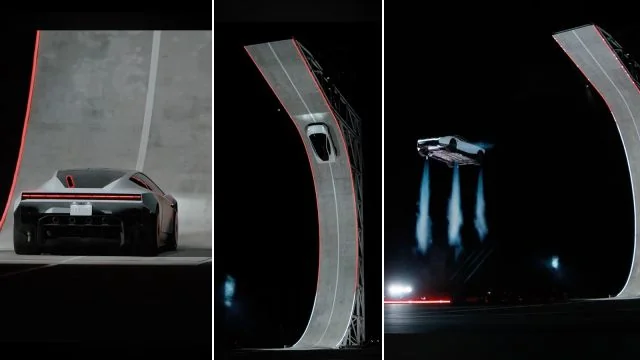
Tesla revealed its long-delayed second-generation Roadster on October 15, 2026, at SpaceX’s rocket test facility in McGregor, Texas. The two-seat (or single-seat in top trim) electric sports car demonstrated the ability to drive upside down on a curved ramp using underbody suction fans, launch into the air, perform mid-air rolls and flips, and land under control via cold-gas thrusters co-developed with SpaceX. Production is targeted for 2028.
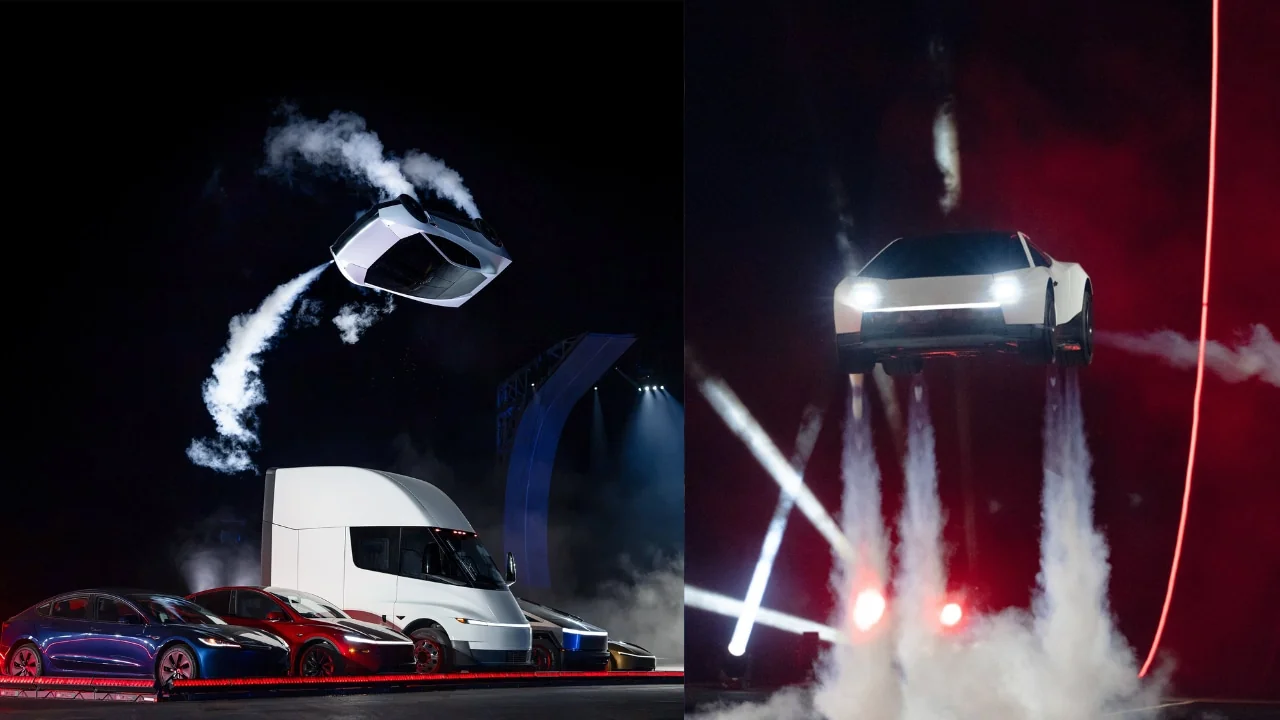
The event marked the first public demonstration of the production-intent vehicle nine years after its initial 2017 concept reveal. The combination of high-power electric propulsion, active aerodynamics, a multi-mode suction system for extreme downforce, and SpaceX-derived thrusters represents a notable crossover between automotive and aerospace engineering applied to a production-bound road car.
Technical Architecture and Specifications
The Roadster’s most distinctive feature is its cold-gas thruster system. Ten nozzles—primarily four main units in the rear diffuser plus attitude-control thrusters at the corners and perimeter in the highest trim—are fed by two carbon-fiber overwrapped pressure vessels (COPVs) holding a combined 600 liters of compressed air (approximately 250 kg). The tanks can be recharged by an onboard system; no chemical propellant is required. Exhaust from the main thrusters exits faster than the speed of sound, producing visible Mach diamonds, and the system is stated to generate more than 80 kN of thrust.
Tesla Vice President of Vehicle Engineering Lars Moravy described the architecture: the tanks occupy usable voids throughout the vehicle, with the full flight package eliminating the passenger seat in the top configuration. All-electric actuators enable rapid, precise control of individual nozzles for lift, forward thrust, yaw, and attitude adjustment.
Complementing the thrusters is a multi-mode underbody fan suction system capable of generating up to 2 G of downforce. This allows the car to remain attached to surfaces even when inverted and supports high lateral acceleration on track (claimed above 2 G). An active rear wing provides additional aerodynamic control in high-drag or high-downforce modes.
The electric powertrain delivers more than 1 MW from a dual-motor arrangement (lighter and more powerful than the three-motor Model S Plaid system). Claimed range exceeds 300 miles across trims, with top speed above 230 mph for the highest configuration. The exterior features a wedge-shaped, aerospace-inspired design with flush panels, hidden headlights, a full-width taillight, and an Ano White finish.
Three Configurations
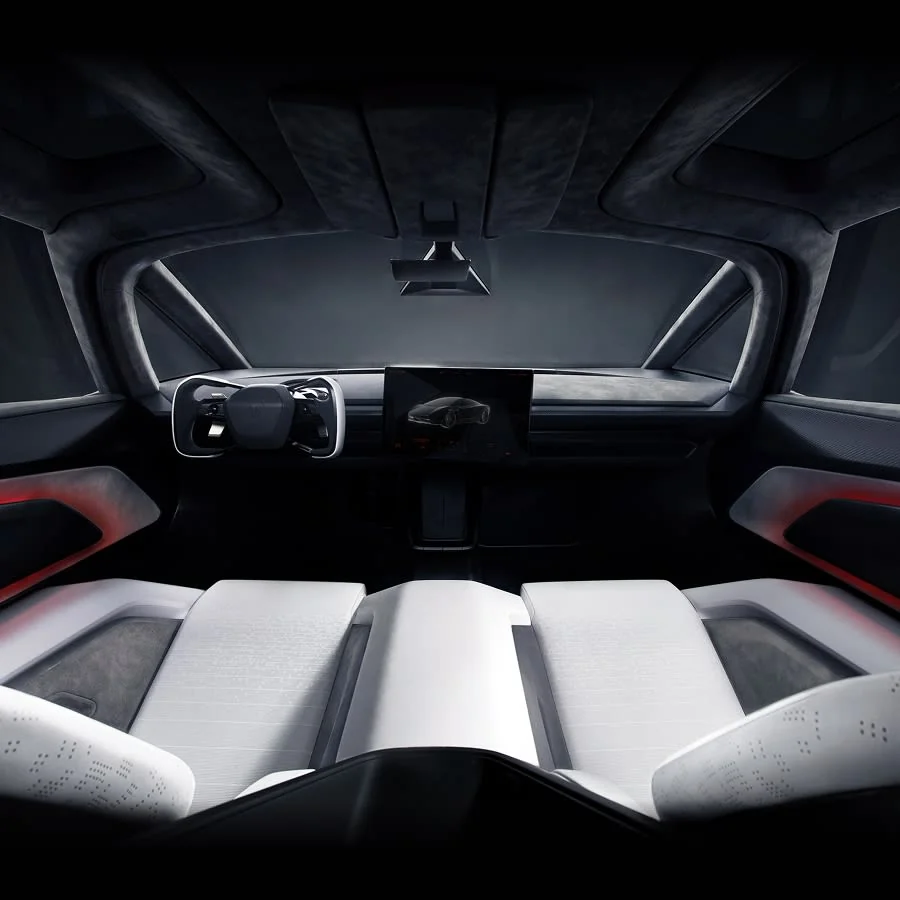
- Performance (road-ready): two seats, active aero, and suction system. Claimed 0–60 mph under 1.6 seconds. Reservations open at $50,000.
- Thrust (race-ready): adds rear-mounted cold-gas thrusters. Claimed 0–60 mph under 0.9–1.0 seconds. Limited release; $250,000 reservation.
- Rocket (air-ready): single seat with full perimeter thruster array enabling forward, upward, and rotational movement. Claimed 0–60 mph under 0.59 seconds. Invite-only; explicitly noted as not approved for public road use.
During the event, a thruster-assisted 0–60 mph (0–96 km/h) run was shown at 0.81 seconds. Tesla has stated the production figures remain targets subject to further development.
Live Demonstrations
Live demonstrations included the inverted-ramp sequence (suction hold followed by thruster-assisted launch, barrel roll, and controlled landing) and a jump over a line of Tesla vehicles that included a Semi. The prototype used for the aerial sequences was described as operating autonomously for the show. Telemetry graphics displayed simultaneous firing of multiple thrusters for attitude control during landings.
The thruster force is stated to exceed the traction limit of the tires by a factor of four to five, allowing acceleration beyond conventional tire-grip constraints. Refill times for the air tanks were cited in post-event interviews as currently several hours, with a development target of approximately 30 minutes.
No independent third-party verification of the acceleration times, thrust figures, or sustained flight capability has been published. The Rocket configuration’s road-use status remains restricted per Tesla’s own statements.
Industry Context and Future Outlook
The Roadster’s development timeline has stretched from an original 2020 target through multiple delays. CEO Elon Musk stated at the event that production would begin in 2028. He described the vehicle as “the best of the last of the human-driven cars” and noted that it is “not necessarily a safety-optimized car,” while adding that the thruster system “takes the fun meter to 11 out of 10.” Musk also said the car “can basically fly like a rocket” and “could do rolls… crazy gymnastics—whatever you want, really.”
The car can basically fly like a rocket and could do rolls… crazy gymnastics—whatever you want, really.
Key open questions over the next 12–24 months include regulatory approval pathways for thruster-equipped vehicles (both road and any potential low-altitude flight use), durability and safety certification of the high-pressure COPV system in a consumer automotive environment, refinement of recharge times and energy cost of air compression, and confirmation that claimed performance numbers translate to production vehicles. Integration of the suction and thruster systems into a street-legal platform that meets crash, emissions (where applicable), and noise standards will require continued engineering work. The Rocket trim’s invite-only, non-road status indicates Tesla is treating full flight capability as a specialized or track-oriented feature rather than a general-use capability at this stage.
Tesla has not released a final consumer price for any configuration beyond the reservation deposits. Independent testing and real-world durability data will be required to assess how the system performs outside controlled demonstration conditions.


