
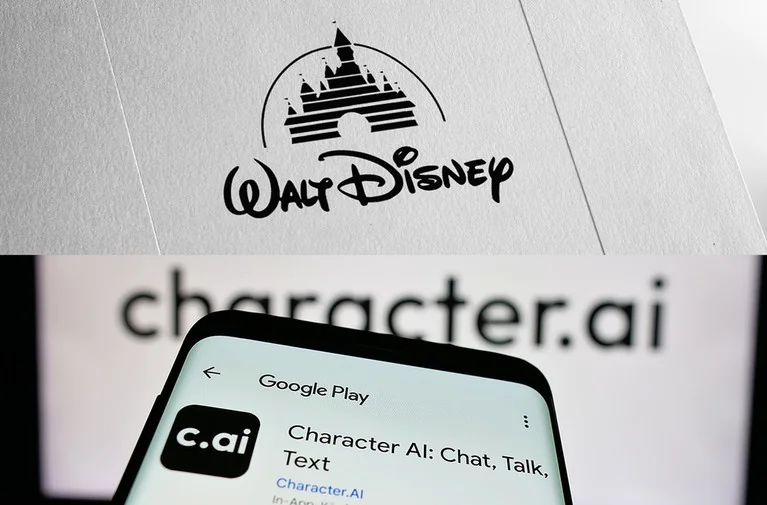
Disney Plans $180 Million Investment in Character.AI Talent After Startup’s Bankruptcy
Disney is making a major investment in artificial intelligence talent, agreeing to hire most of the workforce at chatbot startup Character.AI after the company filed for bankruptcy protection. The deal could cost Disney around $180 million over three years in employee compensation and retention incentives.
The move highlights how major technology and entertainment companies are competing for experienced AI teams, even as some consumer chatbot businesses struggle with high operating costs and legal challenges.
What Does the $180 Million Deal Include?
According to bankruptcy filings, Disney expects to spend approximately $60 million annually on compensation for around 65 Character.AI employees. The package also includes a separate $30 million retention pool designed to encourage employees to remain with Disney.
The recruits include Character.AI’s former chief executive, Karandeep Anand, who has joined Disney as its first company-wide chief technology officer. The company has also offered positions to dozens of other employees with experience building and operating AI products.
The $180 million figure represents the estimated three-year cost of compensation and retention incentives. It is separate from Disney’s proposed $20 million bid to license selected Character.AI technology and intellectual property.
Disney Is Also Bidding for the Startup’s Technology
Alongside hiring the team, Disney has agreed to act as the initial bidder for a license covering certain Character.AI technologies. The proposed $20 million deal would give Disney a perpetual, worldwide, non-exclusive license to specified intellectual property and technical assets.
The proposed license includes elements of the startup’s technology infrastructure, such as tools used for AI training and safety moderation. However, it excludes important assets, including user data, training data, finished AI models, the Character.AI brand and its consumer application.
The transaction is not yet guaranteed to close. Disney’s offer establishes a starting point for a court-supervised sale process, and other potential buyers can submit competing bids. The bankruptcy court must approve the eventual transaction.
Why Did Character.AI File for Bankruptcy?
Character.AI became popular by allowing users to chat with AI-generated personalities, role-play fictional scenarios and create their own conversational characters. Despite attracting a large audience, the company struggled with the economics of running a consumer AI platform.
Operating conversational AI services can require substantial computing resources, particularly when users engage in long, frequent conversations. Character.AI also faced mounting legal and regulatory pressure over allegations that interactions with its chatbots had harmed young users. These allegations have been disputed, and the bankruptcy process does not itself establish liability.
The company filed for Chapter 11 bankruptcy protection in October 2026, citing significant legal, regulatory and operational challenges. The proceedings provide a way to sell assets while addressing outstanding financial obligations.
A Familiar Pattern in the AI Industry
The arrangement resembles a strategy sometimes called a “reverse acquihire,” in which a larger company hires key employees from a startup and separately negotiates access to its technology, rather than acquiring the entire business.
Character.AI has already experienced a similar shift. In 2024, Google reached a multibillion-dollar agreement to license its technology and bring its co-founders and members of its research team into the company. Character.AI continued operating afterward, but without much of its original technical leadership.
Disney’s latest move suggests that experienced AI engineers and the systems they build may retain significant value even when the original startup cannot sustain its business model. For Disney, the recruits could help strengthen its technology capabilities and support future AI initiatives across its entertainment business.
What Happens Next?
The final outcome depends on the bankruptcy sale process. Competing bids could change who obtains the technology license, and court approval is required before the transaction can be completed.
The deal also raises broader questions about how AI companies separate valuable technology and talent from the legal obligations of the businesses that developed them. While Disney is seeking employees and selected technical assets, Character.AI’s bankruptcy estate remains responsible for resolving the startup’s outstanding legal and financial issues, subject to the proceedings.
For the AI industry, the case offers a clear lesson: a popular product and a large user base do not necessarily translate into a sustainable business. As competition intensifies, companies with the resources to retain talent and support expensive infrastructure may be better positioned to turn AI technology into a long-term commercial advantage.