

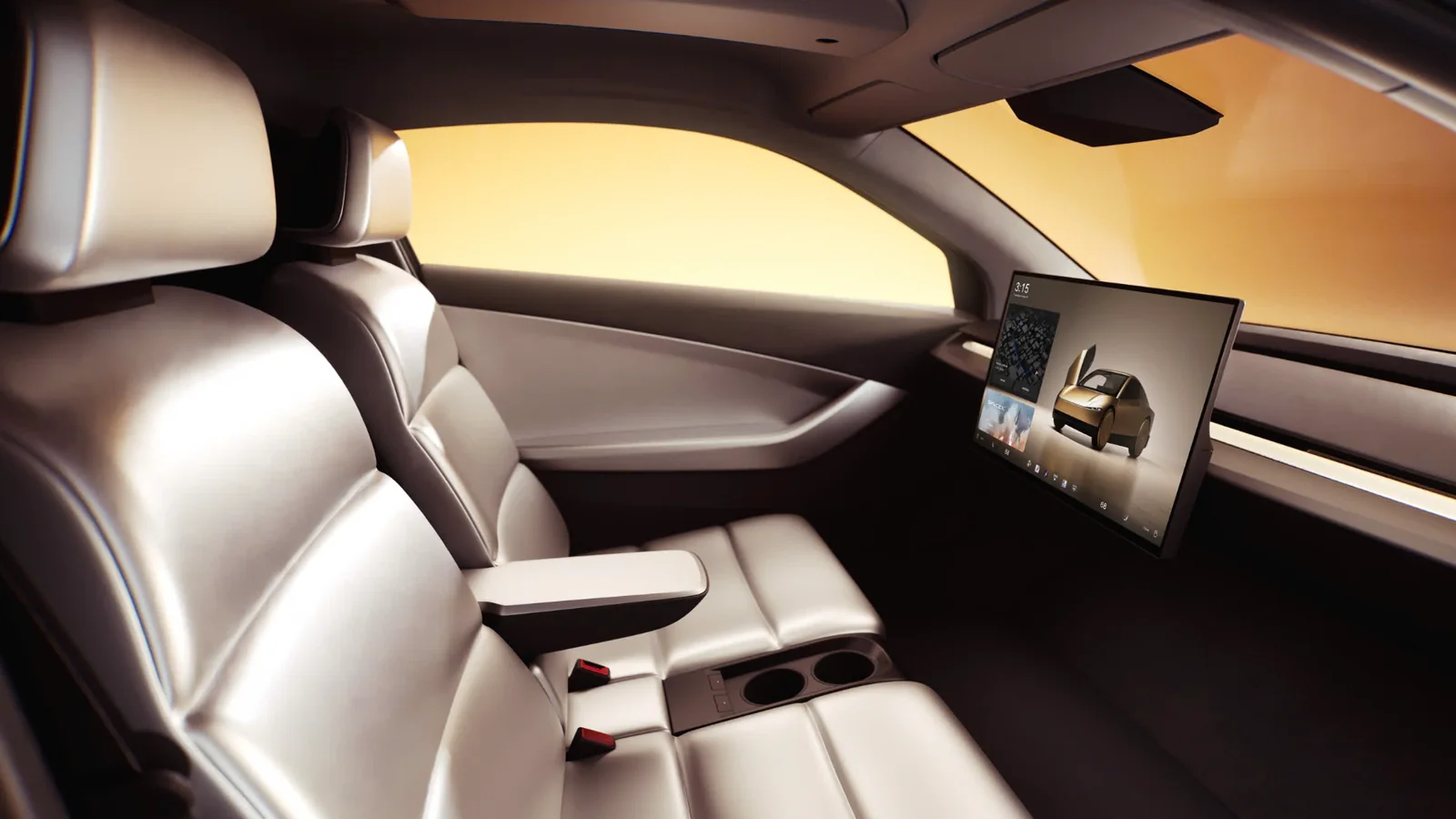
When a robotaxi has no steering wheel, brake pedal, or human driver, the question after a collision is no longer simply “Who was driving?” It becomes: which company designed the system, which operator dispatched it, which insurer covers it, and which regulator has authority to investigate it?
That question moved from theory to practice this year as Tesla began commercial deployment of its two-seat Cybercab in Austin, Texas, on September 3, while Waymo continued operating driverless ride-hailing services in several U.S. metropolitan areas. The U.S. National Highway Traffic Safety Administration (NHTSA) has since opened questions into Tesla’s Cybercab certification, underscoring how unsettled the legal framework remains.
Why the absence of a wheel matters
A conventional car leaves a clear legal actor in the cabin: the person holding the license. A fully autonomous robotaxi removes that actor. Responsibility therefore shifts toward the entities that built, certified, maintained, mapped, updated, and operated the vehicle.
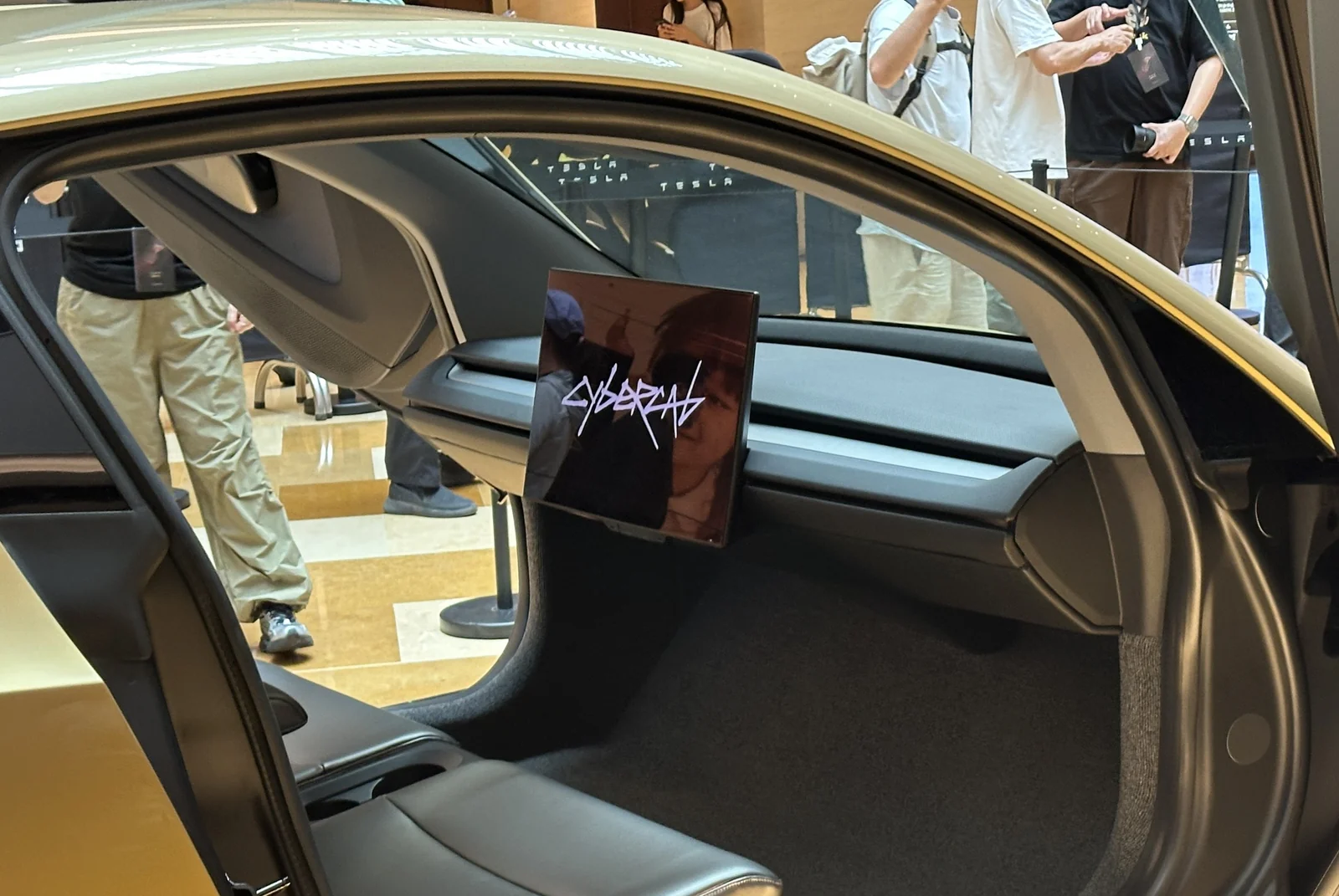
NHTSA said the Cybercab lacks conventional manual controls, including a steering wheel, brake pedal, accelerator pedal, and mirrors. The agency asked Tesla to confirm whether the vehicle can be driven by a human, whether touchscreen controls allow occupants to move it, and what limits apply to its speed, geography, and time of operation.
Under existing U.S. rules, fully self-driving vehicles do not need separate NHTSA approval if they retain human-driver equipment such as steering wheels, brake pedals, and mirrors. NHTSA can, however, grant petitions allowing up to 2,500 vehicles per manufacturer annually to operate without those controls.
How the technology is supposed to work
These vehicles are generally classified as Level 4 automated driving systems: they perform the entire driving task within a defined operational design domain, or ODD. That domain may restrict where, when, and under what conditions the vehicle may operate.
In practice, a robotaxi combines cameras, radar, and—in some designs—lidar with onboard computing, high-definition maps, and machine-learning software. The system must detect lanes, traffic signals, pedestrians, cyclists, construction zones, and unexpected obstacles, then plan a safe path without relying on a person to take over.
The absence of manual controls also changes emergency design. Instead of a driver braking or steering around a hazard, the vehicle must rely on redundant sensors, fail-safe braking, remote support, geofenced routes, and software updates to manage risk.
What the safety data show
Waymo reported 271.3 million rider-only miles through June 2026, meaning miles driven without a human driver. The company said its vehicles were involved in 82% fewer injury-causing crashes and 95% fewer serious-injury crashes than human drivers over comparable distances in the same areas.
Those figures are not a guarantee of safety in every situation. They measure crashes per mile in the specific cities and conditions where Waymo operates, and the company itself notes that its mileage remains small relative to overall human driving.
Independent analysis adds important context. The Insurance Institute for Highway Safety found that Waymo’s driverless vehicles in San Francisco, Phoenix, Los Angeles, and Austin were involved in 68% fewer police-reportable crashes per vehicle mile than human drivers. But IIHS also noted that companies are required to report crashes to NHTSA, while they are not required to report miles driven, making fleet-wide comparisons difficult.
Tesla’s Cybercab deployment is much newer. Reuters reported that Tesla began with a small number of vehicles in Austin and planned a gradual expansion. Early crash reports and safety disclosures therefore provide a limited statistical basis for broad conclusions.
The liability gap
Legal scholars identify several possible standards for assigning blame. Under traditional product-liability law, an injured person may need to show a design or manufacturing defect caused the crash. Under a “reasonable human driver” standard, the manufacturer could be liable if the computer driver failed to avoid a collision that a competent, attentive human would have avoided.
A stricter approach would impose liability on the manufacturer whenever its vehicle causes damage, regardless of whether a defect can be proven. Policymakers are also considering a “reasonable computer driver” benchmark, comparing a vehicle’s behavior with industry norms or the state of the art.
Mark MacCarthy, a nonresident senior fellow at the Brookings Institution, argued that policymakers should combine traditional negligence-based product liability with a reasonable-human-driver standard. He wrote that such a framework would give victims a route to compensation while still allowing manufacturers to defend cases where the automated system behaved as a reasonable human driver would.
A self-driving car performs unreasonably in a particular situation if either a human driver or a comparable automated driving system could have done better under the same circumstances.
That formulation, attributed by Brookings to law professor Bryant Walker Smith, captures the central policy tension: robotaxis should not be held to a lower standard than people, but courts also need a workable way to evaluate software behavior.
Who may actually pay
In a crash involving a wheel-free robotaxi, financial responsibility could fall on several parties depending on the facts:
- The vehicle manufacturer, if a hardware or software defect contributed to the incident.
- The fleet operator or ride-hailing company, if it dispatched the vehicle outside safe conditions or failed to maintain it.
- The software or mapping supplier, if a faulty update, map error, or perception failure caused the error.
- Another road user, if a human-driven vehicle or pedestrian caused the collision.
- An insurer, under commercial policies designed for autonomous fleets.
Passengers complicate the picture. If a rider misuses an emergency control or intentionally interferes with the vehicle, liability may shift. But when no human is expected to supervise the drive, the operator and manufacturer are likely to face greater scrutiny.
What happens next
Over the next 12 to 24 months, the decisive issues will be regulatory rather than purely technical. NHTSA has proposed changes to federal safety standards that would allow autonomous vehicles to operate without some human-driver equipment, but existing requirements remain in force until final rules are adopted.
Insurers will also need clearer data on crash frequency, severity, repair costs, and responsibility. Without standardized mileage and incident reporting across operators, comparing robotaxi safety with human driving will remain difficult.
For now, the technology is advancing faster than the legal architecture surrounding it. A robotaxi without a steering wheel can drive itself; determining who answers for its mistakes still depends on laws, contracts, and evidence that are still being written.
Sources: Reuters, Waymo Safety Impact, IIHS, and Brookings Institution.