


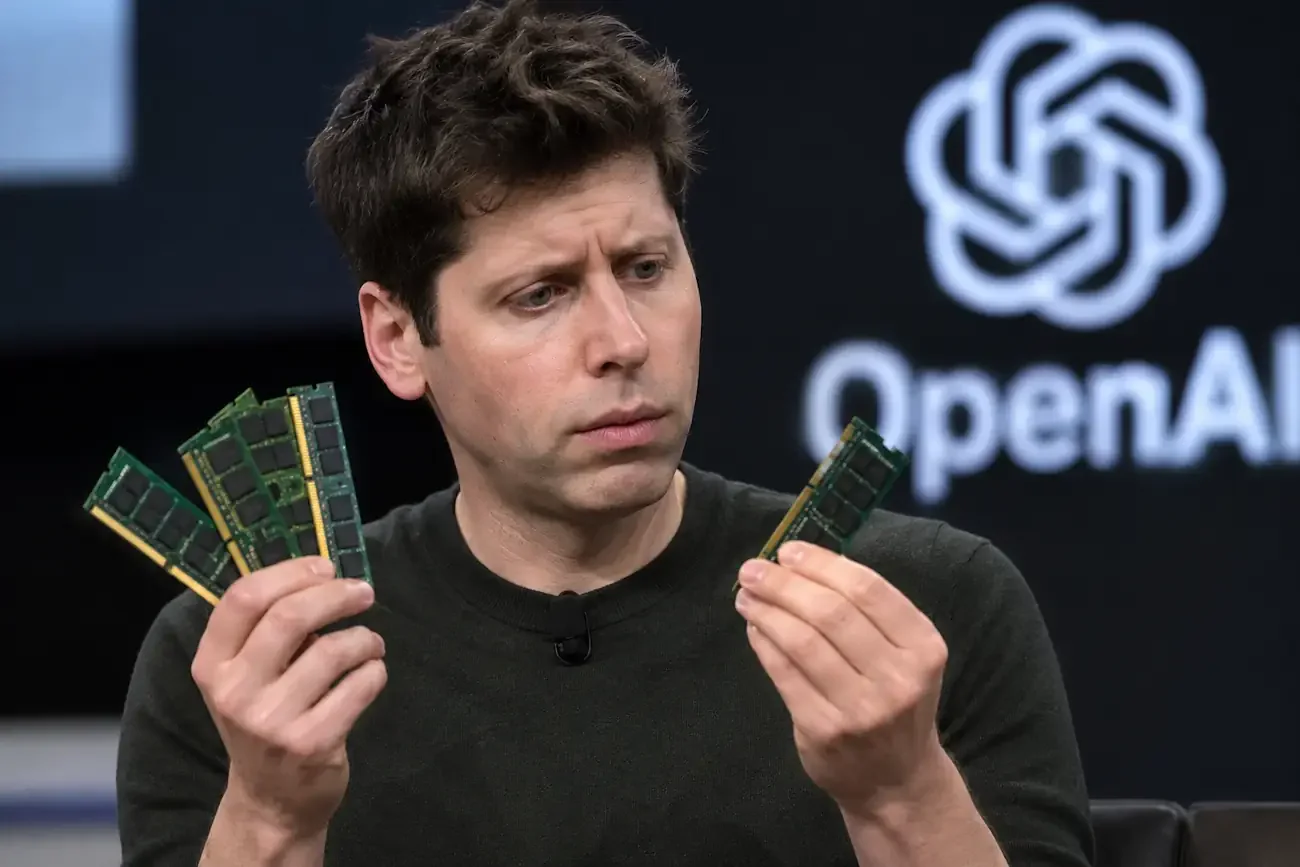
OpenAI CEO Sam Altman has questioned whether keeping large amounts of RAM in personal computers is an efficient use of increasingly scarce semiconductor resources. During an appearance on Stripe's Cheeky Pint podcast, released on October 29, 2026, Altman argued that memory could be used more efficiently in shared cloud infrastructure than in individual computers that spend much of their time idle.
His comments have reignited a debate about the future of local artificial intelligence. As open-source AI models become increasingly accessible, more developers and enthusiasts are investing in powerful computers capable of running models without relying on external services. Altman's argument challenges the economic case for that approach and raises a bigger question: should computing resources be owned by individuals or concentrated in shared infrastructure?
The discussion is particularly relevant as AI companies expand their data center operations and compete for memory chips, GPUs and other components needed to operate increasingly demanding models.
What Sam Altman Actually Said
The comments came during a conversation with Stripe co-founder John Collison on the Cheeky Pint podcast. The discussion covered the economics of computing infrastructure, semiconductor manufacturing, AI development and the growing demand for memory.
Altman was responding to the idea that local AI could reduce the need for massive data centers. The argument is straightforward: if individuals can download open-source models and run them on their own computers, some AI workloads could move away from centralized providers.
Altman challenged that assumption from the perspective of global resource allocation.
From a global allocation perspective, actually, it's quite terrible to have everybody have a bunch of the world's limited supply of DRAM sitting in their own computer and being used 5% of the time.
He argued that shared cloud infrastructure can keep memory resources more consistently utilized because multiple customers can access the same computing infrastructure at different times.
The 5% figure was Altman's own characterization. He did not present an independently verified industry-wide measurement or define precisely how memory utilization was calculated.
That distinction matters. His statement is an argument about infrastructure economics, not proof that 95% of RAM installed in consumer computers is universally wasted.
``` ```text

Why Memory Has Become an AI Industry Bottleneck
To understand Altman's argument, it helps to look at how memory is used across modern computing infrastructure.
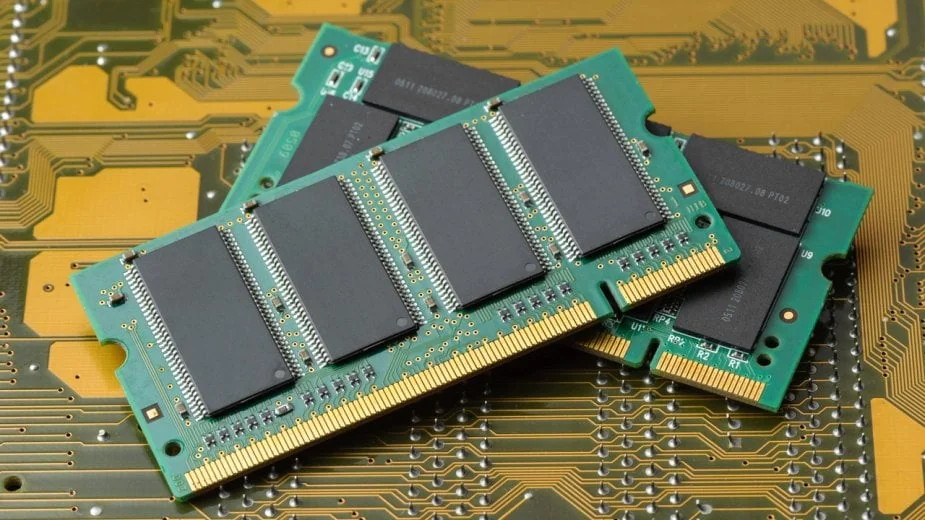
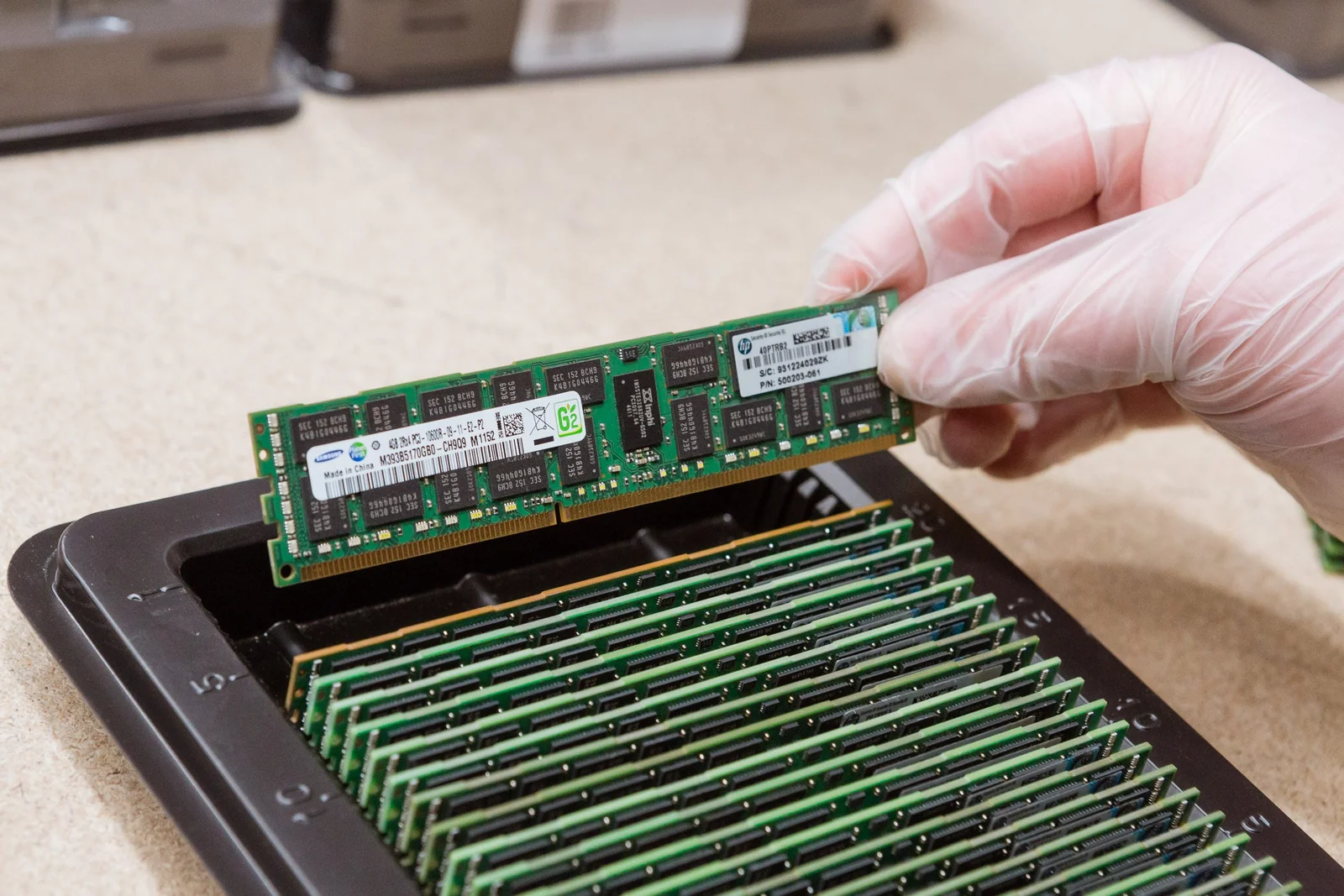
DRAM, or dynamic random-access memory, is the working memory used by computers to temporarily store information that processors need to access quickly. It is found in desktop PCs, laptops and servers. Graphics cards also use dedicated video memory, while AI accelerators increasingly rely on high-bandwidth memory (HBM).
Although conventional DRAM and HBM serve related purposes, they are different technologies with different performance characteristics and applications. HBM is particularly important for advanced AI accelerators because it provides extremely high memory bandwidth.
Large AI models need memory to store model parameters, intermediate calculations and information associated with ongoing requests. The amount required depends on model architecture, precision, quantization, context length and the number of simultaneous users.
This creates a significant infrastructure challenge. AI providers need to balance the cost of memory against the number of workloads their systems can handle. If expensive memory remains allocated to a model that is not actively serving requests, the provider may be able to improve efficiency through better workload scheduling and resource sharing.
Altman's argument is that centralized infrastructure offers an opportunity to distribute available capacity across a much larger customer base.
The Technical Difference Between Local and Cloud AI
The distinction between local inference and cloud inference is not simply where a computer is physically located. It also changes how computing resources are allocated.
With local inference, the model runs on hardware controlled by the user. The computer must have sufficient memory to load the model and process incoming requests. Once the model is running, some of that memory may remain allocated even when the user is not actively interacting with it.
Cloud inference works differently. A provider operates a fleet of servers and distributes customer requests across available infrastructure. Depending on the architecture, models can be loaded, shared, scheduled or replicated to serve different workloads.
However, cloud systems are not automatically perfectly efficient. Providers also need to reserve capacity for demand spikes, maintain availability, manage latency and keep models ready for incoming requests.
There are therefore two different efficiency questions:
- Hardware utilization: How consistently is installed memory being used across the entire infrastructure?
- Service performance: How quickly and reliably can a system respond when a user needs it?
A cloud provider may achieve higher average utilization, but that does not necessarily mean it provides the lowest cost or best experience for every workload.
OpenAI's Own Open Models Complicate the Argument
One particularly interesting aspect of this discussion is that OpenAI has also invested in making local AI possible.
In August 2025, the company introduced gpt-oss-120b and gpt-oss-20b, two open-weight language models designed to run on infrastructure outside OpenAI's own hosted services.
According to OpenAI's technical documentation, the smaller gpt-oss-20b model has 21 billion total parameters and activates approximately 3.6 billion parameters per token through its mixture-of-experts architecture.
OpenAI says the model can run on devices with 16 GB of memory. The larger gpt-oss-120b model has 117 billion total parameters and is designed to operate within 80 GB of memory.
Both models use a Transformer architecture with mixture-of-experts components. This approach activates only a portion of the model's parameters for each token, helping reduce computational requirements compared with activating every parameter.
The release demonstrates that local execution is not merely a theoretical alternative. OpenAI itself has developed models intended for deployment on consumer and other independently controlled hardware.
There is no necessary contradiction between releasing open-weight models and arguing that cloud infrastructure can use memory more efficiently. The two approaches serve different needs. Nevertheless, Altman's latest comments highlight a tension between expanding local AI access and maximizing the utilization of centralized computing resources.
Does the 5% RAM Figure Tell the Whole Story?
Altman's most striking claim was that memory installed in personal computers is used only around 5% of the time.
That number should be treated carefully. The podcast discussion does not provide a technical study, measurement methodology or dataset supporting the figure.
There is also an important distinction between memory utilization and memory availability.
A computer with 64 GB of RAM does not necessarily need to keep all 64 GB occupied at every moment to make the hardware useful. The memory provides capacity for applications, multitasking, demanding software and workloads that may arise later.
Modern operating systems also use available memory for caching and other background operations. Memory that is not currently occupied by an AI model is not necessarily wasted.
Furthermore, local AI is only one of many reasons people purchase computers with large memory capacities. Developers, video editors, engineers, researchers and gamers may need substantial RAM for applications unrelated to artificial intelligence.
Altman's 5% figure is therefore best understood as an illustration of his argument about idle infrastructure rather than an established measure of consumer RAM efficiency.
The Commercial Interest Behind Cloud Computing
There is another dimension worth considering: OpenAI is itself a major participant in the cloud AI market.
The company operates hosted AI services through ChatGPT and its API platform. These services depend on substantial computing infrastructure and benefit economically from customers using centralized models.
Greater demand for cloud inference creates a need for additional servers, accelerators, memory and data center capacity.
This does not automatically invalidate Altman's technical argument. Shared infrastructure can offer genuine advantages in utilization and economies of scale. However, OpenAI also has a commercial interest in the expansion of cloud-based AI.
That context is important when evaluating his position. The efficiency of a data center is not the only factor consumers should consider when deciding where to run their AI models.
What Local AI Offers That the Cloud Cannot Always Match
For individual users and organizations, local inference can provide benefits that are difficult to measure through hardware utilization alone.
- Data control: Locally processed information does not need to be sent to an external AI provider, provided the application does not use external services or transmit telemetry.
- Offline operation: Downloaded models can operate without a continuous internet connection.
- Predictable costs: Users can avoid recurring API charges for compatible workloads, although hardware, electricity and maintenance still cost money.
- Customization: Open-weight models can be modified, fine-tuned and integrated into independent software environments.
- Independence: Users are less dependent on subscription changes, provider availability and external service policies.
These advantages can be particularly relevant for companies handling confidential documents, developers experimenting with custom models and organizations that require greater control over their infrastructure.
Local AI also has limitations. Large models can require expensive hardware, consume substantial electricity and deliver slower performance than optimized cloud systems. Not every user has the technical knowledge or budget to operate a powerful local AI workstation.
What Happens Next?
The discussion points toward a larger infrastructure challenge that will continue to shape the AI industry.
Altman said during the same interview that OpenAI wants substantially more computing capacity and is working on ways to build data centers and improve the economics of AI infrastructure. He also discussed the possibility of using robotics to help manufacture components and construct future facilities.
For the memory industry, the challenge is not simply producing more chips. Manufacturers must balance investment costs, production capacity and demand from several markets, including consumer electronics, traditional servers and AI accelerators.
Over the next 12 to 24 months, several developments will be worth watching:
- Memory production: Whether manufacturers can expand supply fast enough to serve both consumer and AI infrastructure markets.
- AI hardware efficiency: Whether new accelerators and memory architectures can deliver more useful computing performance per unit of energy and hardware investment.
- Local model development: Whether increasingly capable open-weight models can operate on more affordable consumer devices.
- Cloud infrastructure: Whether providers can improve memory utilization without sacrificing availability and response times.
- Consumer hardware: Whether demand for AI infrastructure affects the cost and availability of RAM and other PC components.
There is no confirmed evidence from the podcast that OpenAI intends to restrict local AI, discourage PC ownership or prevent consumers from purchasing high-capacity memory.
The Bigger Question: Who Should Own Computing Power?
Sam Altman's comments reveal a fundamental disagreement about the economics of the next generation of computing.
For a company operating thousands of servers, unused memory represents an opportunity to improve infrastructure efficiency. For an individual, having unused memory can be part of the reason a computer remains capable of handling demanding tasks whenever they arise.
Both perspectives can be valid because they measure different things.
Centralized AI infrastructure may provide better average resource utilization, especially when large numbers of users share expensive hardware. Local AI, meanwhile, provides independence, privacy options and direct ownership of computing resources.
The future is unlikely to belong exclusively to either approach. Cloud platforms will remain important for large models and demanding workloads, while local AI will continue to serve users who value control, offline access and customization.
The real challenge is making both approaches more efficient and accessible.
Altman's argument may make sense from the perspective of a company trying to maximize the output of its data centers. But for PC owners, the value of RAM cannot be measured solely by how many hours it spends actively processing data.
Ultimately, the debate is not just about RAM. It is about whether the future of artificial intelligence should be built around shared computing infrastructure or personal ownership of increasingly powerful machines.
Sources: The original Cheeky Pint interview transcript with Sam Altman and John Collison, October 29, 2026; OpenAI's official gpt-oss announcement and technical specifications; and independent technical analysis published by Pasquale Pillitteri.
```


