

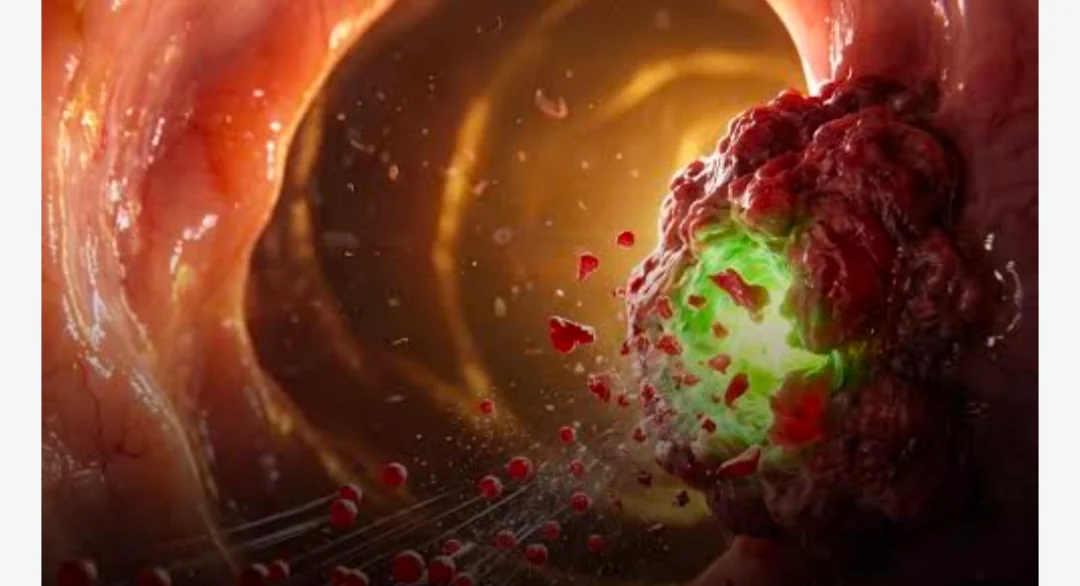
Researchers at Japan’s RIKEN Pioneering Research Institute have demonstrated a proof-of-concept method that uses excess carbon monoxide produced by certain cancer cells to synthesize cytotoxic compounds directly inside those cells. The work, led by Katsunori Tanaka and published in Nature Communications on 17 September 2026, shows selective drug formation in cultured human cancer cell lines while leaving normal cells largely unaffected.
Conventional chemotherapy often damages healthy tissue along with tumors. Tanaka’s team aims to reverse that by delivering a relatively inert precursor that becomes toxic only when it encounters a disease-associated metabolite already present inside the cancer cell. In this case the metabolite is carbon monoxide, a gas known to be elevated in many tumor types because of upregulated heme oxygenase-1 activity.
How the System Works
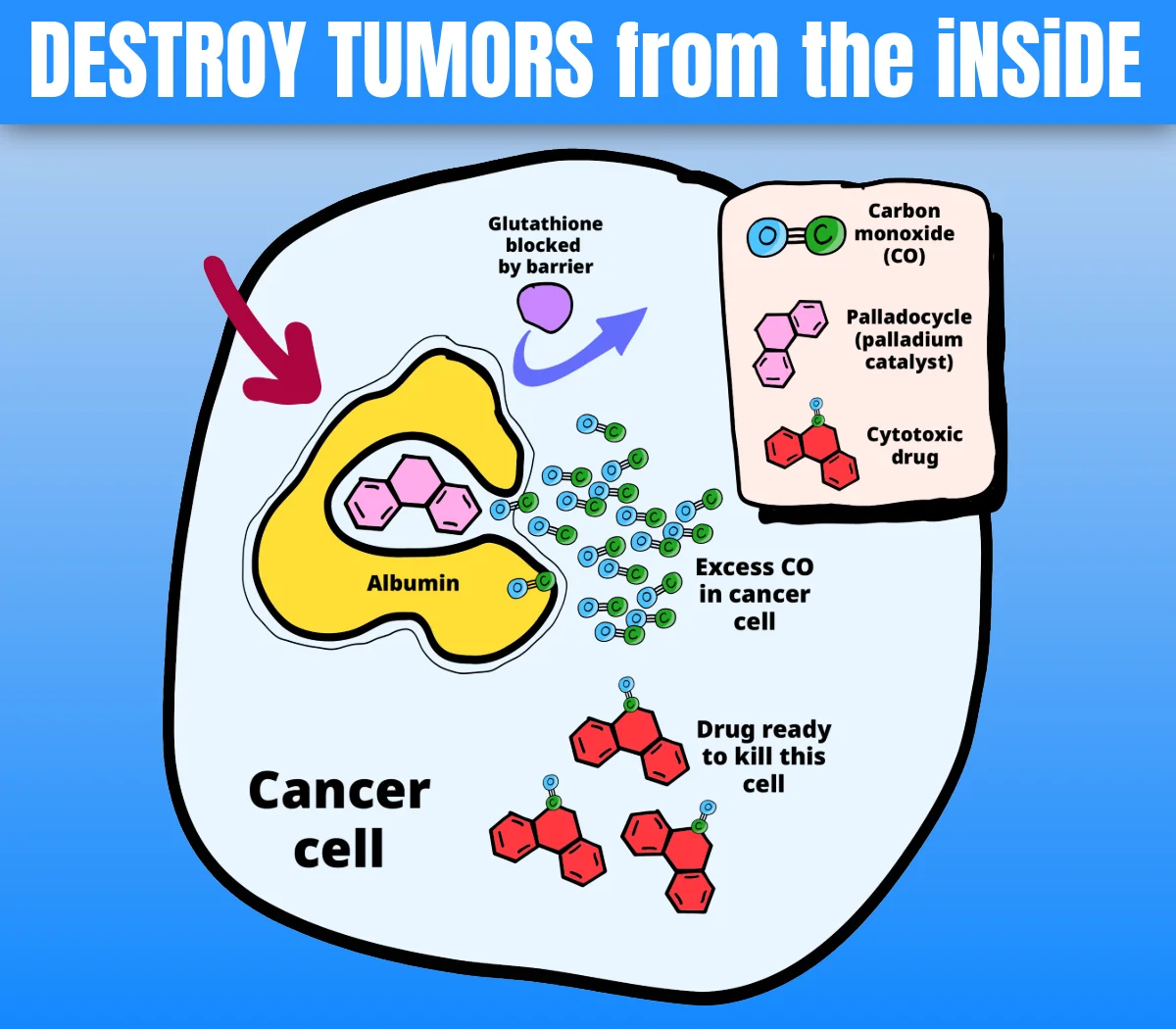
The platform is an albumin-palladacycle complex. Palladacycles are organometallic compounds containing palladium that can react with carbon monoxide to form the phenanthridinone core, a scaffold found in several known anticancer agents including certain PARP and topoisomerase inhibitors. Naked palladium catalysts are rapidly deactivated inside cells by thiols such as glutathione. By embedding the palladacycle inside the hydrophobic pocket of serum albumin and anchoring it with a coumarin group, the researchers shield the metal center from glutathione while still allowing cellular uptake via endocytosis.
Once inside a cancer cell that contains elevated carbon monoxide, the protected catalyst converts the gas into a phenanthridinone derivative. The newly formed molecule can then detach and exert its cytotoxic effect. Because healthy cells produce little excess carbon monoxide, the reaction is largely confined to the tumor environment. Laboratory blood tests confirmed that free carbon monoxide in circulation is largely bound to hemoglobin and does not trigger premature drug formation.
Laboratory Results
After 48 hours of incubation the team detected the expected phenanthridinone product in four human cancer lines—HepG2 liver, HeLa S3 cervical, MCF7 breast and A549 lung—but essentially none in non-cancerous TIG3 fibroblast cells. When the complex was further tuned to produce a highly toxic oxynitidine-type derivative, colony-formation assays showed that concentrations of 10 µM and above almost completely blocked growth of MCF7 cells while leaving normal TIG3 cells largely undamaged. The paper notes that the associated cytotoxicity remains modest, yet the approach still suppresses cancer-cell proliferation under the conditions tested.
- Product detected selectively in four cancer cell lines after 48 h
- Minimal product in normal fibroblasts
- Oxynitidine derivative suppressed MCF7 colony formation at ≥10 µM
- No detectable drug formation in blood samples
This work represents an important advance in therapeutic in vivo synthetic chemistry. In our therapeutic strategy, molecules naturally present or generated within the body—including disease-associated metabolites—are used as endogenous chemical feedstocks to synthesize therapeutic molecules directly at the site of disease.
— Katsunori Tanaka, RIKEN
Context and Next Steps
The study builds on earlier RIKEN work in which the same laboratory used other cancer-associated metabolites for on-site synthesis. It remains a cell-culture proof of concept. The authors state that the immediate next stage is evaluation in animal models to determine whether the complex reaches tumors in sufficient quantity, produces therapeutic levels of drug, and avoids off-target effects. Regulatory pathways for any future clinical translation would require extensive safety, biodistribution and efficacy data that do not yet exist.
The approach illustrates a broader direction in precision oncology: instead of delivering a finished drug systemically, researchers attempt to manufacture the active agent only where disease-specific chemistry is present. Whether the modest potency observed so far can be improved enough to matter in living organisms remains an open experimental question.
Sources: