

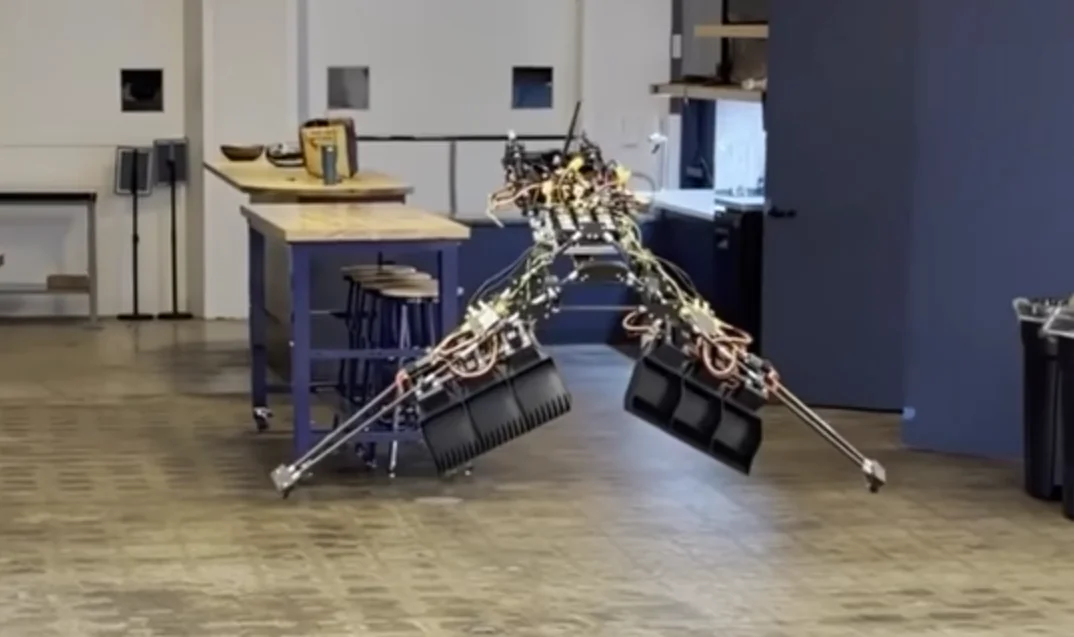
Utopia Labs has flown the fourth prototype of its personal flying machine, according to a development update posted by company founder Rasmus Hauschild. The aircraft, designated V4, is the result of a ground-up redesign that reduces its mass by 6kg and introduces a new propulsion system.
Hauschild said the prototype’s hover stability is solid and that control authority has improved significantly compared with earlier versions. He also reported a stiffer structure and rewritten firmware modules, indicating that the update covers both the airframe and the software that manages flight.
What changed in V4
The publicly disclosed changes focus on four areas: weight, propulsion, structural rigidity and control software. The 6kg reduction is a meaningful gain for a small electric aircraft, where every kilogram affects hover power, battery use, payload margin and maneuverability.
- A 6kg reduction in vehicle mass
- A new propulsion system
- A stiffer airframe structure
- Rewritten firmware modules
- Improved hover stability and control authority
Utopia Labs has not yet published a full technical specification sheet for V4, including its empty weight, battery capacity, thrust, endurance, maximum takeoff weight or flight-test data. The available announcement therefore establishes the milestone and the principal engineering changes, but not yet independently verified performance figures.
Why the redesign matters
Personal flying machines sit at a difficult point in aviation engineering. They must generate enough thrust to lift a pilot and airframe, remain controllable in gusts and during transitions, and do so without becoming too heavy or power-hungry to be practical.
A lighter structure can reduce the power needed for hover, while a revised propulsion layout may improve how thrust is distributed and controlled. The reported firmware rewrite is equally important: flight-control software determines how quickly the vehicle responds to pilot input and how it compensates for disturbances in hover.
The fourth prototype’s first flight is an early engineering milestone, not evidence of a production-ready aircraft. The next stage will likely involve expanding the flight envelope, validating endurance and thermal behavior, refining failure modes and gathering repeatable test data.
What remains unverified
Utopia Labs has not publicly confirmed the aircraft’s dimensions, propulsion architecture, power output, battery configuration, flight duration, speed, noise level or commercial availability. No independent flight-test results, certification plan or delivery timeline have been released in the available announcement.
The company describes itself as developing personal flying vehicles, and Hauschild’s public profile identifies work on carbon-fiber 3D printers for aerospace, automotive and other applications. Those details provide context for the team’s engineering background but do not establish technical performance claims for V4.
Outlook
Over the next 12 to 24 months, the central questions for Utopia Labs will be whether V4 can sustain controlled flight beyond initial hover tests, how its new propulsion system performs under load, and whether the weight saving translates into usable endurance or payload. Publicly available specifications, third-party flight footage and a structured test campaign will be needed to assess the aircraft beyond the initial announcement.
Sources: Ilir Aliu on LinkedIn; Rasmus Hauschild on LinkedIn.