


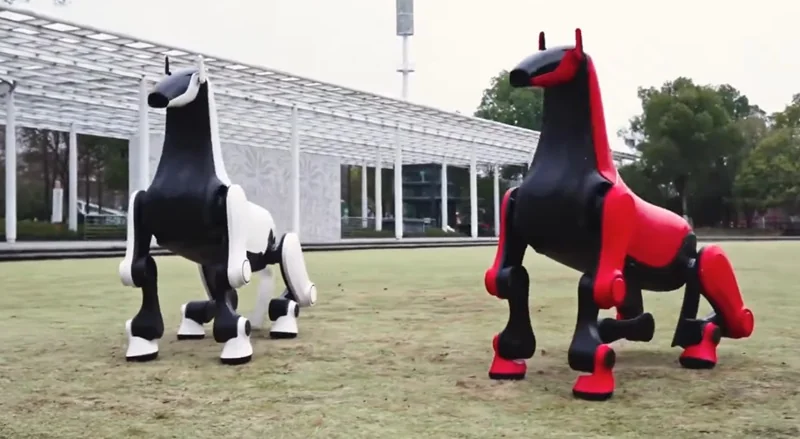
Hangzhou-based DEEP Robotics has developed a horse-inspired version of its quadruped robot, replacing the familiar robotic-dog silhouette with an equine body and hoof-like feet. Reported in March 2026, the limited-edition machine commemorates the Year of the Horse and adapts the company’s LYNX M20 Pro platform rather than introducing an entirely separate robotics architecture.
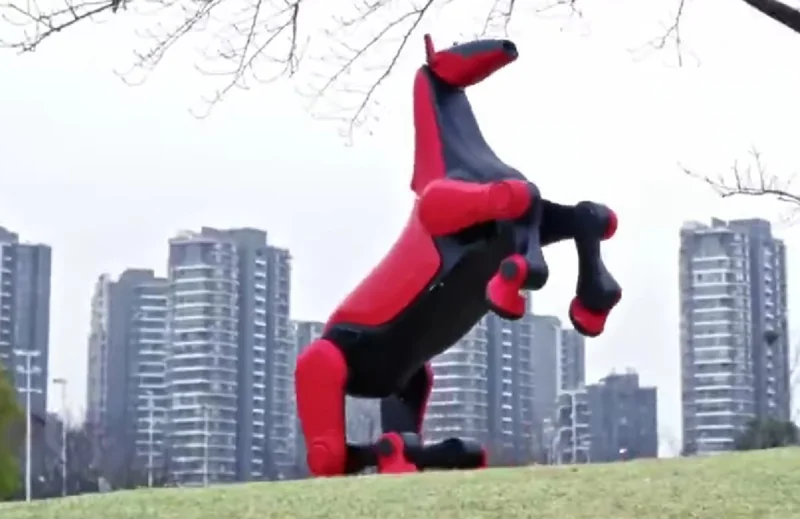
The result is a mechanical pony built around industrial robotics technology. Its significance lies in that adaptation: a platform associated with inspection and hazardous-environment work has become a recognizable animal-shaped demonstration. However, the published coverage leaves important questions about its performance unanswered, particularly where specifications for the industrial platform are presented as capabilities of the horse.
From wheel-legged robot to mechanical pony
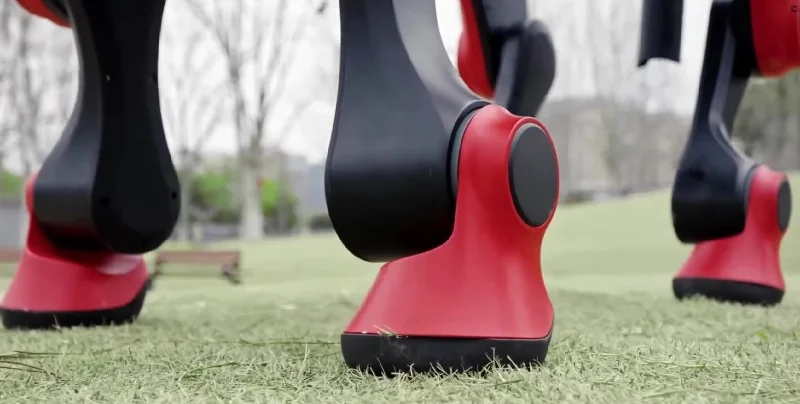
Both Interesting Engineering and Stuff identify the horse as a modification of the LYNX M20 Pro. The redesign includes animal-inspired proportions, legs and hoof-like feet; Stuff describes promotional footage showing the machine trotting and rearing. Unlike its wheeled industrial counterpart, the horse version moves without wheels.
These changes establish a horse-inspired appearance and movement style, but the reporting does not provide a measured comparison with real equine locomotion. Neither article supplies gait-analysis results, joint trajectories or independent balance tests. The available evidence therefore supports describing the machine as an animal-inspired quadruped, not as a scientifically validated reproduction of a horse’s biomechanics.
The technology underneath
DEEP Robotics’ official LYNX M20 documentation provides a clearer account of the underlying industrial technology. The platform combines articulated legs with wheels, terrain-responsive movement and onboard sensing. Its published hardware includes two 96-line LiDAR units and two wide-angle cameras, with the LiDAR specification listing a 360-degree horizontal and 90-degree vertical field of view.
The standard M20 configuration lists two octa-core, 64-bit industrial processors, each with a 16GB-plus-128GB memory and storage configuration. The product page also lists front and rear lighting, Gigabit Ethernet, a 72V power interface and over-the-air software upgrades. These are specifications for the industrial platform, not a separately documented bill of materials for the horse edition.
Interesting Engineering attributes LiDAR, simultaneous localization and mapping, and hot-swappable batteries to the horse. But its report does not identify the machine’s processor configuration, actuator specifications or named AI model. A detailed account of how the horse-specific motion controller was developed is also absent from the cited coverage.
What the performance figures actually establish
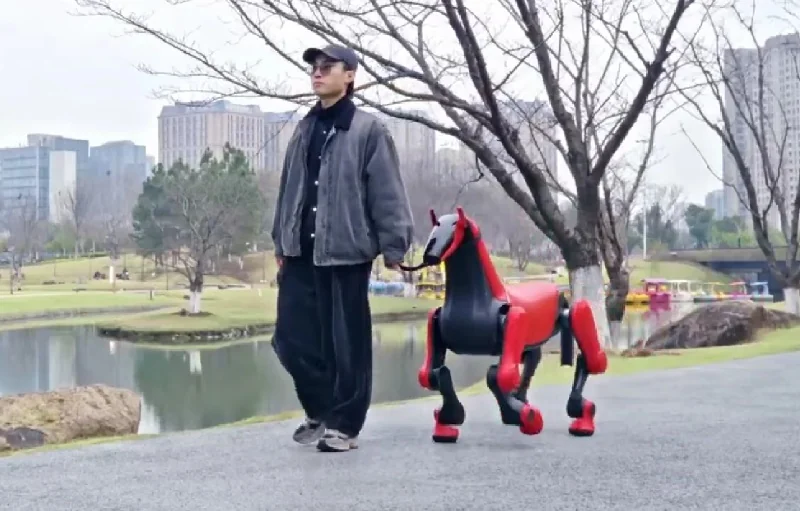
March reporting puts the horse at approximately 30 kilograms and 50 centimeters tall. Interesting Engineering also reports a starting price of about $50,000, a maximum speed of 5 meters per second and battery operation of up to three hours. Those figures should be treated as reported specifications rather than independently measured results.
The most consequential distinction concerns payload. Coverage attributes a carrying capacity of up to 50 kilograms to the horse, but DEEP Robotics’ industrial M20 specification separates a 15-kilogram payload capacity from a 50-kilogram maximum load capacity. Those are different published categories, and the official page does not establish that the horse can routinely transport 50 kilograms while walking.
The manufacturer’s M20 figures also distinguish laboratory performance from normal operation:
- Speed: 5 meters per second in maximum laboratory testing, versus a listed maximum operating speed of 2 meters per second. [22]
- Endurance: three hours or 15 kilometers without a payload, versus 2.5 hours or 12 kilometers with a 15-kilogram payload.
- Environmental protection: IP66, with a stated operating temperature range of minus 20 to 55 degrees Celsius. [22]
- Obstacle capability: listed limits of 25 centimeters for continuous stairs and 80 centimeters for a single step. [22]
These figures describe the industrial M20 configuration. They should not automatically be transferred to a hoof-footed derivative with different proportions and ground-contact hardware. Stuff explicitly labels its estimate of the horse’s range as an assumption based on the wheeled platform, rather than a measured result.
A demonstration, not a documented deployment
The clearest documented role for the horse is as a special-edition demonstration and promotional product. Interesting Engineering discusses exhibitions, museums and public engagement as potential uses. Neither that report nor Stuff’s coverage identifies a customer fleet, a named industrial trial site or measured productivity gains delivered by the horse edition.
Rider demonstrations require similar caution. Stuff reports that promotional footage shows children being carried, with an engineer required to be present. That demonstration is not equivalent to published passenger-safety certification or evidence that the machine is suitable for unsupervised riding. The cited coverage provides neither.
What needs to come next
For the next 12 to 24 months, the practical questions concern validation rather than appearance: a horse-specific operating payload, endurance under that load, safe speed limits and the exact autonomy features delivered to buyers. The cited sources do not provide a dated development roadmap answering those questions.
Software availability is another detail buyers would need to clarify. On its industrial product page, DEEP Robotics marks omnidirectional obstacle avoidance and point-cloud surround view with footnotes stating that the features are enabled through a future over-the-air update. That qualification matters when evaluating reports that describe obstacle avoidance as an established capability of the horse edition. [22]
DEEP Robotics has demonstrated a distinctive way to reshape a quadruped platform. Establishing the horse as more than an exhibition machine would require a separate technical specification and repeatable tests of the redesigned hardware—not simply the performance figures of the industrial robot beneath it.
Sources: DEEP Robotics’ official LYNX M20 product specifications; Interesting Engineering’s March 16, 2026 report; and Stuff South Africa’s March 18, 2026 coverage.


