

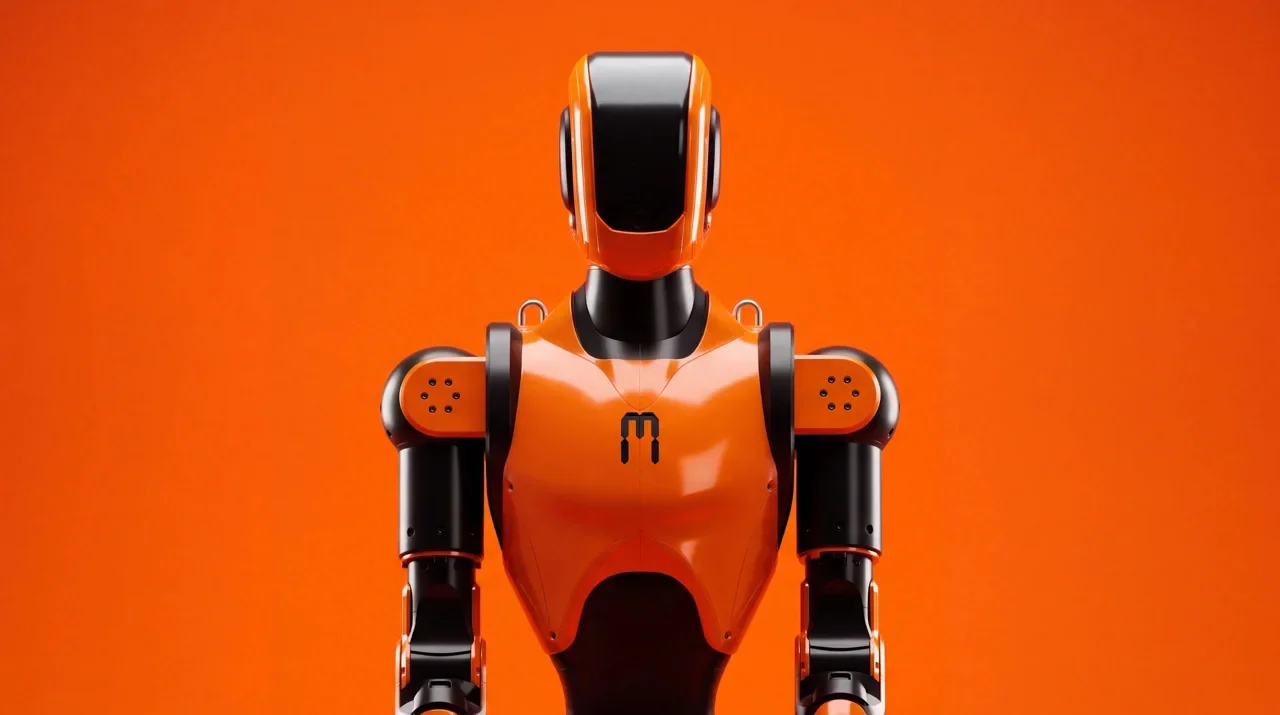
Menlo Research has officially introduced Asimov 1, a fully open-source humanoid robot designed to make bipedal robotics more accessible to academic laboratories, researchers, and independent developers. Standing at 1.2 meters tall and weighing 35 kilograms, the biped platform provides a complete hardware and software stack that users can build, train, and customize themselves. Unlike proprietary commercial robots that restrict access to internal architectures, Asimov 1 offers a transparent design where every layer—from mechanical drawings to onboard software—is open to the community.
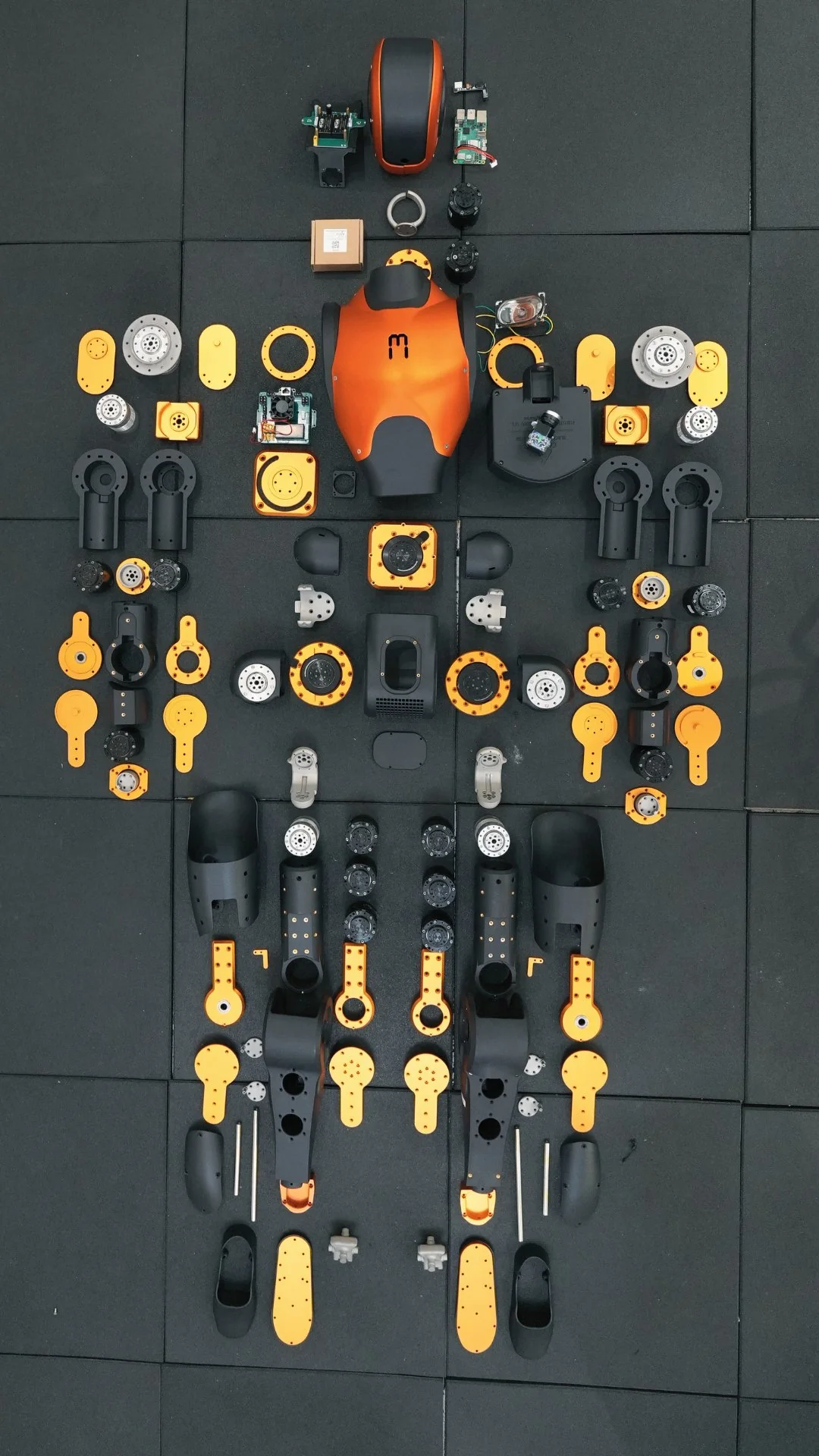
The release marks a significant shift in the humanoid robotics landscape by addressing the barrier to entry for robot learning and hardware research. While commercial humanoid platforms are often locked behind closed ecosystems, Asimov 1 provides a complete blueprint including computer-aided design files, electrical schematics, and simulation models, enabling teams to either self-source components or purchase a complete DIY kit.
Technical Architecture and Specifications
Asimov 1 features 25 actuated degrees of freedom, powered joints capable of delivering up to 120 Nm of peak torque, and a 491 Wh battery system. Its structural composition relies heavily on 7075 aluminum and MJF PA12 nylon components to balance durability with weight efficiency.
The onboard computing architecture splits tasks between a Raspberry Pi 5 managing media and network functions and a Radxa CM5 module dedicated to motion control. Sensory inputs include a 2MP monocular camera, a stereo microphone array, a 6-axis IMU, and joint state sensors distributed across the CAN bus. For simulation and software development, the platform supports MuJoCo and URDF models, allowing developers to train policies in simulation environments like Isaac Lab or MJLab before deploying them directly to physical hardware.
Empirical Data and Deployment Model
The robot is available through two primary acquisition paths: builders can pull the bill of materials to self-source and fabricate components independently, or purchase an unassembled DIY kit priced around $20,000. Auxiliary components, such as custom shoes and dummy hands, are designed for rapid 3D printing using accessible materials like TPU 95A.
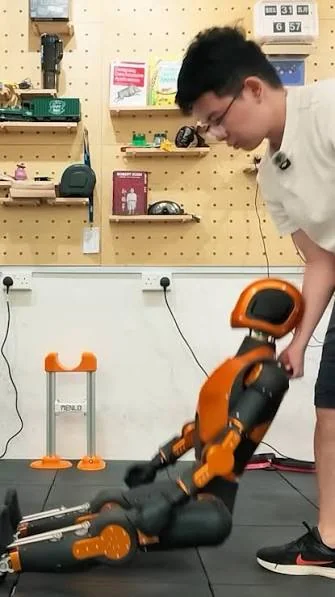
Engineered with repairability in mind, the platform incorporates modular failure points designed to protect major structural assemblies during intensive testing. This allows operators to swap out damaged parts quickly in laboratory settings without halting experimental pipelines.
Industry Context and Future Outlook
Open-source hardware initiatives in robotics aim to bridge the gap between expensive enterprise solutions and underfunded academic research. By providing a standardized, simulation-ready biped, Menlo Research seeks to accelerate machine learning research and policy training for embodied artificial intelligence.
Over the 12-to-24-month horizon, the primary challenges for open hardware platforms will involve scaling community contributions, improving autonomous battery life, and refining zero-shot sim-to-real transfer robustness across diverse operational environments.
More details are available on the Asimov 1 GitHub repository and Menlo Research.